
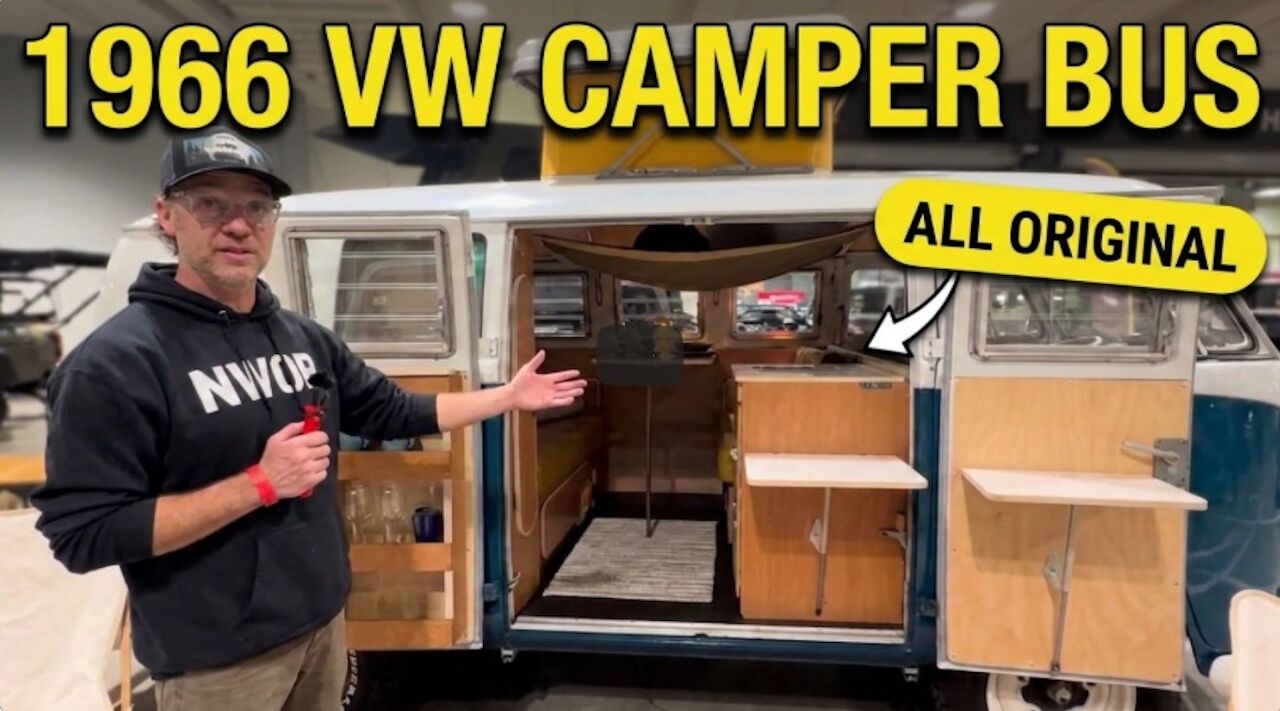
In this episode, we step away from the modern ID. Buzz to explore a true classic: a pristine 1966 Volkswagen Camper Bus.
Owen, the vehicle's third owner, gives us a tour of this incredible "survivor" Westfalia that still rocks its original blue and white paint — a colorway usually reserved for the European market. Plus, we get the details on Owen's massive community event: the Northwest Overland Rally (https://www.nwoverlandrally.com/) in Plain, Washington (near Leavenworth) happening June 17–20, 2027.
The TTAC Creators Series tells stories and amplifies creators from all corners of the car world, including culture, dealerships, collections, modified builds and more.
This video originally posted about a year ago; however, it’s information is relevant as EV owners and potential buyers head into colder weather. A transcript, summarized by AI and edited by a staffer, is below.
[Image: YouTube Screenshot]
Become a TTAC insider. Get the latest news, features, TTAC takes, and everything else that gets to the truth about cars first by subscribing to our newsletter.
Summary
The transcript features an interview with Owen, the owner of a beautifully restored vintage Volkswagen Westfalia camper bus. The vehicle is a survivor with an unusual history, largely original components and an interior that showcases the thoughtful design and practicality of Volkswagen's classic camper vans.
History and Ownership
Owen has owned the bus for 27 years, making him only its third owner. He purchased it from a friend, but the vehicle's history goes back much further.
Interestingly, the bus was not originally intended for the U.S. market. Its distinctive blue-and-white paint scheme reflects its European origins. An American couple purchased it while stationed in Europe, used it there for approximately 10 years, and eventually brought it back to the United States. They drove it for another 12 years before selling it to a second owner, who kept it for three years before Owen purchased it.
The bus is considered a survivor because it retains its original factory paint and much of its original equipment. It has never been repainted.
Restoration and Mechanical Details
Although the bus remained functional throughout its life, it eventually developed the familiar Volkswagen rust problems, particularly in the floor. Owen finally decided a more comprehensive restoration was necessary.
The work included:
- Removing the camper interior to access the floor.
- Replacing the rusted floor sections.
- Rewiring the vehicle.
- Replacing the brake lines.
- Cleaning and polishing the exterior.
- Freshening up the original interior furniture.
- Reassembling the camper.
Despite the extensive work, the goal was to preserve as much of the original vehicle as possible.
The original 1,500cc single-port engine had been rebuilt shortly before Owen purchased the bus. It was subsequently upgraded to a 1,600cc single-port configuration, which remains in the vehicle. Owen estimates he has personally driven approximately 100,000 miles in the bus.
Original Interior and Camper Features
One of the most impressive aspects of the restoration is the preservation of the original interior. The cabinetry, furniture and camper equipment remain largely as they came from the factory.
The interviewer is particularly impressed by the attention to detail, describing the interior as cozy and thoughtfully designed around family needs.
One interesting feature is the original children's hammock. This accessory rolls up and stores above the closet when not in use. It attaches to small metal brackets inside the bus, which can still be found on Westfalia campers originally equipped with the feature.
Owen has used the hammock for different purposes over the years. His luggage goes there when traveling alone, his dog has slept there, and his son used it when he was younger. His son is now 14.
The hammock illustrates how Volkswagen designed these campers to make practical use of limited interior space.
Returning to the Road
The restoration was only recently completed. Owen explains that the tires and bumpers had been installed just two days before the interview, making the vehicle's appearance at the event something of a debut.
After nearly three decades of ownership and a significant restoration, Owen is looking forward to getting the bus back on the road and continuing to enjoy it.
Northwest Overland Rally
The conversation also touches on Owen's involvement in the Northwest Overland Rally, an annual gathering held near Leavenworth, Washington, in Plain.
Now in its 14th year, the event brings together more than 1,000 people and emphasizes community, education and outdoor experiences rather than simply serving as a vendor showcase.
Activities include:
- Off-road driving and technical courses.
- Tire-changing demonstrations.
- Winching instruction.
- Outdoor cooking classes.
- Children's activities.
- Opportunities to meet other overlanding enthusiasts and share experiences.
The event is designed for both experienced off-road enthusiasts and newcomers interested in learning practical skills.
The next rally discussed in the interview is scheduled for June 17–20.
Overall Takeaway
The interview highlights the enduring appeal of Volkswagen's classic Westfalia campers and the thoughtfulness of their original design. Owen's bus is particularly interesting because it has retained its original paint and interior despite decades of regular use and approximately 100,000 miles of driving under his ownership.
Rather than turning the vehicle into a heavily modified showpiece, Owen focused on preserving its originality while addressing the structural and mechanical issues necessary to keep it on the road.
The result is a restored camper with a fascinating history, practical family-oriented features and plenty of life left for future adventures.