
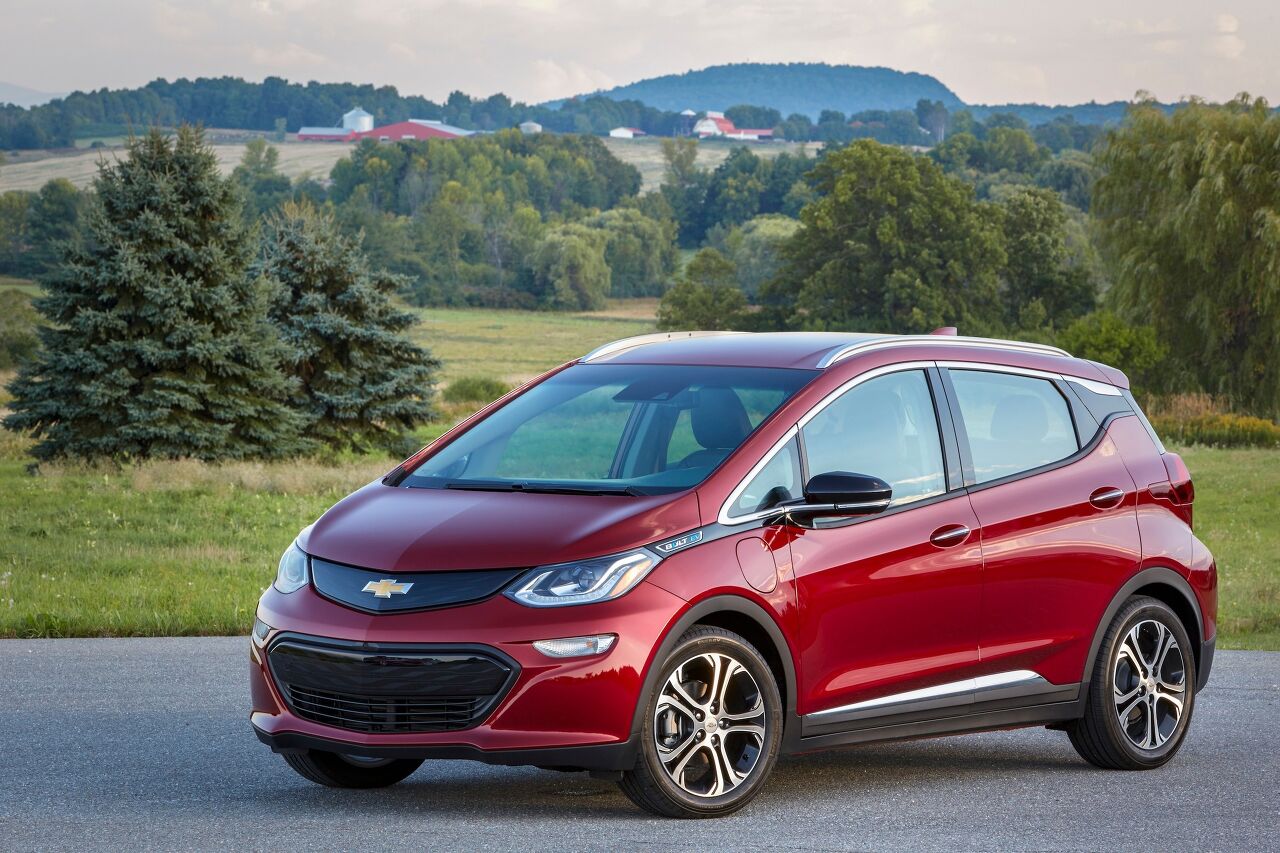
Electric cars are supposed to be throwaway appliances the moment the battery dies. A high-voltage pack fails, the repair bill dwarfs the car's value, and the whole thing heads to the crusher. That's the story. A 2019 Chevrolet Bolt EV brought in to Out of Spec Renew's shop with 471,000 miles on the odometer tells a different one, and the numbers are worth your attention whether you're shopping for a used EV or just keeping score on the technology.
Here's the short version. The car couldn't charge or go into Drive or Reverse. The fix was a used battery pack that cost about $1,800 with delivery folded in, plus labor. For a car that's covered nearly half a million miles, that is not the financial catastrophe the EV skeptics promised.
The pack that died wasn't the original. The Bolt's first battery was swapped under GM's recall in 2022, at an odometer reading of roughly 138,000 miles. That recall is the notorious one that bruised General Motors' reputation.
So the battery that finally gave out was the recall replacement, and it earned its keep. It survived more than 330,000 miles before failing. Open it up and the cause is plain: widespread cell swelling across the modules. Testing found voltage differences in two modules, and those cell imbalances were enough to keep the car out of Drive. The motor, for the record, is a separate story. The owner reports that the electric motor remains the original unit after all those miles.
The new pack is not new. It was pulled from a used 2017 Chevy Bolt, and that donor pack is itself a warranty replacement — meaning this particular battery is a warranty unit from the same recall saga, now living in a second car. It carries an estimated 15,000 miles, with Out of Spec Renew pegging it somewhere in the 10,000 to 15,000 mile range.
Sourcing a used pack is what kept the bill low. The roughly $1,800 price, delivery included, came through a discounted arrangement. For a normal walk-in customer, Out of Spec Renew estimates a replacement pack would run $2,500 to $3,000, which lines up with the broader figure for what the average Bolt owner should expect to pay for a replacement battery.
The physical work is less dramatic than the stakes suggest. When done by experienced technicians, the procedure is described as simple. It came down to removing about a dozen fasteners, a handful of electrical connections, and two coolant hoses.
Safety comes first. The 12-volt battery gets disconnected before anything else, then the high-voltage disconnect plug is pulled so the technician can work on the high-voltage cables and connectors without turning themselves into part of the circuit. Once the old pack is out and the replacement is in, the cooling system gets purged of air pockets, and Out of Spec Renew plans to check the coolant again and bring the battery up to a full charge before handing it back.
Start to finish, the whole job took roughly four and a half hours. The shop's labor estimate matches that four-and-a-half-hour window.
Bolting a battery into a Bolt is the easy part. The headache is teaching the car to trust it. Programming the replacement battery ate up more time than the physical swap itself, which is the kind of detail that explains why EV repair has a reputation for being finicky even when the hardware is straightforward.
Getting the car moving required software work on two control modules. Programming access for a single vehicle costs $51. It didn't go cleanly on the first try either — several failed attempts went by before the programming was wrapped up and the lingering fault codes wiped. The process also includes a battery capacity relearn function, which lets the car recalibrate to the new pack's actual state. This is the real barrier to DIY on an EV battery job. The bolts anyone can remove; the programming needs the right access and some patience.
Add it up and the picture is clear. The pack was about $1,800. Labor at the shop came to slightly more than $800, consistent with the general rule that Bolt battery labor adds $800 to $1,000. That puts this particular repair in the low thousands.
Out of Spec Renew frames the whole exercise against the obvious combustion comparison, and it holds up. The entire replacement costs about as much as fitting a replacement engine into a conventional gas car. An engine swap runs between $2,000 and $10,000, varying with the engine and the labor. On that scale, a battery replacement that keeps a half-million-mile car on the road is not an outlier expense. It's a normal major repair.
A car with nearly half a million miles doesn't get there without attention, and the battery wasn't the only thing on the list. Earlier work on this Bolt included suspension parts and wheel bearings — ordinary high-mileage maintenance that any car of this age would need.
While in for the battery, the shop flagged a few more items. A gear reduction oil change may be due, and a leaking passenger-side axle seal was spotted as worth addressing. None of this is EV-specific drama. It's the routine upkeep of a vehicle that has been driven hard and far, and it's a useful reminder that an electric car still has mechanical bits that wear out.
The lesson here is not that EV batteries never fail. This one failed twice — once in the recall, once again after a third of a million miles. The lesson is that failure is not a death sentence for the car or your wallet.
If you're considering a used Bolt, factor in that a replacement pack from a professional shop runs $2,500 to $3,000 before labor, with another $800 to $1,000 in labor on top. Budget in that range and you're planning for the worst case, not gambling on it. Used packs exist, and they bring the cost down substantially if you can find one.
Confirm the recall battery was already installed — on this car it went in around 138,000 miles — and understand that the recall replacement is the unit most likely to see you through the long haul. Beyond that, treat the battery like any other major component with a finite life. A combustion engine wears out. So does a transmission. A battery is one more item on that list, priced in the same neighborhood, and one that leaves less of a mess behind when its time comes.
[Images: General Motors]
Become a TTAC insider. Get the latest news, features, TTAC takes, and everything else that gets to the truth about cars first by subscribing to our newsletter.