
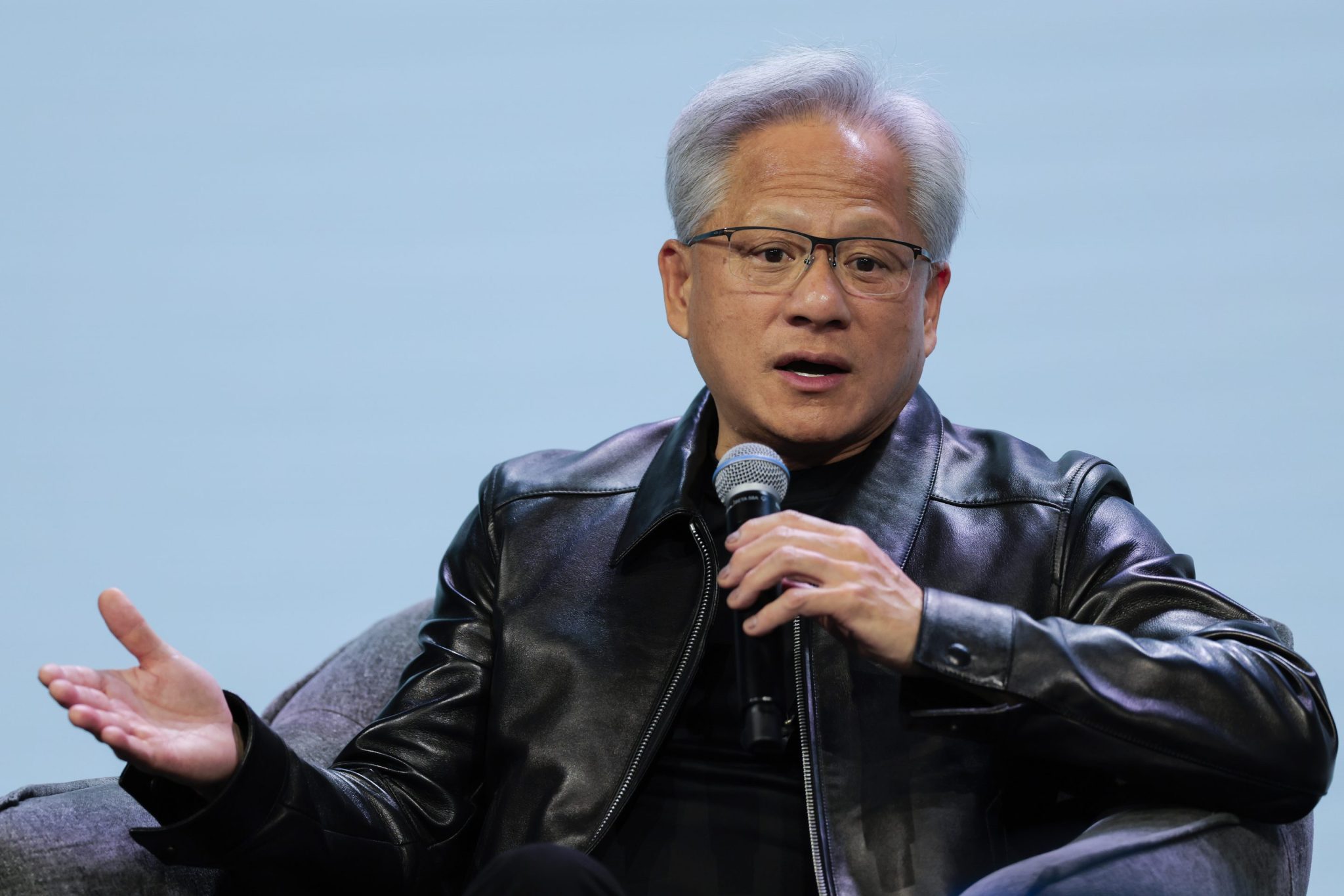
Jensen Huang is back as Nvidia CEO after just shy of two weeks of turmoil. The news—which has come as a shock to many in the tech world—was a welcome relief to investors and Nvidia’s partners, who had spent the majority of that time fretting that the company’s financial commitments might dry up.
Nvidia has become what some have referred to as the “central bank of AI.” The company has invested in and supplied compute to various AI startups, neoclouds, and AI labs. These companies then, in part, use that money to buy Nvidia chips. Critics have called this process “circular financing,” with many saying it leaves much of the AI boom dangerously exposed to weak links.
Indeed as of the end of July, Nvidia had invested nearly $50 billion in AI model makers such as OpenAI, Anthropic, and xAI, and its equity stakes across the AI ecosystem totaled twice that. It has also pledged $170 billion of its investment-grade credit to help AI companies and neoclouds get financing.
Before news of Huang’s reinstatement broke on Monday, several investors and Nvidia partners told Fortune they were concerned that these commitments might stall under the interim CEO. That interim CEO, Colette Kress, some said, already showed early signs of being more hesitant to make deals at the same rate as Huang. Any new CEO, they added, would likely want to appear as a steady hand and more cautious when it came to spending.
“Jensen has been such a critical part of the ecosystem because he’s allowed Nvidia to provide compute to venture stage companies who otherwise don’t have access to it,” said one investor who asked to be anonymous to discuss private deals. “Everyone was concerned about whether the next person at the helm of Nvidia would also be as aggressive in fostering that ecosystem.”
For a while, the investor said, any startup that landed a meeting with Huang was likely to walk away with funding.
There were also worries about commitments to so-called neoclouds, such as CoreWeave or Nscale. These companies buy Nvidia GPUs, often with large amounts of debt, and rent the computing power to AI labs, startups, and enterprises. Nvidia has taken equity stakes in some of them and guarantees some of their data center leases. It has also agreed to rent back unused capacity at a fixed rate, which gives banks a floor that makes them more willing to lend. For example, Nvidia has agreed to buy up to $6.3 billion of CoreWeave’s unsold capacity through 2032.
If Nvidia pulled back on some of these investments, the neoclouds most exposed would be those selling capacity to buyers without investment-grade credit, since they might not be able to finance GPUs without a backstop. This could have the knock-on effect of slowing some new data center projects.
Huang’s personal touch extended to Nvidia’s supply chain, too. After his resignation, Elon Musk wrote on X that many of Nvidia’s critical deals were “a handshake with Jensen” and warned that “at least some of those critical deals will be lost” without him.
With Huang back at the helm, investors expect Nvidia to keep acting as the AI industry’s lender; AI startups, labs, and neoclouds that lean on Nvidia for funding, compute, and credit backstops have more reason to expect those deals will keep coming at the pace they’d grown used to. The market seemed to agree, with Nvidia shares jumping more than 30% on Monday, and analysts at Melius Research and Bernstein quickly upgrading the stock.
“Jensen Huang’s return is an enormous positive for Nvidia and the broader AI trade, removing a major source of uncertainty and restoring the visionary leadership that helped build the entire AI infrastructure ecosystem,” said David Miller, CIO at Catalyst Funds. “While questions remain about the ultimate returns on massive AI capital expenditures, today’s announcement meaningfully improves sentiment and reduces a major risk that had been hanging over the sector.”
This story was originally featured on Fortune.com