
Jason Bonfig’s first earnings report as Best Buy CEO came with numbers the retailer hasn’t posted in years. Comparable sales rose 6.1% in the fiscal third quarter, the strongest growth in five years, and the company raised its full-year outlook for the second straight quarter.
Investors had already started betting on a recovery. Best Buy shares are up nearly 49% this year as of Nov. 24, a sharp turn for a company whose sales had fallen in 14 of the 16 quarters before its CEO change was announced in April, according to Reuters.
Bonfig, who succeeded Corie Barry on Nov. 1, now has to prove the rebound can outlast a holiday season propped up by blockbuster game launches and pricier laptops.
Best Buy beat on revenue and earningsRevenue for the quarter ended Oct. 31 rose 5.8% to $10.24 billion, according to the company’s third-quarter earnings release. Adjusted earnings per share climbed 16% to $1.62.
Both figures topped Wall Street’s forecasts. CNBC reported that analysts surveyed by LSEG expected adjusted EPS of $1.49 on revenue of $9.90 billion.
Best Buy now expects fiscal 2027 revenue of $43 billion to $43.3 billion, up from $42.3 billion to $42.8 billion. It raised its comparable-sales forecast to 3.4% to 4%, from 1.9% to 3%, and its adjusted EPS outlook to $6.90 to $7.05, from $6.70 to $6.90.
Higher prices and game launches drove the quarterComputing and mobile phones did the heaviest lifting, along with newer categories such as AI glasses and trading cards. Much of the computing gain came from price rather than volume: Bonfig said on the earnings call that average selling prices in the category rose about 25% as memory costs climbed, while unit sales fell in the mid-teens percentage range.
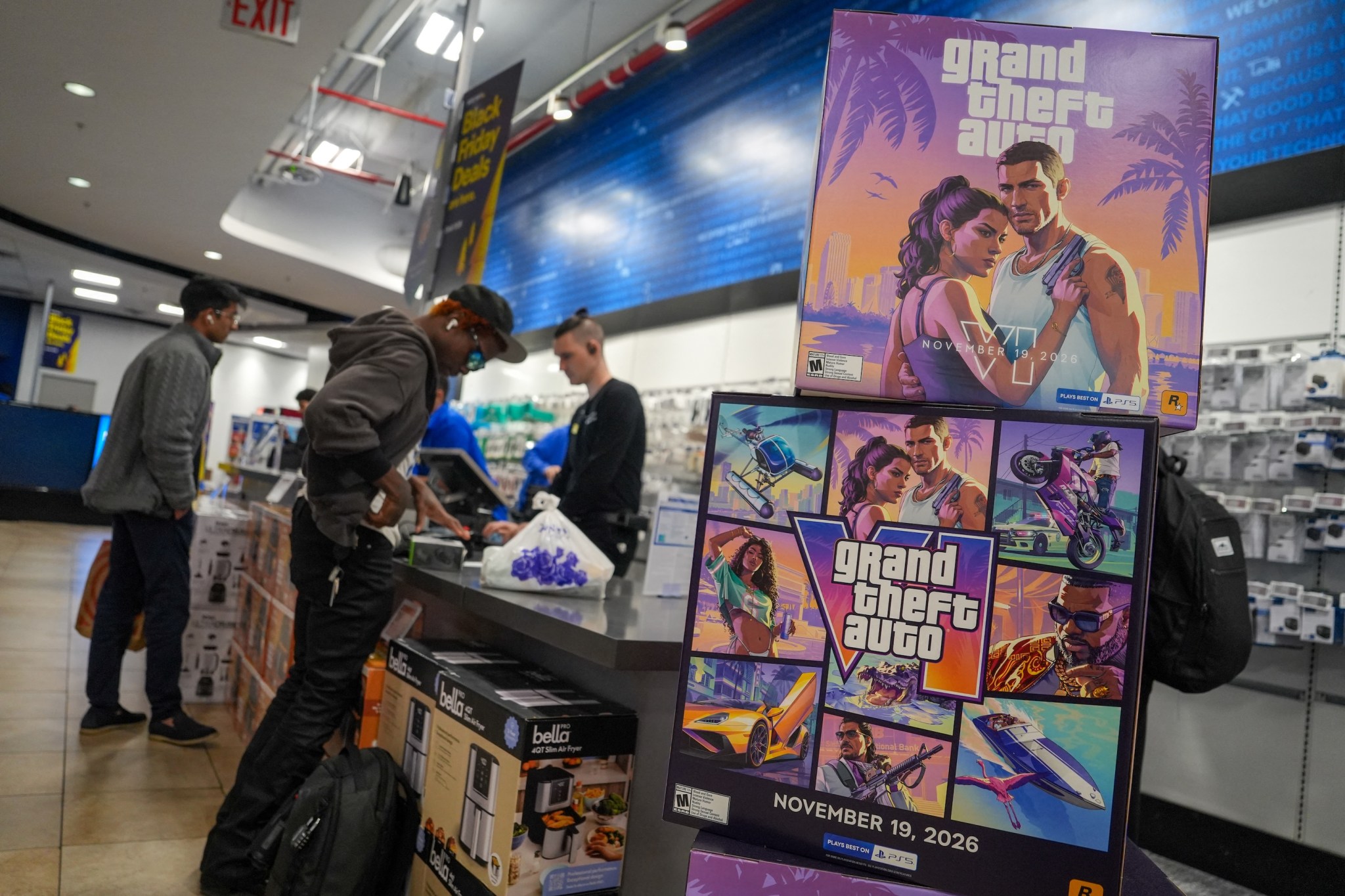
Gaming helped, too. Domestic entertainment comparable sales jumped 27.5% as shoppers bought consoles and accessories ahead of the November releases of Grand Theft Auto VI and The Legend of Zelda: Ocarina of Time.
Margins got a one-time lift. Best Buy’s domestic gross profit rate rose to 24.1% from 23.3%, helped by $41 million in tariff refunds that the company doesn’t expect to repeat in the fourth quarter.
The company’s newer revenue streams are also scaling. Its online marketplace generated about $350 million in gross merchandise value in the quarter and is on track to top $1.3 billion for the year, Bonfig said.
What Bonfig inherits from Corie BarryBonfig joined Best Buy as an inventory analyst in 1999 and is the company’s sixth CEO in its 60-year history, according to its succession announcement. Before taking the top job, he ran merchandising, e-commerce, marketing, and supply chain, and led the launch of the marketplace and the expansion of Best Buy Ads.
He follows Barry, whose seven-year tenure ended with revenue lower than when she started. His promotion fits a wider pattern of Fortune 500 boards turning to company veterans for the corner office.
Best Buy’s revenue stabilized at $41.7 billion in fiscal 2026 after two straight annual declines, as shoppers pulled back on big-ticket electronics and competition from Walmart and Amazon intensified.
“Technology and customer expectations are evolving rapidly, and we need to evolve with them, experimenting and learning more quickly and bringing an even stronger customer lens to our decisions,” Bonfig said on the call.
The holiday quarter is the next testThe new guidance implies fourth-quarter comparable sales growth of 2% to 4%, a slowdown from the third quarter’s pace, while the tariff-refund tailwind falls away.
Bonfig said he expects gaming demand to stay strong as interest in the new titles continues, but that it was too early in the quarter to size the lift. “As we look forward into Q4, everything we’ve seen to this point is factored into our guide,” he said.
This story was originally featured on Fortune.com