
Target has long inspired a particular kind of loyalty. It literally sells its own merch. For many shoppers, the retailer offers more than a place to pick up toilet paper and pet food: It’s where they grab Starbucks and get lost in discovering new beauty brands, finding affordable fashion and seeing both their taste and values reflected on the shelves. But the retailer’s relationship with some of its customers has grown more complicated in recent years, particularly as it has faced backlash over its LGBTQ+ Pride merchandise — or lack thereof — and, more recently, its decision to scale back several formal diversity, equity and inclusion initiatives.
In February 2026, Target’s new CEO Michael Fiddelke shared his vision for a fresh start, promising a merchandise makeover that includes a new beauty section (and food and other major categories). In an interview with AP, he was asked whether the boycotts over DEI changes affected sales. He admitted it did and acknowledged that the company has “trust to win back with guests.”
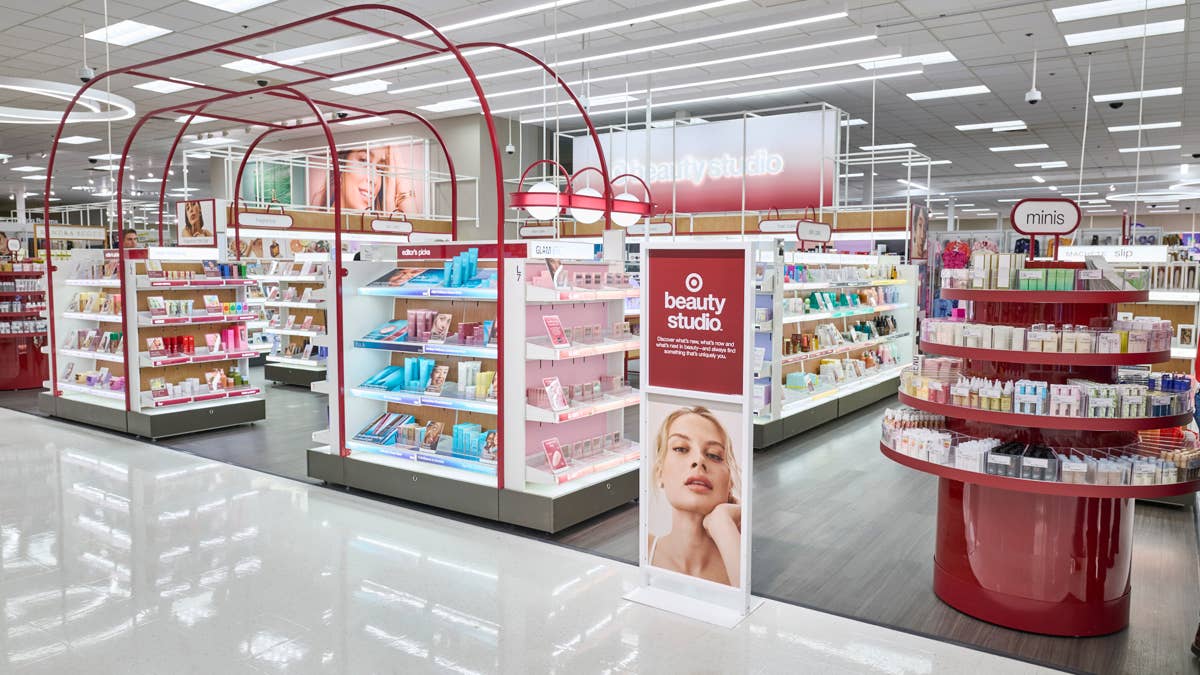
Target’s revenue fell 1.7% in fiscal 2025, according to the company’s earnings report. Fiddelke is betting that his planned changes will turn things around. One part of that plan is the new Beauty Studio, which replaces the Ulta Beauty at Target shop-in-shop concept following the conclusion of the two companies’ partnership in August 2026.
Photo: Courtesy of Target
Target Beauty Studio features a “Global Beauty” section featuring brands from Mexico, Japan, South Korea and beyond. The launch comes as Target faces questions about how it will approach representation after stepping back from several formal DEI initiatives. For founders like Glamazon’s Kim Baker, the retailer’s commitment comes down to more than shelf space. It’s about whether brands like hers receive the resources, visibility and ongoing support they need to grow.
“I understand why those changes raised concerns. As a Black founder, inclusion and fair access to opportunities matter to me,” makeup artist and Glamazon founder Kim Baker tells Fashionista via email. Before deciding to be in the Target Beauty Studio, Baker says she met with a few other retailers, but Target won out. “The diversity and passion of Target’s beauty team stood out to me,” she says. “They understood our products and our customers, and I felt respected as both a makeup artist and a business owner. That mattered to me when we decided to move forward.”
The cost of being in retail can be challenging for most brands, but Baker chose Target for its support of Glamazon. “Getting on the shelf is exciting, but there are real costs beyond making the products and setting up the display,” she says. “As an emerging brand, you need a team that wants you to succeed beyond launch.”
Related: DEI Is Good for Business, According to Beauty's Buzziest Investors
She says Target’s leadership has been available for help and made her feel comfortable through the whole process. “As a Black founder building this business, having people we can call for advice and talk through ideas with has meant a lot,” she adds. “They also come to us with ideas for including Glamazon in marketing opportunities and highlighting me as a founder.”
Still, Baker stresses that “DEI initiatives play an important role in opening doors.” But she says retailers can continue creating opportunities for founders of color through different kinds of initiatives. “Retailers can meaningfully support founders of color through efforts with different names, provided they consistently create access, invest in those brands and support their growth. The commitment needs to be reflected in action.” (As they say, DEI by any other name…)
Kim Baker with Mandy Moore at Target Beauty Studio in Los AngelesPhoto: Courtesy of Presley Ann/Getty Images for Target
Amanda Nusz, Target’s SVP of merchandising, essentials and beauty, echoes the company’s commitment to supporting emerging brands. “We have the Target Foundation and the philanthropic space that invests in [the] really early, early stage,” she explains. “Then we have an accelerators team who really focuses on the next stage in terms of onboarding and mentorship and programming. And then we have the merchants who work with small brands to large brands.”
Asked directly about concerns about the DEI changes, Nusz stresses Target’s “real commitment to build an assortment that reflects the community in which we serve.” She continues: “We have incredible founders from all over the world as part of this, be it Sarelly from Mexico, be it so many of our K-beauty brands, be it from everywhere and more to come.” The assortment will continue to expand, she says. (Fashionista reached out to Sarelly for comment but did not receive a response.)
While some brands are describing a positive new partnership with Target, other Black-owned businesses, including Alikay Naturals, Oyin Handmade and Curls Dynasty, have disappeared from Target shelves or gone out of business entirely, per Modern Retail. For April Showers, founder and CEO of Afro Unicorn, having to leave Target was a “six-figure financial hit.”
Her brand entered the retail giant in 2022 with hair-care products, books and more, made for women of color. When the Target boycotts started in early February 2025, she decided to “listen to the community” and stop marketing her brand at the retailer. That tanked her sales, she says. She was forced to discount products to ensure they were gone from shelves by the end of 2025.
Related: Aurora James on DEI Rollbacks, Boycotts and the Future of Black-Owned Brands in America (Best of 2025)
The retailer’s “silence” on the DEI rollbacks upset Showers’ community. “I had to reach out to people to really understand that they believed that Target used the Black community for cultural reference because they made Target [feel] like theirs,” she tells Fashionista. “They had Black History Month [on] full display [in the] front and Target was just always a part of the community and supporting our events. And [it felt like] they were [a] champion for us. And so for them to pull back, it was hard for people to accept that because they felt like Target basically just played in their face.”
Afro Unicorn is still sold at Walmart, a retailer that also rolled back DEI efforts, but Showers says her community had “no expectations for Walmart” because it “didn’t lead” with support for Black-owned brands. “That wasn’t a selling point for them,” she says. “Target used us as a selling point.”
Showers is clear, though, in her support of the Black-owned brands, such as Glamazon, in Target’s new Beauty Studio. Although she herself isn’t shopping at the retailer, she encourages anyone in her audience who is to buy Black-founded brands and support her friends, such as Kim Baker. Shop the indie brands, shop the brands that need the support, she says.
For indie brand Alleyoop, CEO and founder Leila Kashani Manshoory tells Fashionista that Target’s support for a smaller brand made joining the Beauty Studio a no-brainer. “Other large retailers we spoke with required steep slotting fees, big marketing commitments, or exclusivity,” she says. “Even with a strong community behind us and products that had sold out with waitlists of 20,000 people, making those deals work would have meant a massive fundraise or a risky bet on the business.”
View this post on Instagram
“They’ve supported us with testers, store trainings, and honest feedback that’s helped our business grow,” Manshoory continues. “They brought us into designing our displays and let us bring the brand to life in the way that felt right for us. It truly feels like we’re co-creating something alongside them.”
For Target, the question is whether initiatives like the Beauty Studio can help rebuild the trust it has lost with some shoppers or if the changes from 2020’s promises (and continued controversies) are too big a hurdle. The program seems to offer an exciting platform for emerging beauty brands, but whether that translates into renewed customer loyalty remains to be seen.