
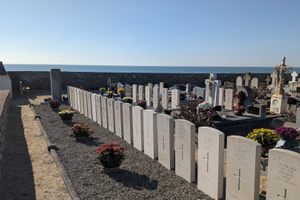
On the northwestern tip of France's Noirmoutier Island, behind the 19th-century Church of the Sacred Heart, a small cemetery overlooks the Atlantic Ocean. Beyond its stone walls stretch the waters of the Bay of Biscay, with the tiny island of Le Pilier visible on the horizon. Many of those buried here were sailors and fishermen whose lives were intimately connected to the sea.
Among the traditional graves stands a striking row of white Commonwealth headstones, commemorating the victims of a largely forgotten maritime tragedy.
On June 17, 1940, as British troops and civilians were being evacuated from France, German aircraft bombed the British troopship HMT Lancastria off the coast of Saint-Nazaire. The ship sank within minutes, taking thousands of lives in one of the deadliest maritime disasters of World War II.
In the following days, the Atlantic currents carried the bodies of victims onto the French coastline, including the shores of Noirmoutier.
Today, the cemetery contains 40 Commonwealth war burials, 22 of them unidentified. Most were victims of the Lancastria disaster.
Overlooking the very ocean that claimed so many lives, L'Herbaudière's marine cemetery remains a peaceful yet poignant reminder of the island's maritime heritage and the tragedies of war.