
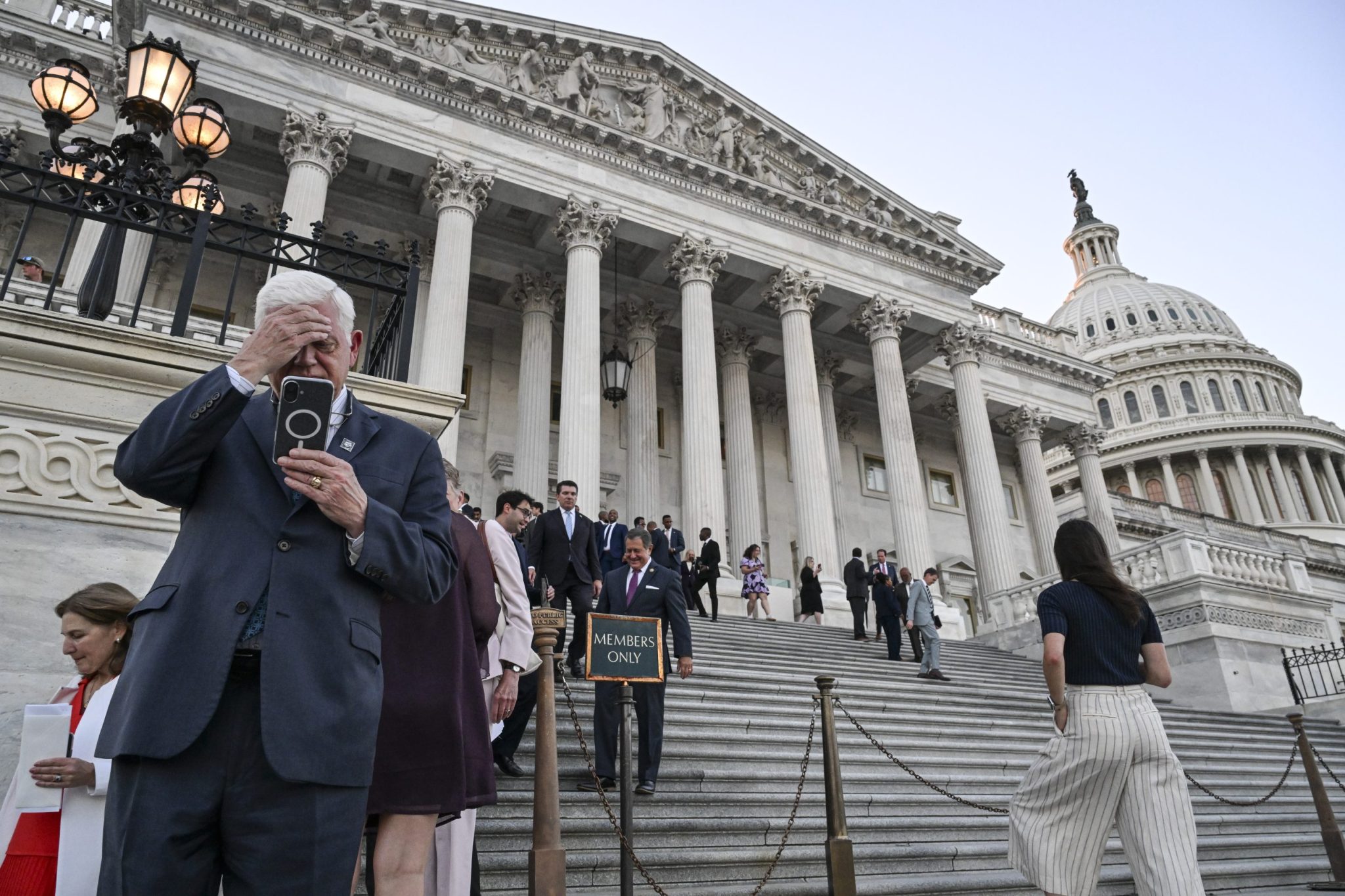
The U.S. Congress has become dysfunctional, and it does not make one bit of difference which party is in power. Exhibit A: The federal budget and appropriations process is broken. For the thirtieth year in a row, Congress has failed to pass all the annual appropriations bills on its plate before the start of the next fiscal year.
It is clear that Congress cannot properly handle its primary spending and taxing functions in a timely manner. This is particularly shocking since Congress’ only annual responsibility under the Constitution is to fund the federal government. Astonishingly, Congress has only delivered on its fiscal responsibilities four times since World War II.
For the thirtieth year in a row, Congress did what it usually does. It failed to pass the bills on its plate and took its August break. It kicked the can down the road by passing a temporary continuing resolution (CR) that keeps the federal government funded when Congress and the President fail to enact the annual appropriations bills on time.
Congress’ dysfunction is particularly disconcerting. After all, the federal government just experienced a record $432 billion deficit in the month of July and also surpassed the $40 trillion total federal debt threshold in August. If that is not bad enough, when the federal financial statements for the year ended September 30, 2026, are released, we project that the federal government’s total liabilities and unfunded obligations will exceed $147 trillion. That is up $11 trillion in one year and an increase from about $20 trillion in 2020.
It is time to enact major budget reforms to restore sanity, stability, and sustainability. First and foremost, we need to adopt a No Budget, No Pay Rule. Such a rule would mandate that, if Congress does not pass all the appropriations bills by the end of the applicable fiscal year, its members must stay in session until they do so. Members of Congress would not be paid until they pass all the appropriations bills, and there would be no retroactive pay. California passed similar legislation in 2010, and it worked. Whether you like California’s budgets or not, the state’s budgets are passed on time.
A federal No Budget, No Pay Rule would not require a constitutional amendment. It would, however, have to become effective in the next Congress, given the Twenty-Seventh Amendment to the U.S. Constitution, which requires an election before a change in a congressperson’s salary can take effect.
But what if Congress fails to pass the appropriations bills on time? The No Budget, No Pay Rule would be invoked. In addition to the Rule being invoked, automatic CRs would kick in. They would be set at the level of the prior year’s appropriations, with no inflation adjustment and with the elimination of any “one-year-only” funding. Such an automatic CR default rule would further incentivize Congress to complete its work on time. Among other things, this procedure would avoid the charades that surround periodic government shutdowns and debt-ceiling debates. Indeed, they would no longer exist.
Under the current rules of the game, Congress has lost control of federal spending. Over 75% of direct annual spending is on autopilot, and that percentage is climbing. That is up from 3% in 1913. It is time to impose an annual cap on all spending, except Social Security and interest on the debt.
The debt ceiling is a proverbial bad joke. It has failed to constrain the growth of the federal government and mounting debt burdens. It is time to explicitly repeal and replace the debt ceiling with a constitutional amendment focused on debt held by the public as a percentage of GDP (debt/GDP).
Specifically, it is time to pass a constitutional credit card limit for the federal government. We recommend that the limit be set at 110–120% of GDP. We also need to take steps to reduce debt as a percent of GDP to a more reasonable and sustainable level, for example, 90%, over the next 10–15 years. For context, our current debt held by the public as a percent of GDP is about 100%. The Congressional Budget Office (CBO) projects that, absent a change in course, debt held by the public as a percent of GDP will reach 175% in 30 years.
Since Congress has been unwilling and unable to pass a needed fiscal responsibility amendment to the U.S. Constitution, how do we reach the promised land? It is time for the states to force the issue. Under Article V, states can bypass a reluctant Congress and call a limited constitutional convention if two-thirds of them apply. That threshold has never been reached for fiscal reform, but roughly 20 states currently have live applications on record — well over half of what’s needed — and momentum has been building. It is time for the remaining states to finish the job.
In addition to a constitutional amendment, achieving much needed budget spending and revenue reforms will require a statutory commission that engages the American people with the facts and truth and solicits their inputs. Fortunately, Bipartisan Fiscal Commission Act bills are pending in both the House and the Senate. It is time for the House and Senate to pass and reconcile their bills for the President’s signature. If Uncle Sam wants to avoid a major debt crisis and ensure that our future is better than our past, the establishment of a fiscal commission and the adoption of a constitutional amendment are essential.
Steve H. Hanke is a Senior Contributing Columnist at Fortune, a professor of applied economics at The Johns Hopkins University, and a member of the Board of Directors at the Federal Fiscal Sustainability Foundation. He is also the co-editor, with Barry W. Poulson and John Merrifield, of Public Debt Sustainability: International Perspectives (Lexington Books, 2022). David M. Walker is the former Comptroller General of the United States and the Chairman of the Board of Directors at the Federal Fiscal Sustainability Foundation. He is also the co-author, with Joe Penland, Sr., of the forthcoming book, Saving Social Security and America’s Future: Common Sense Solutions.
The opinions expressed in Fortune.com commentary pieces are solely the views of their authors and do not necessarily reflect the opinions and beliefs of Fortune.
This story was originally featured on Fortune.com