
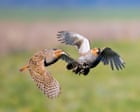
Brigg, Lincolnshire: As my attention turns to drilling next year’s cash crops, I create a disturbance out in the fields
Sometimes a moment of surprise has years of experience behind it. Last week as I was out in the oilseed rape fields applying a cocktail of microbe food (molasses, humates and fish paste), I had quite a shock when up went a large flock of grey partridges, a covey of 26. Twelve would be considered large, with red-legged partridges only ever appearing in pairs, but I’ve not seen 26 grey here in my lifetime.
This is testament to our nature‑friendly approach to farming, including this year planting specific margins to encourage sawfly larvae, crickets, weevils and ground beetles. These insects form the entire diet of grey partridges (and yellowhammers) during their first two weeks of life. In addition, rather than just planting overwinter cover crops and “catch” crops to mop up loose nutrients and protect the soil from the elements, I now add millet, the seed of which is a boost for older birds. The idea is to create a mosaic of habitats that connect through the landscape.
Continue reading...