
The ubiquity of video surveillance has recently given us the glorious nickname ‘Clicky Ponting’, bestowed on a player from Saltburn Cricket Club who was accused of ingloriously clicking his fingers to mimic the sound of a ball making contact with a bat, to dupe umpires into giving batters caught out. He was suspended by the club as the North Yorkshire and South Durham Cricket League began an investigation. This is serious stuff.
It won’t have a shortage of source footage, either. Local cricket teams record and upload so many video highlights that there are ample examples from Saltburn club games of opposition batters looking bemused, suspicious or straight-up accusatory when given out.
Elsewhere in Yorkshire, a cyclist came a cropper after sending a video to his local police service’s Operation Snap (the dashcam policing scheme that’s an increasingly common way for traffic offences to be investigated and prosecuted) claiming that a passing car hadn’t left him enough space.
Maybe, maybe not, but what is true is that, a few moments later, as he overtook a parked car, his footage showed him riding even closer to an oncoming vehicle. The BBC reports that a court decided this was riding without due care and attention, and it fined him £1200 including costs.
In both cases you could say video footage has seen justice done and that, because of the rise of cameras, you can’t do silly things and expect to get away with it. Many police services publish ‘Op Snap’ footage following successful prosecutions and a large proportion of them is people getting their comeuppance.
So why do I feel a sense of unease about these schemes? It’s not (or not only) because nobody loves a grass – particularly given that I would be extremely grateful if, say, I was robbed but some CCTV, or a passing dashcam, or a Ring doorbell had footage that meant the police decided it wasn’t worth ignoring my plight.
I do worry, though, that there are people who manipulate or instigate situations as some kind of hobby, just to send it in, and that there will be a prosecution of offences that a traffic police officer on the scene would be inclined let pass.
Former insurance claim handler Shaun Jobber, who makes videos analysing dashcam footage, reports that one of his viewers was prosecuted for undertaking: in a video clip there’s slow-ish traffic doggedly sitting in lanes three and four, while his viewer’s car eases past steadily in lane two, filmed and submitted from a car in lane one. The undertaking driver was offered a remedial course, three points or the option of going to court; they decided the court option was too risky and took the course. The police service can notch this up as a successful prosecution, but to what genuine end?
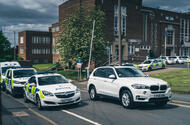
But my big worry is that Ops Snap various will be – or are being – used as poor substitutes for proper roads policing. Recent figures show that dedicated roads police officers now number just 3765, a fall of 25% from a decade ago. And when I wrote about this back in 2017, an officer emailed to say I’d be “shocked” at how short-handed they were even then.
London’s Metropolitan Police is currently deciding whether to scrap its dedicated roads policing department to save money, which former senior traffic commissioner Beverley Bell has described as “foolhardy in the extreme”.
This bit is anecdotal, I know, but three times lately I’ve seen cars being raced violently through traffic. And I do mean violently: not just a bit of light undertaking but swerving between lanes at speed. Surely caught on camera somewhere, so therefore something you’d only do if you think there’s no chance of being caught. If these cars are on cloned plates or bought but never registered to a new owner, where’s the peril? Believe the next car they swerve around could contain a highly skilled officer and they might think twice. As it is, a dashcam will see them but their plates can’t be traced to the right humans.
Meanwhile, more minor indiscretions do get nabbed, so the prosecution numbers look good and the process of Op-Snapping carries on. This is low-hanging-fruit policing: the hard stuff, the expensive, serious work, requiring highly trained officers, gets ignored.
Correlation is not causation, but as policing by camera has increased and roads police have decreased, reductions in road casualties have stalled. Op-Snapping is cheap and easy and it returns numbers. In principle, it’s hard to argue against. But it’s no substitute for the real thing.