
See more Toronto Sun on Google — save as a Preferred Source
On the face of it, it’s absurd that taxpayers are on the hook for building the proposed Pacific Link Pipeline when Canada is the world’s fourth-largest producer and exporter of oil, with the world’s fourth-largest reserves.
Logically, it should be the private sector ponying up the cost of up to $43.7 billion for the 1,250-km pipeline from Bruderheim, Alberta to the Roberts Bank Terminal in southern B.C., where the oil will then be shipped to global markets.
Instead, federal and Alberta taxpayers will pay up to 90% of the costs, with the privately-run Pembina Pipeline Corp. initially in for a non-binding 10% stake.
Eventually, affected Indigenous communities are slated to receive a 10% stake, backed by federal and Alberta government loan guarantees.
Not the original plan
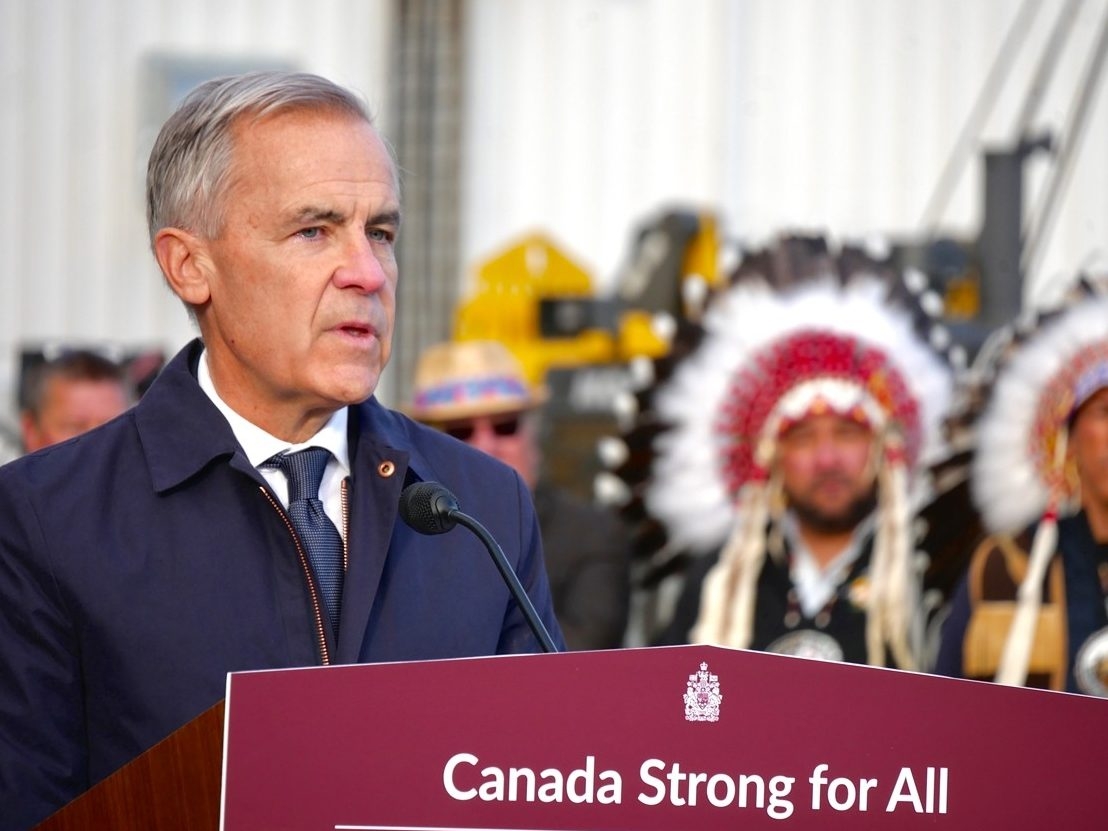
This wasn’t the original plan for Prime Minister Mark Carney’s first designated project of national interest.
The memorandum of understanding between Carney and Alberta Premier Danielle Smith in November 2025 was for the “construction of one or more private sector constructed and financed pipelines.”
Obviously, this is not that and one of the reasons is the onerous restrictions on pipeline construction and tanker access put in place by the previous Liberal government of Justin Trudeau, which the current Liberal government pledges to streamline.
The oil sector and pipeline companies, having been burned in the past by the length of time it takes to get regulatory approvals, plus meeting the legal test for consulting with Indigenous groups, have been reluctant to propose new pipelines themselves.
- GOLDSTEIN: With new pipeline, Mark Carney admits the economy trumps climate change
- LILLEY: New pipeline is great, the government owning it is not
- SNOBELEN: Carney moving to speed up nation-building projects
The next challenge will be to get oil companies and shippers to commit to moving up to one million barrels of oil a day through the Pacific Link Pipeline once it’s completed.
This will be done during a formal period known as “open season,” tentatively scheduled for next spring, with actual pipeline construction starting by Sept. 1, 2027, if everything proceeds as planed, which is a big if.
It also raises the question of whether any new major oil pipelines in Canada can be built without government financing.
This given the fact that in addition to the Pacific Link Pipeline being publicly financed, the federal government paid $34 billion for the 1,150-km TMX pipeline expansion from Alberta to Burnaby, B.C., after taking over the project from Kinder Morgan.