
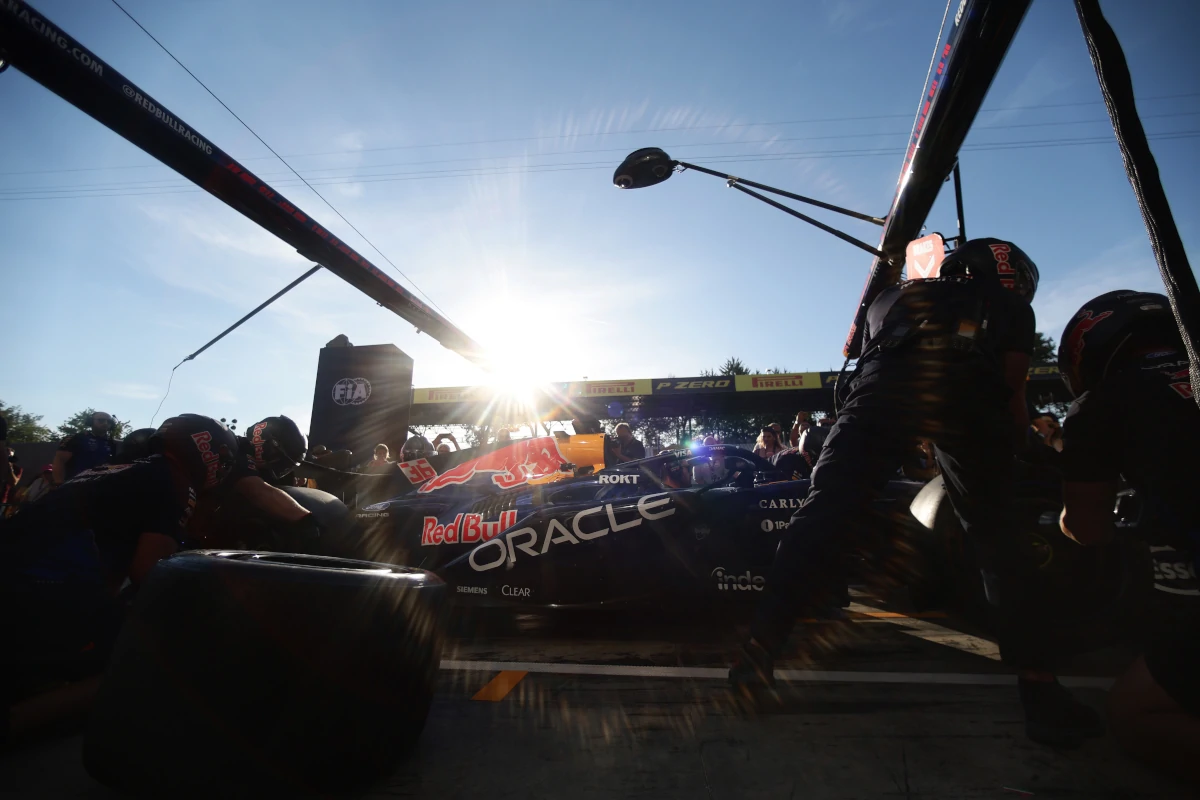
You read that right: Formula 1 races next season are set to be shorter because the sport has gotten itself into such a twist over its current engine regulations. Awkward.
You’ll remember that after the first few grands prix of 2026, it was decided that the 50:50-ish power split between the cars’ e-motors and 1.6-liter V6s wasn’t working, and that changes would be made to push the balance back more heavily in favor of internal combustion over the next couple of seasons.
PHOTO BY Red Bull Content Pool
That was to prevent—or at least reduce—the drastic levels of coasting that drivers had to do to keep their batteries charged, which created the so-called ‘yo-yo racing’ that made the early rounds of the championship desperately chaotic but also wildly inauthentic. So far so sensible.
OTHER STORIES YOU MIGHT HAVE MISSED:
Opinion: Russell can do no wrong—except be victim to bad timing in F1
Get those flight tickets ready: F1 is returning to Sepang in October
But those changes include upping the fuel flow rate—the amount of gasoline the cars can guzzle in a given time—meaning they wouldn’t have enough in the tank to complete the full 305km race distance at some events. At least not without hypermiling it like an EV on its last dregs of e-juice. Effectively...they wouldn’t have enough range. This sport is funny sometimes.
PHOTO BY McLaren Mastercard Formula 1 Team
‘Fine,’ you may think, ‘just make the fuel tanks bigger.’ A very good idea. Except several teams had planned to carry over their cars into next year and simply don’t have room within their packaging. Nor the budget to design an entirely new car.
So according to reports, the wheels are now in motion to bring the official race distance down to 290km, except for Monaco, which was already the exception at 260km because its average speeds are that much lower. So the British Grand Prix, for example, would be 50 laps, not 52.
Watch out for the crazed, nameless X accounts demanding this should be applied retrospectively to Abu Dhabi 2021...
PHOTO BY TopGear.com
NOTE: This article first appeared on TopGear.com. Minor edits have been made.