
See more Toronto Sun on Google — save as a Preferred Source
A recent incident undersells how hot one pressing issue is for the local fire department.
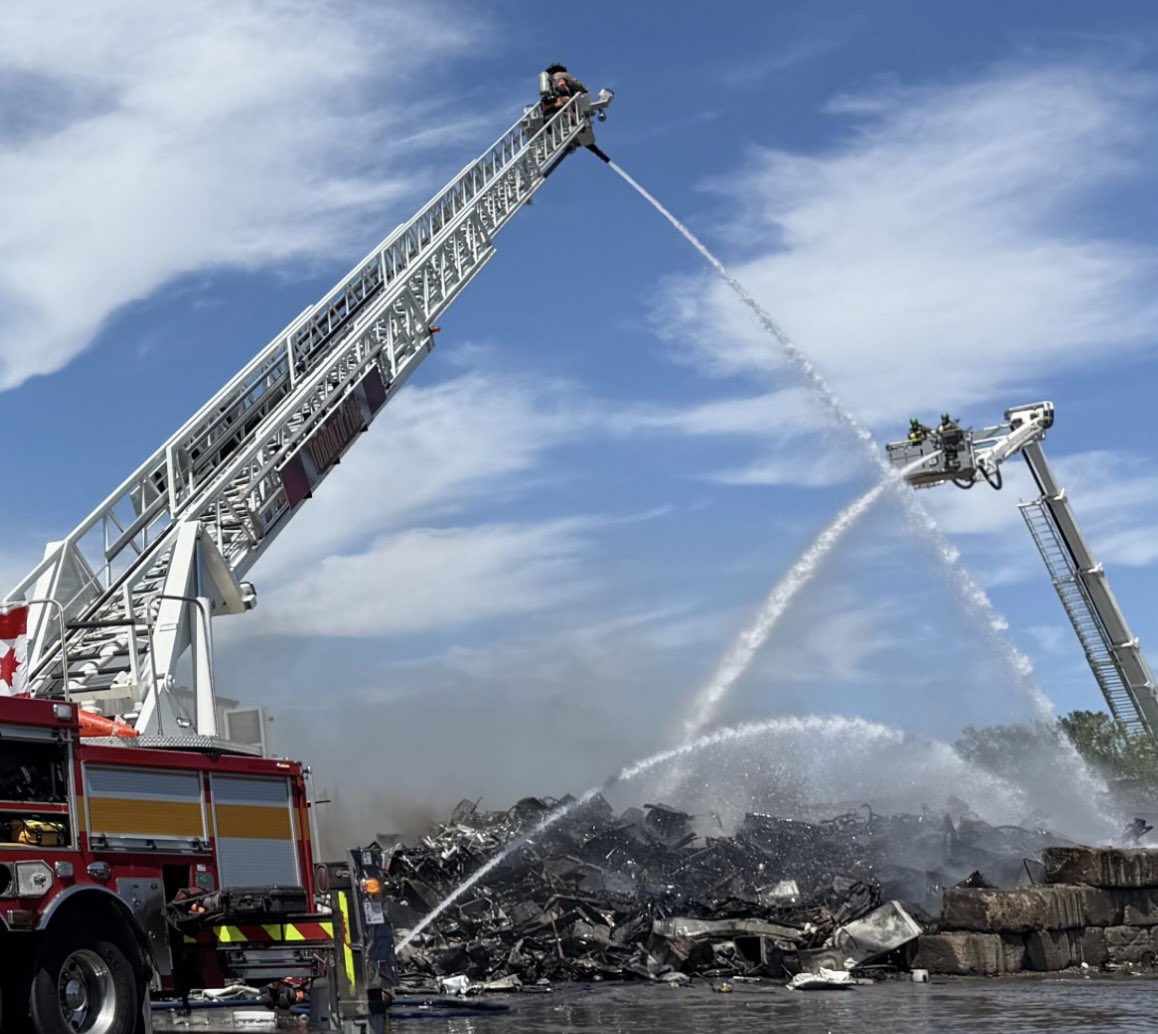
On Aug. 13, the Toronto Fire Service responded to a garbage truck fire in Etobicoke, and identified disposed lithium-ion batteries as the culprit.
“Improperly discarded batteries can ignite in garbage trucks, transfer stations, recycling facilities, and waste processing operations,” Toronto Fire’s Steven D. Wilson, division chief, community risk reduction, told the Toronto Sun in a written statement.
“Municipal waste workers and contractors are at risk when lithium-ion batteries are disposed of in household garbage, recycling bins, or organics streams rather than through approved hazardous waste collection programs.”
Randy Narine, president of the lithium-ion battery testing company Clean Core Research, didn’t waste any time explaining the dangers of improper disposal.
“Think about it, you have garbage in a garbage truck, and now the garbage truck is compacting everything and imagine if a lithium-ion battery is in there, now talk about the physical abuse, now you have just crushed it,” he said. “And guess what is happening? And now it has garbage as a fuel load, and you have a fire that is just going to go.”
Clean Core Research is a Canadian not-for-profit corporation. Their work focuses on the emerging risks associated with lithium-ion batteries, hydrogen systems, energy storage, electric transportation, and other clean energy technologies.
Crushing action
Narine says the crushing action within the compactor, as thousands of kilos of garbage is added, is mechanical and physical abuse.
“A battery will start failing because you are causing the inners of that battery to be moved around, and by shifting the innards of the battery, you are allowing two chemicals that are in the battery, that should never touch, to touch,” Narine said.
When graphite and lithium cobalt oxide interact, they short circuit, creating an uncontrolled surge of electrical current. The discharge generates intense heat, which can break down the internal components and trigger a chain reaction known as thermal runaway.
Thermal runaway is a chain reaction where an increase in temperature changes the internal chemistry, generating more heat. This cycle causes temperatures to spike, resulting in intense fires, explosions, and toxic gas release.
A battery fire in a confined space like the back of a garbage truck is like torching up a bale of hay.
“A bale is very difficult to put out because the fire becomes so deeply seeded in there,” Narine said. “The hay is so dense, and it is very hard to get that water to where it needs to go, while it is burning from the inside.”
- Big things come in small packages, Vapes are ‘blowing up’
- Micromobility devices leading source of lithium-ion battery fires in Toronto
Firefighters overburdened
Currently, the fire service said it is overburdened by the number of lithium-ion battery fires to date.
“Toronto Fire has responded to 89 lithium-ion battery-related fire incidents, not including motor vehicle collisions involving e-bikes and scooters,” Wilson said. There were 91 similar incidents last year. They have seen a 200% increase since 2022.
Lithium-ion batteries should never be placed in the garbage, recycling or green bin system.
The city encourages residents to bring used lithium-ion batteries to one of the city’s drop-off depots or a community environment day for safe disposal.
Residents must ensure batteries are removed from the device before bringing them to a drop-off depot. Batteries attached to a device will not be accepted.
Household hazardous waste and electronic waste drop off is free of charge.
ganderson@postmedia.com