
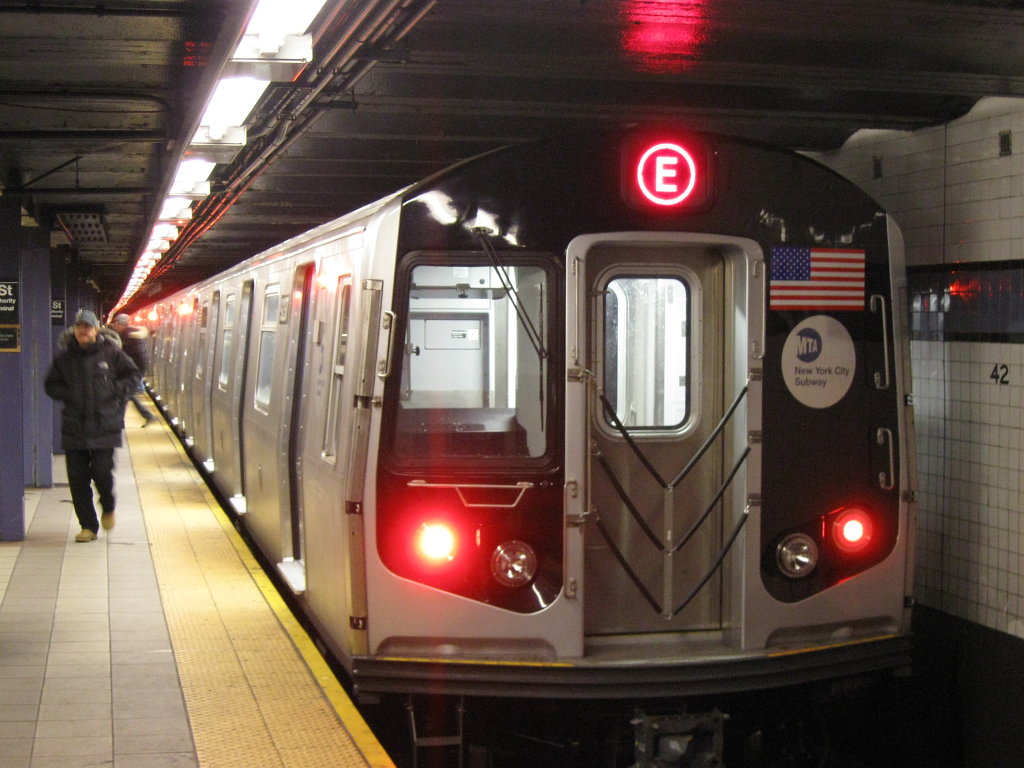
You might think that if you dug some tunnels down into the ground where you could be out of the sunshine, that you might find them to be relatively cool and comfortable inside. Yet, fill those tunnels with trains and supporting equipment and millions of commuters, and you’ll instead find yourself sweltering in the heat.
New York’s subways are too hot for comfort, and have been for some time. Unfortunately, unlike any old regular building, you can’t just air condition a subway and call it done. Instead, authorities are looking for other solutions to beat the heat on the famous underground transit network.
Steal My SunshineThe problem of excess heat is not unique to the New York subway. Similar issues are found in underground rail systems around the world; the London Underground is infamously hot and uncomfortable, to the point one section is referred to as the Central Heat Line. The cause is simple enough—heat pours off the trains, their motors, their brakes, and even commuters, and it builds up in the system. Air conditioned trains only add to the issue, too. They expend energy to pump heat out of train cabins, but they’re just expelling it into the system around them while adding a little bonus heat to boot. It doesn’t help that many subway systems were first built well over 100 years ago, and aren’t exactly spacious or well designed for dealing with excess heat that wasn’t a problem when they first opened and ran at lower capacity.
High temperatures have long been a problem at the Brooklyn Bridge station. Pictured is a system that was tested all the way back in 1906, which used groundwater to try and cool the station. Credit: Internet Archive Book Images, no restrictionsNow, typically, when a building gets too hot, we look at using air conditioning to bring temperatures down. However, the unique nature of subways makes this very difficult to execute. Subways have miles upon miles of tunnels that are open to the platforms, so an air conditioning system would just be pumping cold air off into these deep voids to little local effect. Subways are also full of open entrances which don’t help, either. As much as you could try and locally cool areas of the subway, even a bunch of large HVAC units would barely make a dent.
In New York, though, the problem has gotten to the point that the city and state have decided to act. The plan is to study the application of a Thermal Energy Network (TEN) to the subway, which will take place as part of upgrades being made to the Brooklyn Bridge 4/5/6 and Chambers Street J/Z station complex. Notably, Brooklyn Bridge 4/5/6 regularly hits temperatures of 96 °F (35 °C) during the summer months, giving it the unenviable title of one of the hottest stations in the subway network. This makes it a prime candidate for any sort of heat mitigation effort.
The Chambers Street station has been long overdue for renewal. As part of pending upgrades, a thermal energy network (TEN) will be installed to try and bring down temperatures for commuters. Credit: IliketrainsR211T, CC BY-SA 4.0A thermal energy network (TEN) is designed to move heat between buildings, taking it from where it isn’t wanted and moving it to somewhere it can be more useful. It involves drilling grids of boreholes hundreds of feet deep into the ground, where temperatures stay much cooler and more stable—as low as 55 °F (12 °C). Pipes are then installed around the subway station that run into those boreholes. Circulate fluid through the station pipes, and the fluid picks up heat from the subway station. That fluid is then run into the boreholes, where it gives up its heat and is chilled, and then the fluid is recirculated to the station to continue the cycle.
Over time, the bedrock around the boreholes heats up, and it can then be used as a sort of thermal battery in winter. Fluid can then be circulated into the boreholes to heat it up, and then that fluid can be pumped to other municipal buildings that need heat in the cooler months.
The technology isn’t new—geothermal boreholes have been used for some time across Europe and Canada as a way to achieve cooling. There’s even a system in Coney Island, where 153 geothermal wells are used to provide comfort for a condo built in 2019. Still, implementing a system big enough to bring down the excessively high temperatures in New York’s subway system could yet prove a challenge. For now, the project is a study to explore whether such a concept could make a meaningful difference to user comfort in the station. If it proves workable, though, expect there to be huge demand from commuters to roll out similar systems across other stations in New York and beyond. The sweaty subway could yet be a thing of the past, merely requiring the engineering and will to do so.
Featured image: “NYC Subway R160A 9237 on the E” by [Adam E. Moreira].