
Stretching 18km between modern day Kwai Chung (then known as Gin Drinkers Bay) to Port Shelter in Sai Kung, the Gin Drinkers Line was a massive defensive structure built by the British army, dubbed as 'the Maginot line of the East'.
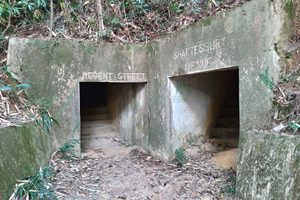
Construction on the line began in 1936, and took 2 years to complete. The lynch-pin of the entire line was the Shing Mun Redoubt, comprised of a number of pillboxes joined by an intricate network of tunnels, together with the Command Post and the principal artillery observation post for the whole position. Many of the tunnels were named after notable London landmarks to make navigation easier for the troops.
The British believed the line to be capable of holding the Japanese invasion at bay for several weeks. But once the Japanese army launched their assault from the north on December 8th, 1941, the line fell after only 2 days. The surviving defenders hastily retreated to Hong Kong Island, remaining there until the British forces surrendered 2 weeks later on Christmas Day.
While impressively fortified, the Gin Drinkers Line had far too many deficiencies to enable it to be adequately defended. The main issue stemmed from too few troops being stationed at the line. The Shing Mun Redoubt had the capacity for 120 soldiers, but was garrisoned by only 43 men. The defensive positions were spread out enough that outposts and patrolmen were often completely isolated and unable to support to each other. This encouraged the Japanese to launch surprise attacks, often infiltrating the undermanned line completely unopposed and unnoticed.
Much of the western part of the line was either completely destroyed or has since been overgrown by nature. The eastern section near the Shing Mun Reservoir remains relatively intact and easy to access, allowing visitors to navigate Regent Street, Charing Cross, Shaftesbury Avenue and Haymarket, albeit in far less glamorous surroundings than their London namesakes.