
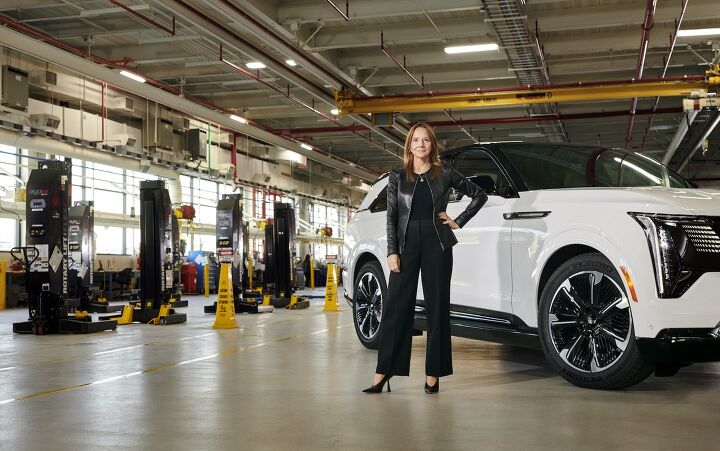
General Motors sits in an unusual spot for a legacy automaker. It sells a wide range of electric vehicles alongside a fleet of profitable gas-powered trucks and SUVs, and it has done so without building the hybrid bridge that nearly every rival leaned on. The only hybrid GM currently sells in the United States is the Corvette E-Ray. Everything else is either a combustion vehicle or a battery-electric one, with almost nothing in between.
That looks like a problem right now. EV sales have softened, hybrids are gaining ground, and dealers want product GM does not have. But the case that GM guessed wrong is weaker than it appears. There is a real argument that the company's early, expensive commitment to a broad EV lineup positions it to win if the regulatory and consumer winds shift back. This guide walks through where GM stands, why it skipped hybrids, what that has cost it so far, and what would have to happen for the bet to pay off.
GM is the second-largest seller of electric vehicles in the U.S., behind Tesla and well ahead of everyone else. In one recent full year, GM's EV market share rose to 13.2 percent from 8.8 percent the prior year, with sales climbing from 114,426 units to 169,793. That growth came as Tesla's dominance slipped, falling from 48.7 percent of the market to 46 percent even though it still moved close to 589,000 vehicles.
The gains were broad across GM's brands. Chevrolet rose to roughly 92,000 EV sales, good for second place among individual brands. Cadillac was the standout climber, nearly doubling its volume to about 49,000 units and jumping to 3.8 percent market share on the strength of a growing lineup. That breadth is the whole point of GM's strategy, and it is what separated GM from rivals who fielded only a handful of electric models.
Ford's chief executive made the contrast explicit. CEO Jim Farley said his company has "been No. 2 to Tesla for three years now," and that "GM is passing us now, which is good for them, but I think we have three models, they have like 12 models." He added the obvious follow-up: With that many models and that much investment, GM ought to be accelerating faster than it is.
GM's leadership treated hybrids as a temporary technology rather than a destination. CEO Mary Barra has said the company would look into offering plug-in hybrids, but she framed the technology as not "the end game because it's not zero emission." The logic was that spending heavily to build hybrids would divert money and engineering from the electric future GM believed was coming.
That belief was grounded in the regulatory environment GM planned around. Barra has said that "up until a year ago, we were on a journey to a regulatory environment where we had to drive EVs." GM's original public pledge went even further: the company committed to producing only electric vehicles by 2035. That target has largely been scrapped, but it shaped a decade of capital spending and product planning.
The irony is that GM was early to hybrids and then walked away from them. The company developed hybrid technology ahead of many rivals and even beat everyone to market with a hybrid truck. It chose to treat that as an interim step rather than a product line to sustain. The industry's actual path has run the other way, with hybrids proving durable and popular while pure EV demand cooled.
The near-term price of GM's all-in EV bet has been steep and visible on factory floors. GM invested $2.2 billion to convert its Factory Zero plant in Detroit-Hamtramck for electric trucks and SUVs, then slashed shifts and laid off hundreds of workers there as demand fell short. At the Fairfax Assembly plant in Kansas, GM changed 900 workers from temporary to indefinite layoff while retooling the site to build the gas-powered Equinox.
The reversals extended to powertrain plants. GM's Toledo Propulsion Systems facility was the company's first US powertrain plant transformed for EV work, at a cost the company put at $760 million in 2022. GM later told workers it would remove the equipment to build electric drive units there entirely. One local union leader called the news "a punch to the gut," noting members had been excited to build the parts just months earlier. GM also received $480 million in Michigan state grants to expand its Orion Assembly plant for EVs, then redirected that plant to full-size gas pickups and the Cadillac Escalade.
The demand picture worsened further when Congress ended the federal tax credit of up to $7,500 for new EV buyers and $4,000 for qualifying used EVs, years ahead of its scheduled expiration. GM and Ford briefly floated extending incentives through leases, but GM backed out after a former-dealer senator raised concerns. Losing that subsidy removes a major prop under EV pricing and makes the hybrid gap look more painful in the short run.
Here is where the story turns. GM's own executives insist the deep, early investment was not a mistake, and the numbers give them cover. GM estimates its overall market share across all propulsion types recently reached 17.2 percent, the highest in a decade. Duncan Aldred, GM's president of North America, credited EVs directly: "We believe EVs will remain a strong part of the GM portfolio. Quite honestly, it's one of the reasons why our market share has grown so much this year."
Analysts are not writing the strategy off either. John Murphy of Murphy Automotive Partners expects hybrid sales to reach 34 percent of U.S. sales within several years, yet he still argues it makes sense for GM to emphasize its highly profitable gas trucks and SUVs while its EV lineup positions the company for tighter future regulation. In his words, GM's strategy "is not as clear a major mistake as I think some people believe."
The bet rests on a simple premise: GM has already paid the enormous cost of building a broad EV portfolio, and that lead is expensive to replicate. If a future administration tightens fuel-economy rules, if consumer acceptance of EVs catches up to acceptance of hybrids, and if charging and pricing pressures ease, GM would be holding the deepest electric lineup of any traditional automaker. Even Toyota, the hybrid leader, is now rolling out a raft of EVs, and Ford is developing new electric models to fill out its thin roster. Everyone is heading toward the same destination GM committed to early.
If you are tracking whether GM's bet pays off, watch three things. The first is regulation: a shift toward stricter fuel-economy or emissions rules would reward GM's electric investment and punish rivals who leaned on hybrids. The second is whether GM relents and adds plug-in hybrids anyway. Dealers are pushing hard, with one New Jersey dealer saying he hopes "GM can adapt and come up with a way to build hybrids," and Barra has left the door open to plug-ins.
The third is the market itself. If EV demand recovers and hybrid enthusiasm plateaus, GM's twelve-model lineup gives it a head start no competitor can quickly match. Until then, the profitable gas trucks pay the bills, market share sits at a decade high, and the question of whether GM guessed wrong stays open. The straight-line story says GM blew it. The actual data is messier, and messier tends to favor the company that already spent the money.
[Images: General Motors]
Become a TTAC insider. Get the latest news, features, TTAC takes, and everything else that gets to the truth about cars first by subscribing to our newsletter.