
See more Toronto Sun on Google — save as a Preferred Source
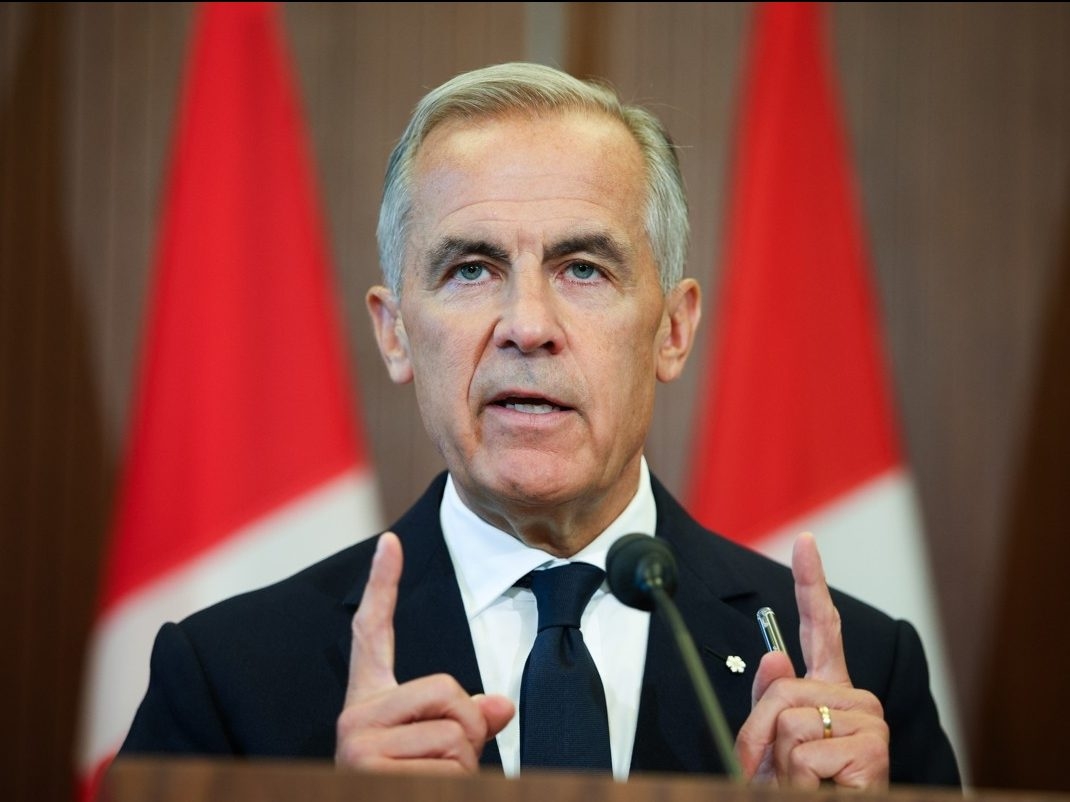
In responding to the breakdown of Canada-U.S. trade negotiations late Friday with dollar-for-dollar matching counter tariffs against the U.S. starting on Sept. 8, Prime Minister Mark Carney is embarking on a strategy he said was unrealistic a year ago.
This actually marks the second time he has reversed policy on the issue of dollar-for-dollar retaliatory tariffs.
When he was running for the Liberal leadership, Carney said in response to tariffs imposed on Canada by U.S. Present Donald Trump that, “dollar-for-dollar retaliatory tariffs by Canada should be a given … aimed where their impacts in the United States will be felt the hardest.”
But after becoming prime minister, Carney quickly reversed his argument, saying dollar-for-dollar counter-tariffs against the U.S. were unrealistic since our economy is “a tenth the size of the U.S.”
After he won the election, Carney removed most of Canada’s counter-tariffs on U.S. imports that were in compliance with the Canada-U.S.-Mexico Agreement (CUSMA) on trade, although he maintained sectoral counter-tariffs on steel, aluminum and autos in response to tariffs initiated by Trump.
Carney said on Saturday the new dollar-for-dollar counter tariffs he will announce on Sept. 8 in response to Trump’s new round of 50% tariffs on $28 billion worth of Canadian goods – including everything from wine, to plastics, hockey sticks, electronics and forestry – will be strategically designed in order to be effective.
- WARMINGTON: Canada and U.S. plunged into full-on tariff war as trade talks collapse
- LILLEY: Carney walks away, now Canada faces the tariff fallout
- KINSELLA: Mark Carney walks away from Donald Trump's extortion table
New spending to bail out businesses, workers, industries
On the same day he will announce new government spending to bail out businesses, workers and industries negatively impacted by tariffs, beyond the $25 billion it has already spent.
The practical impact of an escalating tariff war between Canada and the U.S. will be higher consumer prices, higher inflation and more job losses in both countries.
That’s why tariff wars are bad public policy and economically destructive to large, small and medium-sized businesses.
The tariff war between Canada and the U.S. could escalate further if, as U.S. trade representative Jamieson Greer has said, the U.S. imposes more tariffs on Canadian goods in response to the counter-tariffs Carney will announce on Sept. 8, and the Carney government responds to that with new matching tariffs.
Carney said he had no choice but to impose new counter tariffs given that Trump started the trade war by attacking Canada with the aim not only of damaging Canada economically, but eroding Canadian sovereignty.
RECOMMENDED VIDEO
Economic cost to Canadians will increase
Whatever the reason, the economic cost to Canadians of the ongoing tariff war will increase the longer it goes on.
Canada lost 51,800 manufacturing jobs in the 12 months after Trump announced his so-called “Liberation Day” tariffs on April 2, 2025 of 50% on steel and aluminum, and 25% on the auto sector.
Prior to the collapse of the trade talks between Canada and the U.S. late Friday, University of Calgary economist Trevor Tombe estimated Trump’s latest round of 50% tariffs on $28 billion worth of Canadian goods would result in almost 90,000 direct and indirect job losses across Canada, including 36,000 in Ontario, 18,000 in Quebec, 11,000 in B.C. and 9,000 in Alberta.
Writing in thehub.ca, Tombe said this alone would raise the current national unemployment rate of 6.4% to 6.8%.
“Using the full list of items subject to U.S. tariffs, I estimate that the most exposed sectors are machinery and electronics, plastics and rubber, furniture, toys, wood products, chemicals, food products, and clothing,” Tombe wrote.
“Roughly half of textile exports to the United States would be affected, and nearly as high a share of furniture exports.”
A report earlier this month by the Canadian American Business Council done by Oxford Economics estimated an all-out trade war between Canada and the U.S. leading to a breakdown of CUSMA would result in 102,000 lost jobs in Canada next year.
It would also mean a cumulative loss of $5,987 per Canadian household over 10 years and a $271 billion loss in GDP over the same period.
“Four decades of economic integration (between Canada and the U.S.) have overwhelmingly generated economic benefits for American and Canadian businesses, workers and consumers, and those benefits would be placed at risk under all elevated-tariff scenarios,” the report concludes.
lgoldstein@postmedia.com