
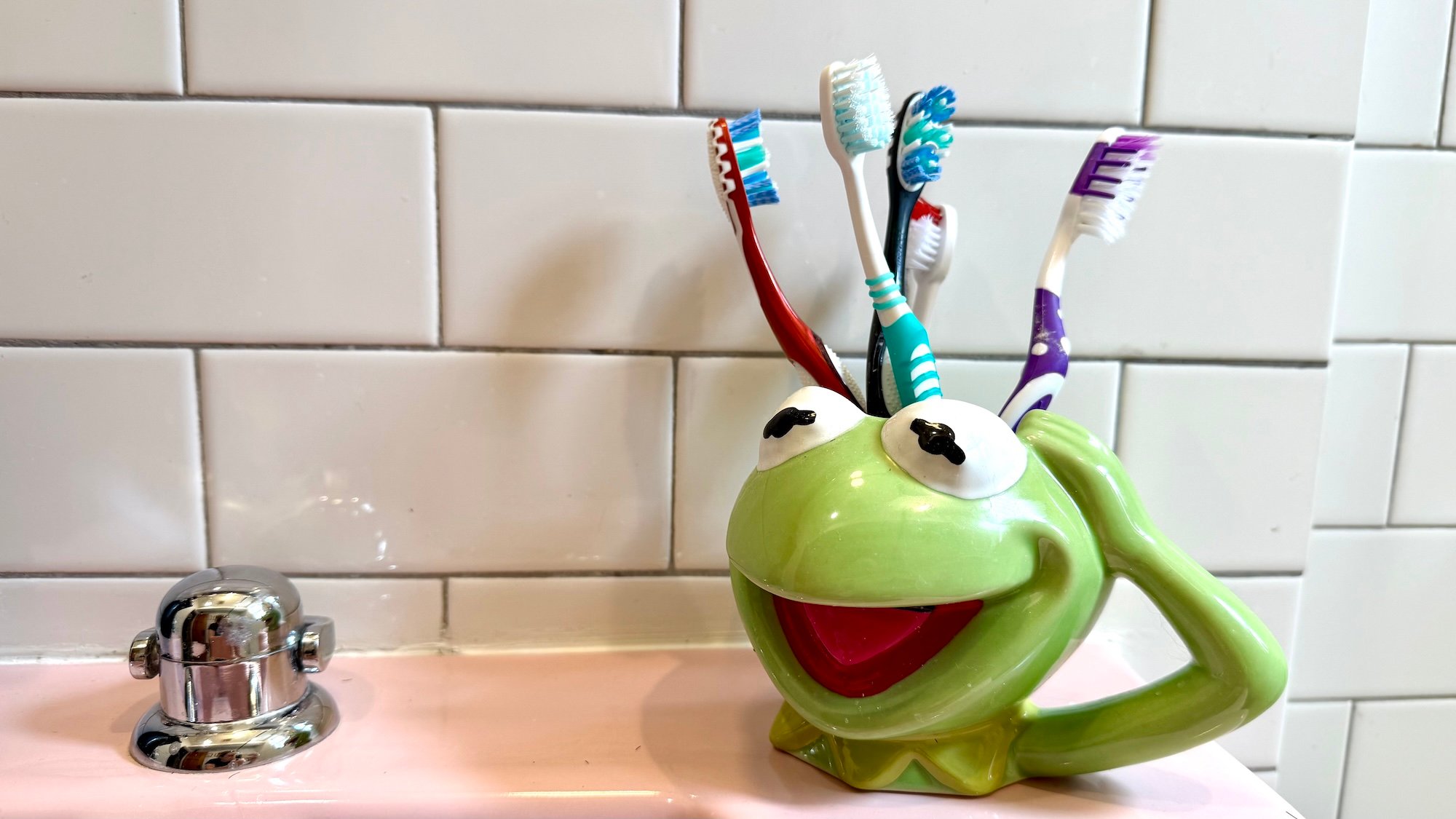
You put your toothbrush in your mouth. You store it in your bathroom, near your toilet. If that’s something you’d rather not think about, I understand.
In 2015, a grad student at Quinnipiac University found fecal matter on toothbrushes in communal bathrooms, research that was presented at the annual meeting of the American Society for Microbiology. It was certainly attention grabbing, prompting widespread media coverage. But besides driving clicks, and making people feel generally uncomfortable, what happened after?
Not much, it turns out. There’s no evidence connecting this phenomenon with negative health effects, according to the American Dental Association (ADA). But this is a story that seems to pop up every once in a while, so let’s talk a bit about the research.
Toilet plumes are real Your toilet plumes aren’t actually green.Image: John P. Crimaldi, Aaron C. True, Karl G. Linden, Mark T. Hernandez, Lars T. Larson & Anna K. Pauls
So, how do bacteria from the fecal matter end up on toothbrushes? The common answer is toilet plumes, and they are a very real thing. A 2022 study published in Scientific Reports by researchers at the University of Colorado in Boulder visually shows how far a flushing toilet pushes particles. The photos, which use lasers to show aerosols ejected from the toilet during flushing, show that particles are ejected 1.5 meters (4.9 feet) into the air. There’s a YouTube video you can watch, if you want to ruin your day.
So, if your toothbrush is right next to your toilet, consider moving it further away. But are there other things you can do?
The seemingly obvious idea is to close the toilet lid before flushing, but that might not actually work. A 2024 study published in the American Journal of Infection Control by researchers at the University of Arizona in Tucson suggests not. That study, which involved inoculating toilets with surrogates for human viruses and flushing them with the lid either open or closed, found that toilet seat position had “no significant effect” on cross-contamination. What did reduce contamination is regularly disinfecting the toilet using a brush and an antimicrobial cleaner.
You also might think that covering your toothbrush will help, but the ADA does not recommend this. “Storing a moist toothbrush in a closed container promotes microbial growth more so than leaving it exposed to the open air,” they explain. A moist toothbrush is a petri dish for bacteria, so it’s important to make sure it actually dries during the day.
But you probably don’t need to worry about itThis all sounds pretty gross, but there’s good news: no study has ever connected this phenomenon with an actual illness. The ADA states this clearly: “While toothbrushes have been shown to harbor bacteria, there is no evidence that these bacteria cause adverse health effects.” They do state that anyone worried can sanitize their toothbrushes with Listerine, but emphasize that it’s not necessary.
And there’s research to support this. A 2021 study published in the journal Microbiome by researchers at Northwestern University asked people to send in used toothbrushes for analysis. The results show that things like toothbrush placement, covering, and toilet seat positions don’t have a lot of impact on the sorts of microbes residing on your toothbrush. “Dental hygiene and bathroom features, among other factors, are weakly associated with the toothbrush microbiomes,” the study concludes.
“I’m not saying that you can’t get toilet aerosols on your toothbrush when you flush the toilet,” Erica Hartmann, one of the researchers, said in a press release. “But, based on what we saw in our study, the overwhelming majority of microbes on your toothbrush probably came from your mouth. We found that the microbes on toothbrushes have a lot in common with the mouth and skin and very little in common with the human gut.”
Basically, there’s not actually a lot to worry about here. Your toothbrush is full of bacteria, most of which came from your mouth. And the few that came from your toilet aren’t a problem—or, at least, there’s no definitive proof that they are. This probably isn’t something you need to worry about (but seriously, make sure your toothbrush is drying between brushings).
The post How gross is it to leave a toothbrush exposed in the bathroom? appeared first on Popular Science.