
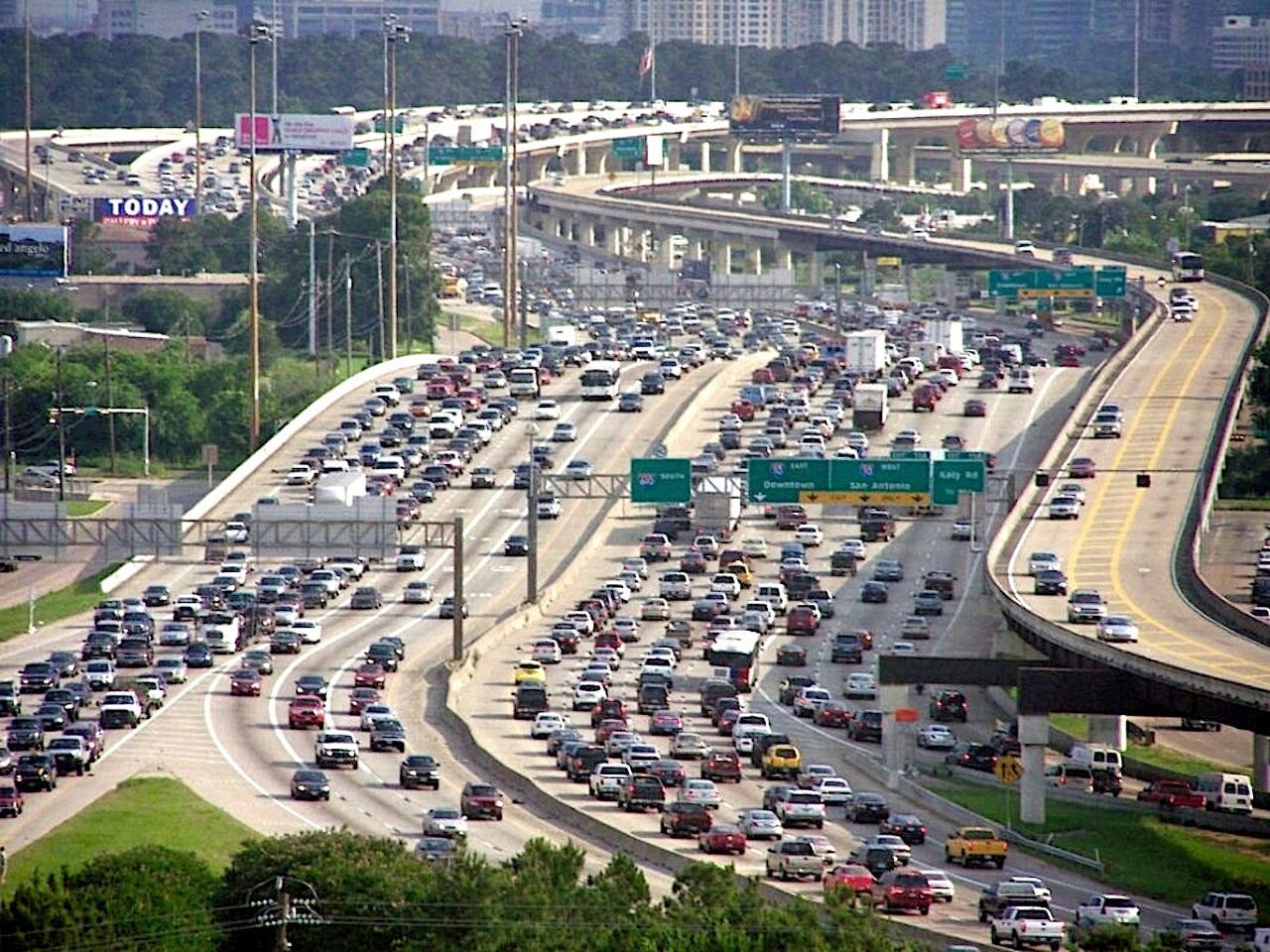
Holiday weeks put more drivers on the road than almost any other stretch of the year, and electric cars add a wrinkle that gas drivers never think about: where, when, and how long you stop to charge. Done right, you can cross a busy travel corridor with no waits and a lower bill. Done wrong, you land at the one crowded Supercharger halfway between two cities on the worst afternoon of the year and sit in a line. What follows is the process, in the order you should run it, to avoid that.
You need a route planning app, the charging apps for the networks on your path, payment set up in advance, and if you can swing it, a portable Level 2 charger. That is the whole toolkit. The rest is timing.
If you have home charging, plug in the night before so the car is ready in the morning. Tesla's usual warning against topping to 100 percent every day is meant for batteries left sitting full for weeks, and a trip departure is precisely the case that warning carves out. Charging all the way up occasionally for a trip is fine. The one rule: after the charge finishes, leave soon, especially in cold weather.
No home charging? Run a session at a DC fast charger the night before, while fewer drivers are rushing to leave. Some fast-charging companies offer a discount for off-peak hours, so charging the night before can save both time and money.
Route planning apps such as A Better Route Planner, Plugshare, and Google Maps weigh each path against your car's range, and they will suggest a detour if a slightly different route delivers a big range boost while staying nearly as quick. They map out each stop by efficiency, destination, the state of charge you want on arrival, and road conditions, and you can tune them to the efficiency you actually get or to how often you want to stop.
Route choice itself affects range. EVs burn more energy at higher speeds and up hills, so a flatter or slower route can stretch what you have. One counterintuitive point: an EV tends to do better in stop-and-go traffic than on the open highway, thanks to regenerative braking, the opposite of a gas car. You can also conserve by keeping the climate control off or in eco mode and avoiding hard acceleration.
An increasing number of highway stops now cluster several competing stations together near high-power infrastructure. Brands you might find side by side include Tesla Supercharging, Ionna Rechargery, EV Go, Circle K, and Shell. Research which companies sit on your route, then install their apps and set up payment before you arrive. Fumbling with a new account at the plug is how a 20-minute stop becomes an hour.
Ports matter too. NACS is spreading fast but is not everywhere, and not every station has CCS ports either. Carrying an adapter for both NACS and CCS prevents long waits when your preferred port is busy.
The data is blunt about when to charge. Paren, which monitors public charging across every network, pegged the worst Thanksgiving window at roughly 10 a.m. to 2 p.m., with the stretch from about midnight to 6 a.m. drawing the fewest cars. The best times to plug in are early morning before 10 a.m. or overnight. The midday line forms for a simple reason: everyone who left at 8 a.m. reaches that same stop two or three hours down the road.
So move your stop earlier, or stop for lunch and let the crowd clear. On Thanksgiving week, the Wednesday before is the busiest outbound day and the Sunday after the busiest return, so plan those two around the middle of the day especially.
Tesla's trip planner tends to funnel drivers to the same handful of efficient stops, usually the site around two to three hours from a major city. Pulling off 20 minutes early at a quieter location, perhaps a small town, a hotel, or a station just off the highway, usually clears the wait when the obvious one is nearly full. If a main stop shows few free stalls, pull in one stop earlier and charge to around 70%.
Keep a backup Supercharger for every stop. On a Tesla, you can check busyness ahead of time: select the Supercharger from the car's map or the app to see how many stalls are free, and the trip planner factors in live availability.
Charging slows sharply once a battery passes 80 percent. Getting to 80 percent might take 15 to 20 minutes, with another 20 or more to reach 100 percent. On a busy day, a pair of short stops to about 70 percent comes out ahead of a single long haul to 95 percent, because the charge rate is highest when the battery is nearly empty and tapers as it fills. Topping to 100 percent at a crowded Supercharger holds up the stall, and it is likely quicker to charge again closer to your destination anyway. When others are waiting, unplugging at 80% and moving on is courteous.
At its busiest sites, Tesla may also hold your charge limit down and tack on congestion fees once the lot is full and your battery is nearly topped off. And idle fees apply once your session ends and you are still plugged in, higher when the site is busy, so move the car promptly.
Make the Supercharger your navigation destination so the car warms the battery en route and arrives ready to take a higher charge rate. If you switch to a backup, make that site the destination as well so the warming continues. In cold weather, this matters more than any other on-road strategy. A cold battery is the usual culprit behind a planned 20-minute stop stretching to 40.
In winter, aim to reach each stop with a 15 percent to 20 percent buffer instead of 5 percent, so a busy site or a closed road does not strand you. Warm the cabin and battery before you pull out while the car is still plugged in at home, so the warming draws from the grid rather than your pack.
The move that eliminates a Supercharger stop entirely is charging where you are staying. A regular 120V outlet adds meaningful range over two or three nights, and a 240V dryer or range outlet, such as the NEMA 14-50 wired into many garages, can bring most batteries back to full overnight. Staying two or more nights lets you leave with a full battery and no fast-charging stop at all.
A portable Level 2 charger is worth buying before a trip; one night on 240V can replace a Supercharger stop each way for anyone who visits the same relatives often. When plugging in at a host's home, ask first, pick an outlet that is not sharing a circuit with a space heater, and keep the cable off any extension cord.
Done well, you leave home full, stop two or three times in the quiet hours, hit 80 percent and roll on, and top up overnight at your destination. Waits network-wide are genuinely rare: Tesla reports that barely 0.76 percent of drivers faced any wait across the 2025 Thanksgiving weekend, out of more than 2 million sessions. But that national average hides hot spots, and a 12-stall location set halfway along a corridor linking two major cities, on a Wednesday afternoon, can still have a line. EVs from other brands running NACS ports or adapters now pile demand onto exactly those sites.
The errors to avoid are predictable: charging into the 10 a.m. to 2 p.m. crush, topping to 100 percent at a packed stall, skipping preconditioning in the cold, and showing up to an unfamiliar network with no app and no payment set up. Fix those four, keep a backup stop in your pocket, and the drive home stops being the hard part.
[Image: AAA, Lucid, PlugShare, General Motors, Stellantis, Ionna]
Become a TTAC insider. Get the latest news, features, TTAC takes, and everything else that gets to the truth about cars first by subscribing to our newsletter.