
See more Toronto Sun on Google — save as a Preferred Source
You can’t really fault the legal eagles defending a trio of killers for using the old “cruel and unusual punishment” gambit.
After all, this is Canada, and with more than 800 Justin Trudeau appointees on the bench, it might just work. But let’s rewind.
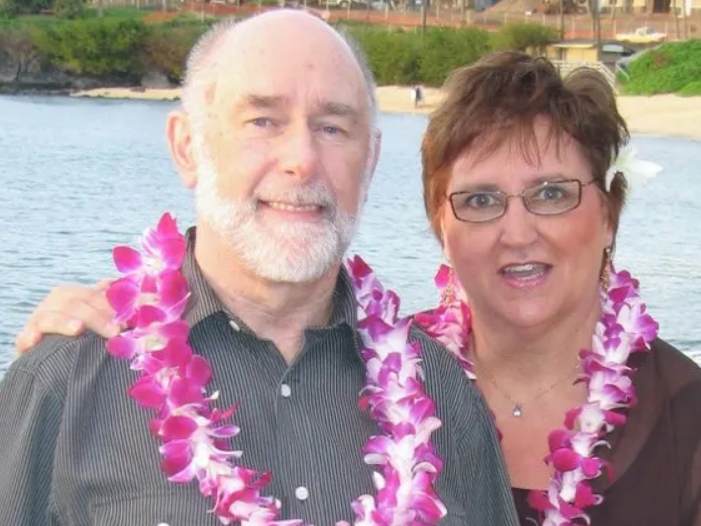
On May 9, 2022, the lives of elderly Abbotsford, B.C. couple Joanne and Arnold De Jong were snuffed out in a ghastly torture double murder. At least one of the monsters had been in the country only a matter of weeks.
‘Cruel and unusual punishment’?
And in May, Gurkaran Singh, Khushveer Toor and Abhijeet Singh — all in their 20s — were each convicted of two counts of first-degree murder. No doubt they would have offered up valuable contributions to Canada, but alas.
In this country, if you go down on first-degree murder, you’re looking at 25 years before you can apply for parole. But wait, we are talking about the Canadian justice system, right?
Now, the killers’ lawyers have made a Charter challenge. The boys are looking for a shot at early parole.
And they are invoking the Trudeau 1.0 Criminal Code play called the “faint hope clause.” None of this 25 years nonsense for this trio of homicidal maniacs. It was former Prime Minister Stephen Harper who effectively torpedoed faint hopers in 2011.
The cornerstone of the Harper tough-on-crime legislation was that anyone convicted of multiple murders after Jan. 9, 1997, is barred from applying. Well, this cannot stand. Canadians have no right to believe that our worst killers should be behind bars for the full 25-year run.
Caveat of activist judges everywhere
Enter Toor’s mouthpiece, Donna Turko.
Last week, Turko told the court that “a sentence without hope is contrary to Section 12.“ That is the frequently bizarre, misused and beloved caveat of activist judges from Newfoundland to Nanaimo: The section of the Charter of Rights and Freedoms that “protects” against cruel and unusual punishment.
Turko said: “We want them to be able in 15 years to go before the court, before a jury and have a jury decide when they should get parole.”
She has pulled it off before. In January 2025, a B.C. Supreme Court judge found the legislative changes to the faint hope clause to be unconstitutional. The beneficiary of this bit of courtroom largesse was a psycho named Luciano Mariani.
Mariani battered his girlfriend, Caroline Bernard, to death with a baseball bat as the high school teacher slept. She had opted for an abortion, and he was enraged. Turko won the faint hope gambit, but horrific as Mariani’s crime was, he only murdered one.
Trio slaughtered two for financial gain
Gurkaran Singh, Abhijeet Singh and Toor went for a double-double and slaughtered two.
“Parliament determined that a person who kills more than one person should not be eligible to have their sentence judicially reviewed after they have served 15 years of their sentence,” Crown prosecutor Lara Vizsolyi told the court.
“They chose to commit the most grave of offences … the mandatory minimum sentence is not grossly disproportionate in their circumstances.”
That should mean a minimum of 25 years in the slammer, no ifs, ands, or buts. Yet the habitués of the faculty lounge are no doubt gleeful at this latest affront to common sense and decency. To the family of the victims — and the rest of us — the whole process is sickening.
The De Jong’s daughter, Sandra Barthel, told reporters outside court: “The fact that we’re sitting here now listening to a faint hope clause just seems incredibly ironic because it diminishes, I think, a lot of the hope that we have in justice, or puts it at least in question.”
Exactly.
The twisted trio will be sentenced on Oct. 19.
bhunter@postmedia.com
@HunterTOSun