
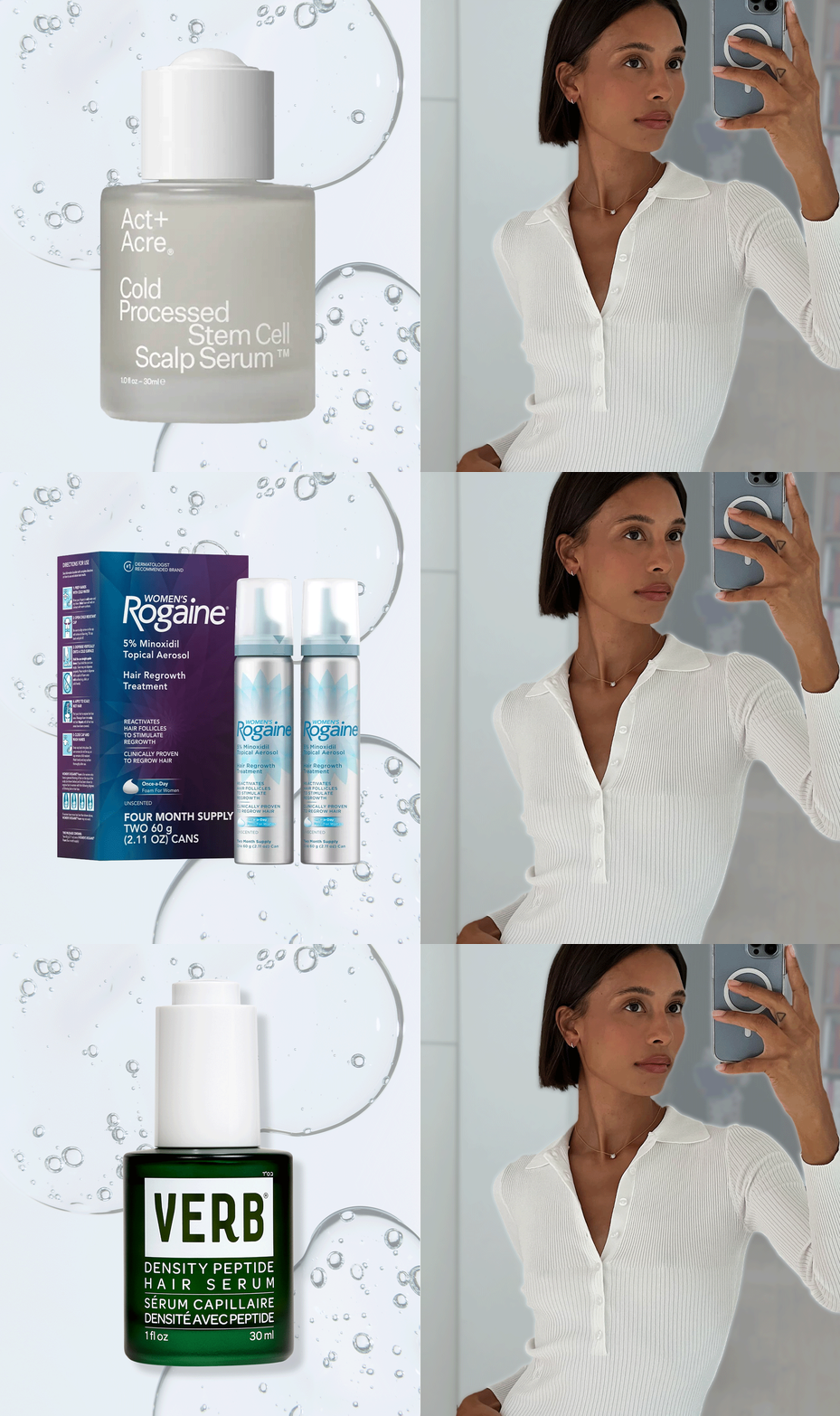
Hair thinning can sneak up on you (maybe you've noticed more and more strands plastered across your shower walls) or hit you all at once (everything is fine, and then suddenly you're anxiously analyzing your hairline in the mirror). Regardless of how or when you notice it, know that there's something you can do about it. Start with a dermatology appointment. Derms are experts in the field of skin, hair, and nails, and they're highly equipped to pinpoint the exact cause of your thinning hair and map out specific solutions.
You can also incorporate expert-recommended products in your routine to support hair density. That's where we come in. We assembled a list of the best, science-backed solutions for thinning hair with the help of two top dermatologists and a celebrity trichologist. Ahead, get the lowdown on all things hair thinning, from potential causes to re-growth timelines, product selects, and more.
What Causes Hair Thinning?Michael Tassavor, MD, FAAD, is a board-certified dermatologist at MDCS Dermatology. He says there are multiple potential causes of hair thinning (hence why a dermatology appointment can be so helpful in treating and/or reversing it). The most common? Androgenetic Alopecia, the scientific term for hereditary, hormone-related hair thinning. Tassavor says it affects about half of women over a lifetime.
"Next is Telogen Effluvium from triggers like illness, childbirth, thyroid issues, low iron, or certain medications." There's also Alopecia Areata (autoimmune-related) and Traction Alopecia (shedding from tight hairstyles, which is largely preventable). "One more that shouldn't be missed: Scarring Alopecia, where inflammation destroys the follicle. That loss is permanent, so it needs early diagnosis. If shedding is persistent, it deserves a visit with a dermatologist."
Morgana Colombo, MD, FAAD, is a board-certified dermatologist at Integrated Dermatology of Reston. She reiterates that the potential causes can vary, from genetics to hormonal changes. The latter are particularly relevant to women, especially during perimenopause, menopause, postpartum, and with thyroid disorders. "We also commonly see increased shedding after significant physical or emotional stress, illness, surgery, rapid weight loss, nutritional deficiencies, or certain medications. "This type of shedding (Telogen Effluvium) often becomes noticeable two to three months after the triggering event."
Helen Reavey is a celebrity trichologist and hairstylist and the founder of Act+Acre. For the unfamiliar, a trichologist specializes in hair and scalp health, which is why Reavey is uniquely positioned to speak to this issue. "I always encourage people to look at their hair and scalp holistically," she says. "Genetics can certainly play a role, but stress, hormonal changes, nutritional deficiencies, illness, certain medications, and even styling habits can all contribute to increased shedding or changes in density. Scalp health is also incredibly important. The scalp is where healthy hair begins, so maintaining a balanced, hydrated scalp environment is an essential part of supporting healthy hair growth."
Seasonal Hair SheddingIf you've noticed that your hair seems to thin in a particular season, you're not imagining things, especially in the fall—this is when many people notice changes in their hair density. "It’s completely normal to shed hair every day, but some people may notice an increase during seasonal transitions," Reavey says. "Hair naturally moves through different stages of the growth cycle, and at certain times, more hairs may enter the shedding phase at once. That said, if you’re experiencing sudden or excessive shedding that persists, I always recommend speaking with a healthcare provider to determine whether there may be an underlying cause."
The derms agree. "There is evidence that hair shedding can fluctuate seasonally," Colombo says. "Some people notice increased shedding in late summer and fall, and sometimes another smaller increase in the spring. Hair naturally cycles through growth, transition, and resting phases, so a certain amount of variation throughout the year is normal.
Tassavor seconds this, saying seasonal hair shedding is unequivocally real. "Shedding peaks in late summer into fall and is lowest in late winter, likely a leftover mammalian rhythm: more follicles enter the resting phase in summer and shed a few months later. It's usually normal and temporary, not a sign of permanent thinning — but it can make an underlying thinning pattern look worse for a few weeks."
Can Hair & Scalp Products Actually Reverse Hair Thinning?The good news? You don't have to sit back and watch your hairline change or your ponytail shrink. When I ask Tassavor how much topical products can make a real, visible difference, he says, "Quite a bit, if we're talking about the right one." Choose the *right* product, and you can see a difference with consistent use.
Both derms recommend Minoxidil, an FDA-approved over-the-counter (OTC) medication widely used to treat pattern hair loss and stimulate hair growth. It's the hero ingredient in products like Rogaine (more on that in a minute). Reavey says non-minoxidil products can make a difference too, as long as they're thoughtfully and intelligently formulated. "Topical products can be a really helpful part of a routine for thinning hair, especially when they’re formulated to support the scalp and follicle environment," she says. "They may not address every underlying cause of hair loss, particularly if the cause is hormonal, genetic or medical, but targeted scalp treatments can help create an optimal environment for healthier, fuller-looking hair."
How Long Does It Take to Reverse Hair Thinning?To reiterate, the good news is that you can treat and even reverse hair thinning. The bad news? It might take longer than you would like it to. "Hair requires patience because its growth cycle is slow," Colombo says. "With an evidence-based treatment such as topical minoxidil, I generally tell patients not to judge the results after a few weeks. It often takes approximately three to six months to begin seeing a meaningful difference, and continued improvement may occur beyond that. Some people also experience a temporary increase in shedding when they first begin minoxidil. That can be alarming, but it can occur as follicles transition into a new growth cycle. Consistency is extremely important—hair treatments generally need to be used continuously to maintain their benefit."
Tassavor agrees, although he extends the timeline slightly farther. "Plan for 6–12 months of consistent use before visible density changes, with a check-in around six months. One honest warning — many people shed more in the first month or two, and that's actually a good sign (follicles shifting into growth). And it's a commitment, not a course: minoxidil controls thinning, it doesn't cure it, so stopping usually brings the shedding back within months."
Reavey says consistency is just as important for non-minoxidil treatments. "I always tell people not to expect an overnight change in density from any topical treatment. With Act+Acre's Stem Cell Scalp Serum ($55), consumer testing found that 90% saw new hair growth in six weeks, while our 12-week clinical study showed 56% less visible hair fall-out. Results will vary from person to person, but generally, you want to give a scalp treatment several weeks to a few months of consistent use before evaluating your results."
Derm-Recommended Products for Thinning Hair Rogaine 5% Minoxidil Foam"Minoxidil is the first-line, FDA-approved topical for female-pattern thinning, and it’s in a different league from everything else — in controlled trials, over half of women saw regrowth," Tassavor says. "There are plenty of other topical formulations out there (peptide serums, caffeine blends), but none of them has anywhere near minoxidil's level of evidence."
Colombo agrees, saying minoxidil can prolong the growth phase of the hair cycle and help increase hair density and thickness. "There are also scalp serums containing ingredients such as peptides, caffeine, antioxidants, or botanical ingredients. Some may help support scalp and hair health, but I would not put them in the same evidence category as minoxidil."
Hers Hair Regrowth Foam Treatment 5% MinoxidilHere's another minoxidil hair treatment. The airy foam is applied directly to the scalp to stimulate follicles. It absorbs quickly and dries without residue.
Act+Acre 2% Stem Cell Scalp Serum"I’m a huge advocate for scalp serums, especially when thinning and shedding are the primary concerns," Reavey says. "The scalp is an extension of the skin on our face, yet we often don't give it nearly the same level of care. A targeted leave-in treatment allows you to deliver ingredients directly to the scalp while supporting the environment surrounding the hair follicle."
She recommends Act+Acre’s Stem Cell Scalp Serum, a lightweight, leave-in treatment specifically formulated for thinning hair. "It uses an Apple Stem Cell Complex alongside ingredients like bamboo and pea extracts and aloe vera to support the scalp and hair follicles. In a 12-week third-party clinical study of 28 subjects with acute telogen effluvium at baseline, there was 56% less visible hair fall-out, and 86% noticed more hair coverage on the scalp."
There's also Act+Acre's Stem Cell Thickening Foam ($52), which is half styling product, half scalp serum. It works like a mousse to deliver an immediate root lift, while 2% Apple Stem Cells support hair growth and target early-stage thinning.
The Ordinary Multi-Peptide Serum for Hair DensityWhile Tassavor calls serums "supporting players" in the game of hair growth, he mentiones The Ordinary's Multi-Peptide Serum for Hair Density. "[It's] lightweight, affordable, and easy to try." He admits that it lacks "strong evidence" for growing hair, but "it's a reasonable adjunct alongside proven therapy."
Verb Density Peptide Scalp Serum for Thinning HairIn the Who What Wear team's anecdotal experience, Verb's Density Peptide Scalp Serum is a worthy contender (it even won a coveted Who What Wear 100 Beauty Award). It uses the brand's signature density complex, as well as ginseng-root extract and niacinamide, to visibly increase hair density over time. In fact, in a clinical study, 97% of participants said it reduced visible hair fall-out, and it achieved up to 167% visibly fuller hair.
We also recommend the brand's Density Peptide Shampoo ($22).
Vegamour Gro Hair Serum for Thinning HairI personally credit this hair serum for bringing back my absent baby hairs and making my thinning hair line look fuller in as few as 90 days. It's all thanks to ingredients like turmeric, caffeine, red clover, and mung bean extract, which help stimulate the scalp and increase hair density.
NUTRAFOL Lightweight Scalp Serum for Thinning HairHere's another product that the Who What Wear team has personally vetted. Nutrafol's Lightweight Scalp Serum is formulated with Ashwagandha exosomes, Irish moss peptides, and maca extract. Together, these ingredients support visibly thicker, fuller, and more voluminous hair. They also protect against thinning at the root. In a clinical study, participants saw visibly thicker, fuller hair and reduced breakage in as few as 90 days.
Nizoral Anti-Dandruff ShampooFun fact: Dandruff shampoos do more than just cure flakes and itch. According to Colombo, they can actually treat and reverse hair thinning IF they contain ketoconazole and you're dealing with Androgenetic Alopecia. "Ketoconazole shampoo, which has anti-androgenic properties, can be helpful in treating hair thinning related to androgenetic alopecia," she says. "It also treats dandruff, which can cause or aggravate hair loss or thinning."
On the topic of shampoo, both derms caution against expecting too much from "volumizing" formulas. Most of these are meant to improve the LOOK of hair density and root lift, not actually improve it on a biological level. "It’s important to distinguish products that make the hair shaft look thicker from treatments that actually affect the hair follicle," Colombo says. "A volumizing shampoo can make hair appear fuller, for example, but it isn’t necessarily treating the biological cause of thinning." As always, it's best to stick to expert-recommended modalities.
How We ChoseAs with all of our buying guides at Who What Wear, we compile our edits based on original testing and expert recommendations. To find the best products for thinning hair, we leaned heavily on expertise from two top dermatologists and one trichologist. We also incorporated our own testing and knowledge as beauty experts. Of course, customer reviews were also kept in mind when creating this list.
Why Trust UsAt Who What Wear, we know that beauty isn't one-size-fits-all. Over the years, our editors have tested thousands of products—including skincare, makeup, haircare, and nails—while also working closely with trusted experts, like renowned dermatologists, celebrity makeup artists, and other leading industry insiders. Together, this ensures every guide is well-researched, inclusive, and relevant to you.
We focus on formulas that deliver, whether they're affordable favorites or luxury investments. Our product selection is based on tangible results, ingredient know-how, and what we'd truly recommend to our closest friends and family members.