
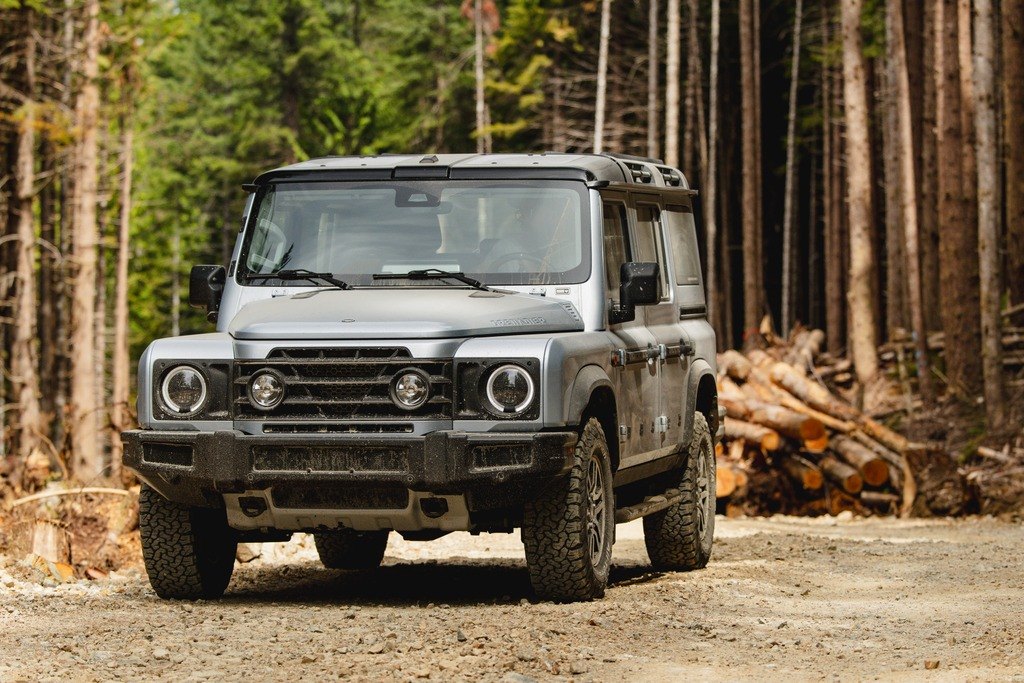
Ineos has expressed its intention of building the Grenadier SUV and Quartermaster pickup variant within the United States as soon as possible. However, this has required that the automaker sell off its main production facility in France.
On the surface, this announcement seems like a good deal for the brand. Ineos has been building the Grenadier to effectively cater to the kind of people who want mechanically simple vehicles with serious off-road potential and traditional controls. The model is basically an homage to the classic Land Rover Defender that was built from 1990-2016, as well as the Land Rover 90 and 110 models that preceded it.
It fills a similar niche as the Toyota Land Cruiser 70 Series, which has been in continuous production since roughly 1984. The big difference is that the Ineos Grenadier is a wholly unique model that was inspired by the beloved British SUV and is actually available on our market.
Since Ineos does a significant amount of business inside North America, it makes sense to relocate to the United States to help avoid tariffs. Some of the reasons we don’t get the Land Cruiser 70 Series is because it’s based on an older model that would likely have trouble passing the modern U.S. safety and emissions regulations.
The Toyota would also be subject to the current tariffs, with pickup variants falling prey to the dreaded chicken tax that adds 25 percent. The classic Land Rover would likewise steal sales from other Toyota models. Plenty of Tacoma or 4Runner buyers would gladly pivot to the 70 Series were it ever made available here.
Ineos plans on getting around all of the above by simply building its vehicles stateside. It also doesn’t have to worry about the Grenadier or Quartermaster stealing sales from other models.
Despite promoting itself as a British company that only exists because of its affinity for iconic vehicles originating from the United Kingdom, Ineos does the brunt of its business on the other side of the Atlantic Ocean and has its main production facility based in Hambach, France.
That facility was a former Mercedes-Benz site, responsible for the Smart ForTwo, and will reportedly be sold to China’s BYD and is assumed to be repurposed to build all-electric vehicles sold on the European market.
The big question is what will happen in the interim period. Ineos needs a place to build its vehicles and is reportedly targeting U.S. production for 2028. That almost assuredly means that it will be buying a preexisting facility that it can retool, rather than building something from the ground up. We’re assuming Ineos won’t be handing over the keys to BYD until after it has things up and running in the United States, unless it’s fine with an extended period of not selling anything.
Details on the arrangement haven’t yet been finalized. We haven’t heard anything on where Ineos wants to set up shop in the United States, nor when the Chinese brand expects to move into France. But the deal with BYD sounds like it’s been solidified and the British company has certainly already been browsing American real estate.
This is a massive undertaking for what is effectively a very small automaker. Ineos has only sold about 35,000 vehicles since commencing production three years ago. But volumes have been increasing and the brand estimates that about 70 percent of those sales went to people living in North America.
That alone probably makes moving to the U.S. a foregone conclusion. Continuing to eat the cost of international shipping and regional tariffs makes little sense when you can just relocate to your core market. Ineos has suggested that the scheme will also help keep prices on the Grenadier and Quartermaster lower — which presently start around $73,000 and $84,000, respectively.
Assuming Ineos could bring those figures down by a few thousand dollars, it’s possible that the Grenadier could see more mass appeal. But they are likely to remain niche products. Due to boasting extremely traditional architecture, these models lack most modern convenience features and tend to drive like classic off-road vehicles.
That said, buyers' growing disdain for connectivity features and electronic gatekeeping could play into Ineos’ hands. Despite your author’s belief that modern pickups and SUVs have received some of the most useful tech features in recent years, that’s still accompanied by plenty of invasive boatware nobody really wants.
The Grenadier simply existing as an alternative to that, while still offering serious off-road performance reliant on mechanical hardware, could result in a sales boom for the brand. Ineos products don’t even come with an internal modem that can do more than send out an emergency signal, requiring customers to pair vehicles to their phone if they want to use the internet. There are no over-the-air updates, telemetry data, or in-car apps to speak of — which is something Ineos seems rather proud of.
Expect more information about the company’s relocation plans as they surface.
[Images: Ineos]
Become a TTAC insider. Get the latest news, features, TTAC takes, and everything else that gets to the truth about cars first by subscribing to our newsletter.