
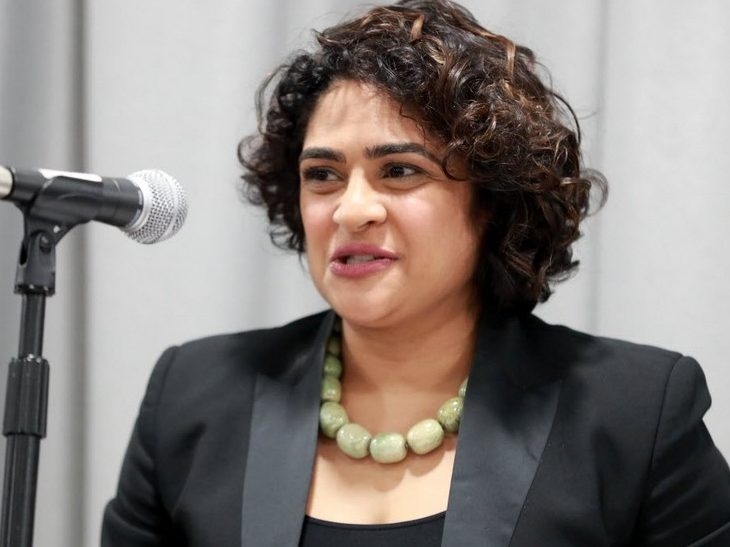
A Trudeau-appointed judge in Brampton should be feeling shame today after an appeals court picked apart a ridiculous ruling she issued last year.
In a unanimous decision, three justices of the Ontario Court of Appeal overturned the decision by Justice Renu Mandhane in R. v. Cameron.
Three appeals court judges found the original decision to be lacking in evidence, lacking in an understanding of the law and filled with speculation. Now the accused, Robert Cameron, has been ordered to face a new trial on charges of possessing an illegal gun.
In her decision last year, Justice Mandhane dismissed charges against Cameron, claiming that the officer only arrested him due to systemic bias. That claim, not supported by any facts or evidence, sullied the name of Const. Anand Gandhi and the entire Peel Regional Police Service.
RECOMMENDED VIDEO
Plate reader, U-turn, loaded gun
Cameron was arrested on a residential street in October 2023. While driving in the opposite direction from Cameron, Const. Gandhi’s automatic plate reader alerted him that the owner of that vehicle had a suspended driver’s licence and the vehicle was “impound eligible.”
Gandhi did a U-turn, pulled Cameron over and ran the licence plate.
It turned out that Cameron was under two driving suspensions, including one for impaired driving. He was also facing outstanding drug charges in Toronto at the time of the stop.
There is no way the officer should have just let Cameron go. The vehicle should have been impounded and Cameron should have been arrested.
While conducting an inventory search before impounding the vehicle, officers lifted a mat and found a loaded Beretta CX4. This is not only a prohibited gun in Canada; Cameron had no firearms licence, and transporting it the way he was, including that it was loaded, is also an offence.
These are offences that could have seen Cameron spend up to 14 years in jail.
- COURT JESTERS: Meet some of Canada's nuttiest judges
- LILLEY: B.C. judge's dangerous drug delusion
- LILLEY: Stay in your lane, Judge! Appeals court kills bike lane ruling
Race over evidence
For Justice Mandhane, there was only one thing that mattered: Cameron was Black, and therefore this was discrimination.
The race of Const. Gandhi didn’t matter. His track record didn’t matter.
“While Officer Gandhi’s racial bias was likely unconscious and the product of our culture and his own worldview, that is not an excuse or even a mitigating factor in terms of the seriousness of the conduct,” Mandhane wrote. “The fact that Officer Gandhi is himself is racialized – he is a Brown man – does not insulate him from the insidious power of anti-Black racism, stereotype, and racial bias.”
Mandhane came to her decision, as the Court of Appeal found, via speculation rather than evidence.
One of the many reasons that Mandhane should have been disqualified from ever being appointed to the bench is her own systemic bias against police. During her time as the Chief Commissioner of the Ontario Human Rights Commission, she pushed an anti-police agenda that always assumed racism.
She’s continued that ideological crusade on the bench, where such activism doesn’t belong.
RECOMMENDED VIDEO
Appeal court slaps down activism
Thankfully, on Wednesday, the Ontario Court of Appeal pushed back.
“There is no rebuttable presumption that officers engage in racial profiling,” the ruling states. “Racial profiling cannot be inferred simply because the officer also learned the individual’s race before an arrest, detention or search.”
Time and again, Justice Julie Thorburn, writing for the panel, cited Justice Mandhane for replacing evidence with speculation and for not understanding the law or standard police procedure. This included Mandhane’s conclusion that the search of the vehicle was illegal due to racial profiling.
“As with her findings regarding the arrest and detention, the application judge’s findings regarding the search rested on speculation and an erroneous understanding of police powers, rather than the evidence. Properly scrutinized, the evidence she identified falls short of establishing a sufficient basis from which to infer racial profiling,” Justice Thorburn wrote.
When her ruling became public, I said it brought the justice system into disrepute and called for it to be appealed. The Court of Appeal agreed.
The Ontario Court of Appeal did that with gusto this week. Let’s hope Justice Mandhane learns from this experience and puts evidence above her activism.
blilley@postmedia.com