
Building another oil pipeline from Alberta to the West Coast has always been in the national interest – o n Thursday, it became official.
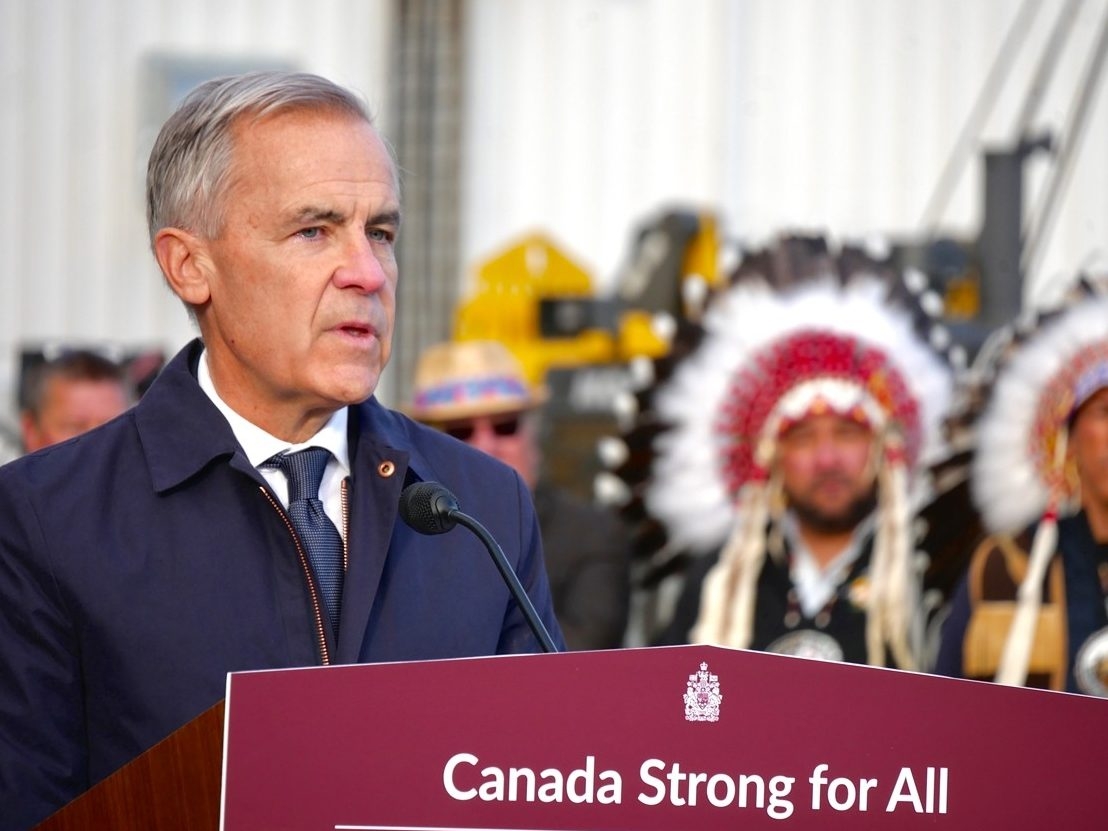
Prime Minister Mark Carney, standing in Fort McMurray with Premier Danielle Smith, declared that the West Coast Oil Pipeline, now known as Pacific Link, would become the first project deemed in the national interest under the Building Canada Act.
This doesn’t mean the project is going ahead for sure. This is still Canada, after all, and we are only speeding up the bureaucracy, not getting rid of it.
“We estimate that the Pacific Link project will create 140,000 jobs across Canada, from the engineers who design it and the pipefitters who lay it to the welders who connect it,” Carney said. “The project will generate more than $20 billion in annual GDP and over $100 billion in government revenue by 2060.”
He went on to describe how that revenue would fund the programs Canadians and Albertans rely on, such as health care, dental care and child care.
“This is true nation-building, and it will take a nation to build it,” he said.
- LILLEY: White House celebrates steel investment as Canadian workers are laid off
- LILLEY: Delayed EV battery plant could save taxpayers billions
- LILLEY: Carney puts politics over paycheques in trade war
About time
In total, Thursday’s announcement was a good news, bad news kind of event. It’s good news that the project is moving forward, but bad news that it will take so long and that this pipeline will be government-owned and government-built.
Clearly, we haven’t done enough to make investors comfortable putting their money into projects like this.
Danielle Smith’s smile as Carney made the announcement told you everything you needed to know. Few have worked as hard as Smith to push the project to this point, but there is still a long road ahead.
With the listing of the project in the national interest, Pacific Link now moves into a one-process, one-review regulatory environment. The Major Projects Officer, working with the Canada Energy Regulator, will, according to the news release from Carney’s office, examine “the ownership, benefits, respect for Indigenous rights, environmental protections, and local hiring and oversight.”
That’s still a lot of bureaucracy, but at least it is being crammed into one year instead of several.
During last year’s election and even in his victory speech on election night, Carney promised to move fast to grow Canada’s economy in light of the upheaval coming out of Washington.
“We will need to think big and act bigger. We will need to do things previously thought impossible at speeds we haven’t seen in generations,” he said the night of April 28, 2025.
RECOMMENDED VIDEO
Faster? Not yet
It’s been 522 days since he said that, or one year, five months and four days. In that time, we haven’t gotten to the point of starting construction on a pipeline. We have only gotten to the point of starting an expedited review.
At the end of this process, which will include Fisheries Act authorizations and Species at Risk Act permits, there will be what is called a “conditions document,” meaning the list of conditions that must be met for the project to proceed.
When the Northern Gateway pipeline was approved by the Harper government in December 2013, it came with 209 legally binding conditions. If we go down that path, it will ensure that, like Northern Gateway, this pipeline is never built.
RECOMMENDED VIDEO
The real problem
Finally, while this project moving forward should be celebrated, the fact that the Government of Canada and the Government of Alberta will jointly own it, with 10% of the project being owned by Indigenous bands along the route, is a sign of failure.
Canada is an energy superpower.
Carney keeps calling us that, which, after a decade of Trudeau, should be welcomed. But an energy superpower should have private companies lined up to take the risk, deploy the capital and build the pipeline.
The fact that government needs to step in and do this means we haven’t done the heavy lifting needed to shift our economy and roll back the regulatory excesses of the past 10 years.
Given that Carney just hosted an investment summit in Toronto to attract global capital, this doesn’t bode well.
Canadians should celebrate this project moving forward. But until private investors are willing to build pipelines here without government ownership and government guarantees, Canada still has a lot more fixing to do.
blilley@postmedia.com