
See more Toronto Sun on Google — save as a Preferred Source
Politicians are arguing, pointing fingers and laying blame, but regular Canadians are about to feel pain.
As a new wave of tariffs hits Canadian industries, workers in plants across the country will start losing their jobs.
Some might be told as early as today that production is shutting down, that the tariffs make it impossible to continue or sustain current levels of production.
Speak to any elected official, federal or provincial, and you will hear that they’ve been fielding these calls since the trade talks broke off. This is the unseen cost of a trade war. People who work frontline jobs, not those sipping lattes while typing on laptops, will hit the unemployment line.
The human cost
University of Calgary economist Trevor Tombe estimates that while this new round of tariffs will shave only a few tenths of a percentage point off Canada’s GDP, the impact on jobs could be significant.
His calculations suggest that if these tariffs stay in place, 90,000 jobs could be lost across the country, including 36,000 in Ontario, 18,000 in Quebec, 11,000 in British Columbia, and 9,000 in Alberta.
In the grand scheme of things, that may not seem like much. Statistics Canada said we lost 84,000 jobs in February alone and we survived. If it’s your job or your company being hit and downsized, you’ll feel much differently than someone looking at cold, hard statistics.
The politicians leading us in this moment need to remember the human element at play here.
“I’ve spent the last couple of weeks in places across southwestern Ontario, from Cambridge to Windsor to Peterborough and elsewhere. You could have see the palpable anxiety in the eyes of our small businesses, their families, when it comes to these trade negotiations,” Conservative MP and Canada-U.S. trade critic Shuvaloy Majumdar told me in an interview Sunday.
“They had a lot on the line in a successful negotiation, which is why no matter the cost, we want Canada to have a successful negotiation with America.”
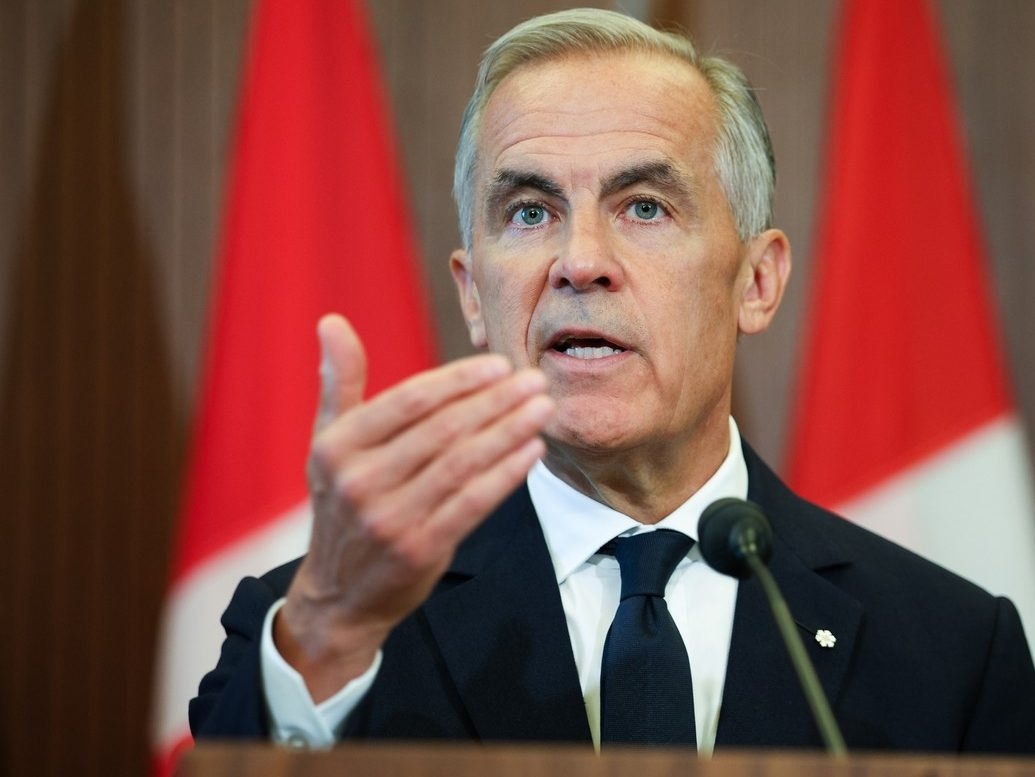
The Conservative Party has come out in support of Liberal Prime Minister Mark Carney walking away from what he called a bad deal and is supportive of his promise to impose dollar-for-dollar retaliatory tariffs.
That said, Majumdar has written to the government asking it to release the terms of the deal it walked away from so that Canadians can better understand it.
What’s the Deal? pic.twitter.com/8fepAELhW2
— Shuv Majumdar (@shuvmajumdar) August 23, 2026
He’s also backing calls for Parliament to be recalled to deal with the situation.
“Our country is actually not so brittle that it can’t handle a constructive debate in the midst of a crisis. In fact, governments are improved through that process,” Majumdar said.
Show Canadians the deal
The Carney government should release the deal.
What we do know about autos, excluding medium and heavy-duty pickup trucks such as the Chevy Silverado, built in Oshawa, or the Ford F-350 and F-450, soon to be built in Oakville, would be enough reason to turn down this deal .
Carney says there were more reasons, a cumulative effect, but he hasn’t given enough details.
After the Gordie Howe Bridge deal debacle, Canadians are right to be skeptical of him, even though polling shows that, right now, they’re supporting his position.
If he wants to solidify that support, then he should release more details and lay it all on the line.
Transparency matters
“We’re just not willing, at the end of the day, to accept terms that were unfair, uneconomic and actually, you know, called into question the reliability of the deal,” Canada’s Ambassador to the United States Mark Wiseman told Bloomberg’s White House correspondent, and Canadian, Josh Wingrove on Sunday.
New: Canada's ambassador to the US, @MarkDWiseman, tells me that trade talks didn't collapse over any one issue, but over several where the written text surprised the Canadians and wasn't what they thought they agreed to. 🧵
— Josh Wingrove (@josh_wingrove) August 23, 2026
I’ve spoken to enough people briefed on and familiar with the talks to believe that to be true.
Still, this decision comes with enormous consequences and therefore demands transparency.
The prime minister should start giving us more details on why he walked away, why Canadian businesses are facing these steep tariffs, and why Canadian workers are now worried about losing their jobs.
blilley@postmedia.com