
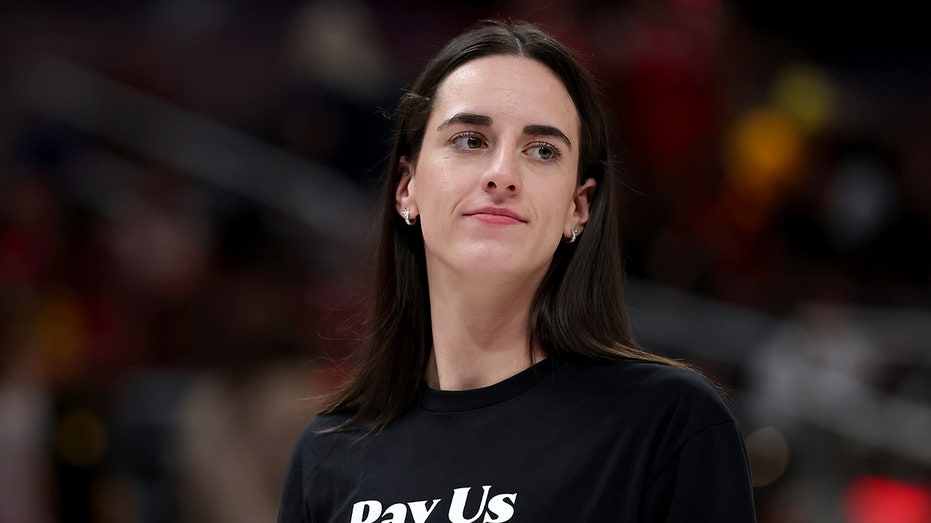
Chantell Preston thinks the WNBA has done a good job handling Caitlin Clark and the popularity she brought to the league.
That is ... a generous interpretation.
Preston, a healthcare entrepreneur and author of The Success Lie, is a co-founder and owner of the incoming San Francisco Signal, a League One Volleyball franchise. She also owns a stake in LOVB, the women’s professional volleyball league.
"Caitlin Clark’s done some phenomenal things for women’s sports as a whole," Preston told OutKick. "What Caitlin Clark has been able to do and the visibility that she’s brought to the WNBA has been invaluable to not just the WNBA, but all sports."
LOVB FRANCHISE OWNER SAYS TRANSGENDER ATHLETES 'SHOULD BE ABLE TO PLAY' IN WOMEN'S VOLLEYBALL
Clark brought record ratings, sold-out arenas and a fan base the WNBA had spent nearly three decades trying to find. Preston said the league didn't do everything perfectly, but she believes it handled the moment well.
"Nothing’s ever perfect," she said. "And I think they’ve done a good job. I think there’s still some areas of opportunity."
In May, the WNBA promoted a Fever game on NBC and Peacock with a social media graphic featuring A’ja Wilson, Angel Reese, Zia Cooke and Fever guard Raven Johnson, who was averaging one point per game at the time. Clark wasn't included.
ESPN followed in July with a six-part documentary about the WNBA’s growth. It centered on Wilson, Napheesa Collier and DeWanna Bonner. Clark appeared in game and All-Star footage, but the documentary didn't interview Clark or feature her in any storylines, and barely acknowledged her role in the league’s popularity boom.
The filmmakers also didn't answer OutKick’s questions about whether they asked Clark to participate.
Preston would rather see attention on the league’s players than the drama surrounding them.
"How do we focus on the positive, not the negative?" she said. "Talk about the incredible players that are coming in, the ones coming from college. You’ve got Caitlin Clark, but then you’ve also got three or four other players that have come up in the last few years that are making huge, huge differences."
Preston said the league shouldn't sell only one player.
"It doesn’t have to be one individual," Preston said. "It can be multiple individuals, but really focusing on what they’ve done well for their teams and how they can help as a whole. It’s about visibility and storytelling."
The WNBA doesn’t need to put Clark on every graphic because she’ll get people to watch either way. But it also can’t act like she isn’t the main reason those people are tuning in.
CAITLIN CLARK HELPS WNBA SHATTER ANOTHER TV RATINGS RECORD AS FEVER-DREAM DRAWS MASSIVE AUDIENCE
Fever-Sky on Aug. 23 averaged 3.31 million viewers on NBC and Peacock. It was the most-watched WNBA regular-season game since the league’s opening weekend in 1997 and peaked at 3.82 million viewers. Fever-Aces in July averaged 2.64 million viewers, the second-largest WNBA regular-season audience of the season.
ION Sports left Clark off an August graphic naming its five MVP candidates and fans were not thrilled. It's not just the league that has seemed eager to ignore Clark's impact. ION’s graphic was another example of the disconnect between how the sport is often marketed and what viewers are actually watching.
Some people who came to the WNBA for Clark will stick around for Wilson, Collier, Bueckers or another player, and some will only watch games that involve Clark. Let them. But the league is not helping itself by arguing with the audience it has.
Preston said she spent three years looking at different leagues before putting money into LOVB.
"When I’m looking at businesses to invest in, I’m looking at where can I get the best return on my investment?" she said. "For a long time, people say, ‘Oh, well, invest in women. It’s charity.’ No, it’s not."
It's refreshing to hear Preston say that women's sports leagues should act like businesses. Some of the biggest complaints about the WNBA come from the idea that it's run like a charity instead of as a for-profit entity.
For a long time, that was simply the truth. The WNBA has long operated with NBA backing and has reported losses, but Clark’s arrival changed the economic conversation. The league hasn't adjusted to the audience and money that followed.
WNBA SUDDENLY WANTS TO STICK TO BASKETBALL AFTER YEARS OF MAKING POLITICS PART OF THE PRODUCT
Preston is betting on volleyball following a similar trajectory. She said youth participation and the Olympic audience helped convince her that the sport presents a new opportunity.
"Volleyball is the No. 1 girls’ sport in the U.S.," Preston said. "You look at how many people watch it in the Olympics, there’s a lot of tailwinds and we see growth."
LOVB began play in 2025 and has announced expansion franchises in Los Angeles, Miami, Minnesota and the San Francisco Bay Area to start play in 2027. Preston said she also liked that team owners hold a stake in the league.
"We own part of the team, and we own part of the league," she said. "So everyone’s aligned. When the league is doing well, everyone’s doing well. When teams are doing well, everyone’s doing well."
That doesn't mean she assumes women’s sports will keep growing forever.
"We’re not quite sure," she said. "Is this sustainable for all sports, women’s sports, or is it just the WNBA?"
Preston thinks the next few years will depend on brands and media companies.
"If the brands and the media come together and realize that there’s a great opportunity to support women’s sport, I think that to me shows sustainability across the board," she said.
LOVB has to give people a reason to care about its players, too.
"It’s our responsibility and job to make sure that we’re telling the stories of those players so they become household names," Preston said. "That’s the storytelling, that’s the branding."