
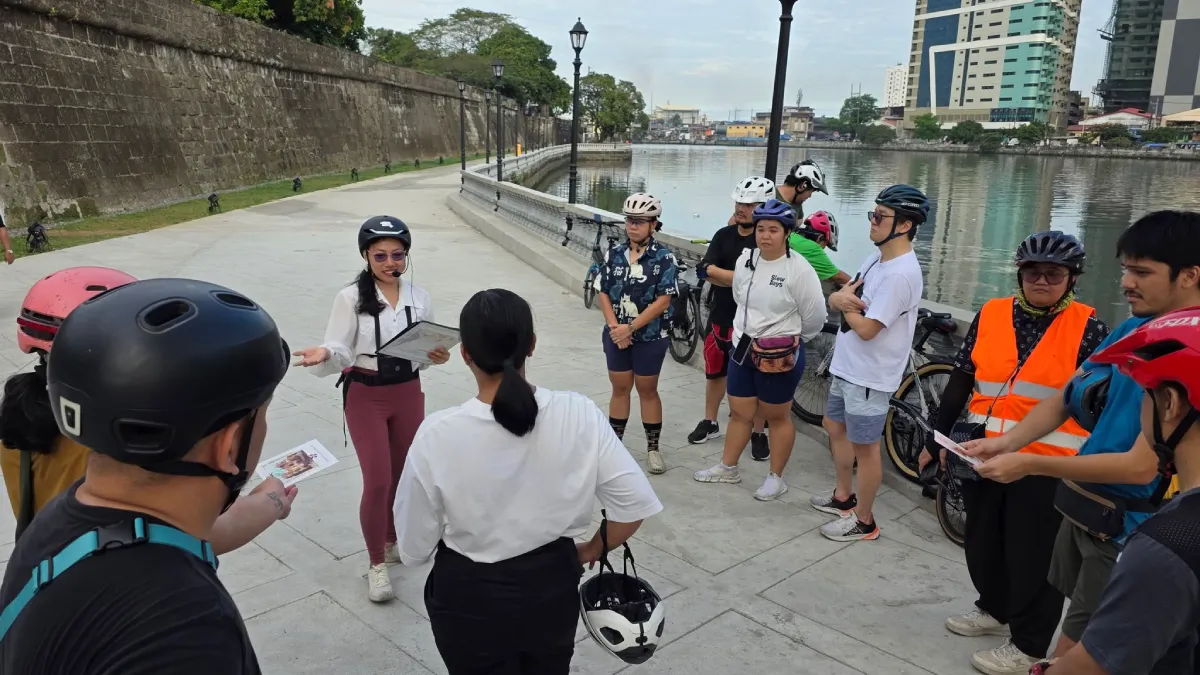
While many bike tours often focus on leisure, sightseeing, and scenic spots, one group in Manila is using the draw of two-wheeled transport to tackle important urban issues.
Renacimiento Manila, a cultural and heritage organization dedicated to the urban renewal and cultural rebirth of the City of Manila, offers unique bike tours along with their regular walking tours and heritage transit tours.
PHOTO BY Renacimiento Manila
Filipino heritage advocate and the co-founder and president of Renacimiento Manila, Bea Dolores, says that aside from their use in commuting, long rides, and leisure, the cycling tours give a deeper context of the history of the city that shaped it.
ALSO READ:
Casio has turned the classic F-91W into a Bluetooth fitness watch
Gallery: Tag along on our scenic road trip across Western Sichuan with BYD and Denza
“Renacimiento Manila Heritage Bike Tours provide an additional way to explore our historic capital by bike that blends learning, heritage awareness, and advocating for a sustainable urban development,” Dolores told Top Gear Philippines.
The tours initially started with a “Sleigh the Streets” bike ride last December 8, 2024, using the car-free Sunday windows of Ayala Avenue and Roxas Boulevard to explore Intramuros, San Nicolas, Escolta of Binondo, and Quiapo, with visits to Ocampo Pagoda Mansion and Bahay Nakpil in Quiapo. Since 2025, they’ve organized 13 bike tours, with more in the pipeline.
“The heritage bike tours are a special way of putting our country’s legacy deeper into our hearts, something that, especially as bikers who are often oppressed on our roads today, may hold on to as fuel to keep going, to keep fighting for better cities that we all deserve,” said Dolores.
Led by accredited tour guides and avid cyclists themselves, the tours often focus on rarely visited, overlooked, and forgotten spots.
“Many of us may have learned Philippine history in books, but some places we simply pass through also hold their own stories which aren't commonly known. Despite the negative realities of our capital today, the City of Manila holds a lot of stories where every pedal to move one forward also is a travel through time—stories such as the war, Pasig River, Jose Rizal, Katipuneros, and even the firsts in Philippine history,” she said.
Community Bike Ride for World Rivers DayPHOTO BY Tambay Cycling Hub
Last year for World Rivers Day, I found myself biking from Quezon City to the Manila Boat Club, the oldest sports club in Manila, lying on the banks of Pasig River as one of their bike tour participants.
Our community ride, starting at Tambay Cycling Hub in Pasig, took cyclists through BGC and car-free Ayala Avenue, all the way to Santa Ana, Manila where the historic Boat Club, which has been headquartered there since the 1930s, held an Open House visit.
Aside from getting rare access to the historic site and a chance to meet like-minded leisure cyclists, the event also gave us a chance to hear about the challenges faced by riverside communities and rehabilitation efforts being done for Pasig River, which once served as the cultural lifeblood of Manila before decades of industrial pollution led to its decline.
Move Manila: Mobility and Energy Bike TourPHOTO BY Renacimiento Manila
Last April 2026, the group organized a “Move Manila: Mobility and Energy” bike tour revisiting how Filipinos used to move without cars. This tour highlighted historical places established before cars existed, including formerly beautiful train stations, a Spanish Colonial-era locomotive, building boundaries designed for safer horse-drawn carriage transportation, and more.
“A simple bike ride in Manila brings you to all of them just a few minutes from each other. We have streetcars that passed through Escolta and beyond, the actual part of the Luzon railway’s train in Tutuban (Tondo), a rich centuries-old collection showcasing Spanish colonial period Galleon trade (San Nicolas), and the country's very first electric power plant was in Quiapo,” shared Dolores.
The bike tour also gave the group a chance to use and appreciate the bike lanes in Intramuros, a fairly new development in the area.
Given the rising fuel costs impacting the transport sector, the group will be holding a repeat run of this bike tour this coming October 11, 2026.
Padyak Bayani RidePHOTO BY Renacimiento Manila
On their most recent bike tour this month, the group headed to places in Manila related to heroes in history while addressing a key issue in bike tourism: The lack of safe bike parking in museums and sites. From Ayala Car-Free Sunday, the tour took participants to key spots like Rizal Park Luneta and the National Museum Complex.
“It’s interesting how in Intramuros there are dedicated bike lanes but no strategic, safe bike parking per site except for the paid Fort Santiago. In Rizal Park Luneta, there is a good number of bike parking, but getting to its destination isn't as safe. We also have the three National Museums which are free for all visitors but, together with bad sidewalks, have no dedicated bike parking within their building premises,” pointed out Dolores.
“Our Padyak Bayani bike tour officially sought permission from the National Museum Complex, which allowed us to park in their gravel vehicle parking space (beside NM Natural History). We were informed that walk-in bike commuter visitors aren't allowed to do the same,” she added.
While it’s generally safer for tourists to bike within Intramuros, sadly for regular bike commuters and tourists, visiting other nearby sites like the National Museums or Rizal Park by bike from Intramuros (or even just getting to Intramuros by bike) is still a challenge.
Other bike-related issues that need to be addressedPHOTO BY Renacimiento Manila
From the lack of safe bike lanes and discrimination bikers still face on car-centric infrastructure, there are many other issues that their group hopes to address in future bike tours.
Dolores believes that the government still doesn’t see biking as a staple mode of transport, which is reflected in the existing infrastructure.
“They don’t understand the ease of biking compared to walking with our unwalkable sidewalks. They see “bikes as a blight.” Despite the push for sustainability and active transport, many establishments still lack safe bike parking spots. “Surely, with strategic design and planning, adding safe bike parking will beautify the space even more, while also ensuring theft is prevented,” she added.
Dolores also pointed out how potential projects like SALEX could impact communities and how essential infrastructure projects could be integrated to benefit all road users.
“I believe flood control and bike lanes can be designed together; imagine the width of protected bike lanes also serving as a larger volume capacity for drainage with bioswales.”
How to join Manila Heritage Bike ToursInterested in joining Renacimiento Manila’s bike tours? Potential participants must be healthy and have their own bike to join. All participants are expected to be respectful to one another to ensure an enjoyable tour for everyone. For October, you can join the Move Manila: Mobility and Energy Bike Tour happening on Sunday, October 11, 2026, by registering here.
For other guided tours, check out the group’s monthly sign-ups on Renacimiento Manila’s accounts on Facebook and Instagram.