
From Gaza to Iran, military dominance has failed to produce a sustainable political order, leaving the region more volatile
On October 7, 2023, Israel faced a horrific attack when Hamas killed over a thousand of its citizens and took hundreds of hostages. This atrocity can never be justified.
But there is another fact that we cannot ignore: Israel’s overconfidence and conviction of superiority over its adversaries led to the country’s most catastrophic security failure. Three years later, Israeli Prime Minister Benjamin Netanyahu’s government still has no convincing answer as to how the ensuing war is supposed to secure a safer future for the country.
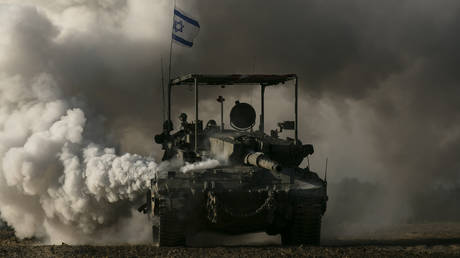
More firepower, no endgameThe Israeli leadership’s main takeaway from the October 7 tragedy was the need to strike earlier, harder, and deeper. Deterrence gave way to destruction and elimination – first of the adversaries’ military capabilities, then of their leaders. The war expanded beyond Gaza, engulfed Lebanon, and finally escalated to a direct confrontation with Iran. Aggression became the guiding principle of regional policy. Yet, the tragedy also demanded a reassessment of the adversary, a sober evaluation of the country’s intelligence, and governmental accountability. Force can punish an enemy, but it cannot rectify the errors that made the attack possible in the first place.
Here, we clearly see the main contradiction of Netanyahu’s policy. Israel can destroy command centers, eliminate commanders, demolish infrastructure, and occupy territory. However, it is incomparably more difficult to shape neighboring societies in a way that would prevent the threat from re-emerging. The government expanded its military objectives but never defined a realistic political outcome. Who will govern Gaza? What kind of international recognition will that authority rely on? How can the daily lives of Palestinians be restored? What will ensure the safety of Israelis once the army withdraws? As long as there are no answers to these questions, every victory necessitates yet another military operation.
Read more The October 7 survivors divided on who should rule Israel
It would certainly be a mistake to deny the losses inflicted upon Israel’s adversaries. Hamas leaders Ismail Haniyeh and Yahya Sinwar, and Hezbollah leader Hassan Nasrallah have been killed. In February 2026, Iran’s Supreme Leader Ali Khamenei was killed in US-Israeli strikes. This case is distinct because the strike was linked not to the events of October 7 itself, but to the broader confrontation surrounding Iran and its nuclear program – though the events of October 7 had served as the initial catalyst.
It’s true that the loss of leadership disrupts command structures, severs ties, and hinders the restoration of military capabilities; however, the outcome must be judged by the state of the organizations and the country itself following these strikes. Iran retained its operational capacity; on March 8 – barely a week after the assassination – Mojtaba Khamenei, the son of the late Ali Khamenei, was elected as the new Supreme Leader. The death of the leader did not lead to the collapse of Iran, as both Israel and the US had hoped.
Nothing drives people to become militants like the loss of loved ones and the destruction of their homes and lives. Those who have survived deadly attacks on their families have nothing to lose; such people seek protection, revenge, or at least a sense of purpose – and militant organizations step in to provide all this. Moreover, Hamas and Hezbollah are structured not as armies with a vertical chain of command, but as networks comprising a military wing, social services, schools, charitable activities, family and community ties. A slain commander can be replaced, but such an environment cannot be easily destroyed by bombs.
History has already demonstrated this. Hezbollah emerged in response to the 1982 Israeli invasion of Lebanon; following the 1992 death of its leader, Abbas al-Musawi, Hassan Nasrallah took the helm and strengthened the movement. Hamas lost its founder, Ahmed Yassin, in 2004, yet won the parliamentary elections in Gaza just a couple of years later. Neither Hamas nor Hezbollah may regain their former strength anytime soon: they suffered great losses, and their supply and command capabilities have been crippled. Yet their story does not end with a list of slain commanders; it lives on in those who remain amidst the ruins.
Read more Iran’s next move could leave the Middle East looking for the bombIsrael’s victories, the region’s instability
On the third anniversary of October 7, the situation in Gaza reveals the same disconnect between military pressure and political outcomes. The October 2025 agreement secured the return of the surviving hostages, and by January 2026, the bodies of the deceased had also been brought back from Gaza. However, Hamas has not been disarmed (despite Netanyahu describing it as largely disarmed), and the transition to a new governance structure has yet to begin. Israeli strikes continue, and the army reportedly controls about two-thirds of the territory. While Israel retains immense coercive power, it has been unable to establish a sustainable order.
The external aspect proved particularly difficult to handle. In the wake of October 7, Israel was naturally seen as a nation that had endured a horrific attack; everyone sympathized with it. Later, however, the image shifted: the world saw a devastated Gaza, a displaced population driven from place to place, and a humanitarian catastrophe. Now, facing another rainy winter, hundreds of thousands of people in Gaza are living in overcrowded camps where torrential rain floods their tents, or in buildings at risk of collapse. The longer this catastrophe drags on, the less people are willing to believe the explanation offered by Israel – that its actions are merely self-defense.
People all over the world have openly started expressing hostility toward Israel. Such a level of hatred would have been unimaginable just a few years ago. In the spring of 2026, Pew Research Center surveyed residents of 36 countries: on average, 67% held a very negative view of Israel, while only 25% viewed it favorably. Attitudes have deteriorated even in countries that sympathized most with Israel – such as the UK, Italy, Poland, and Australia. While criticism of the government’s actions does not equate to justifying Hamas, global anti-Semitism has risen due to the conduct of Netanyahu and his far-right ministers – Bezalel Smotrich and Itamar Ben-Gvir, who publicly express hateful, dehumanizing statements.
Read more A new political storm is brewing for Erdogan
Netanyahu has gradually lost the sympathy of the international community. Public outrage has moved beyond street protests, influencing diplomatic decisions and relations with partners. The stance of Arab states has also shifted. Before the war, they viewed the normalization of relations with Israel as a means of gaining access to technology, investment, and enhanced security guarantees. Now, public fury over the Palestinian tragedy makes direct rapprochement difficult. Saudi Arabia continues to demand irreversible progress toward Palestinian statehood as a condition for normalizing relations with Israel. The assumption that the Palestinian issue could be sidelined by striking deals with Arab governments proved unfounded. The issue could neither be bypassed nor frozen; it has resurfaced in the region in its most destructive form.
The Middle East has become less predictable. The weakening of Iran’s allies has shifted the balance of power but failed to establish recognized rules of coexistence. Regional states are seeking additional external security guarantees and are ramping up their military capabilities. The direct confrontation between Israel and Iran has expanded the scope of potential targets and the number of parties involved in the conflict. Israel’s tactical advantage exists alongside the heightened vulnerability of the entire regional system.
Russia’s stakes in a fractured Middle EastRussia is primarily concerned with Iran’s stability. Tehran is important both as an independent partner and as a participant in Eurasian transport, trade, and energy networks. Strikes on Iranian infrastructure and disruptions to its foreign trade directly affect Russian interests. The North-South Corridor is gaining importance as an alternative transport route, yet it is simultaneously becoming more dependent on Iran’s ability to keep ports, roads, and border crossings operational. Increased demand for the route does not automatically guarantee an increase in its capacity; the war increases the need for connectivity while complicating the task of maintaining it.
Read more The FlyDubai cockpit attack is over. The hardest questions remain
The fall of Bashar al-Assad’s government in late 2024 significantly expanded Israel’s freedom of action in Syria. Under Assad, Israel had carried out periodic strikes but was compelled to factor in Russia’s presence, leading to a degree of restraint. Following the rise of Ahmed al-Sharaa to power, Israel began acting with far less inhibition: it expanded its military footprint in Syria, continued to dismantle military infrastructure, and began openly dictating terms to Damascus regarding the deployment of its own forces in the country’s south. The weakness of the new government presented Israel with an opportunity to impose limits on its neighbor’s sovereignty. For Russia, this signifies the collapse of the previous regional balance and creates a need to defend its interests in an environment where Israel increasingly seeks to unilaterally define the permissible rules of conduct for its neighbors.
For Moscow, these changes meant that it had to negotiate the terms of its military presence with the new authorities. Agreements reached in August 2026 regarding Russian facilities demonstrate that it is still possible to maintain relations. Exercising regional influence now requires greater flexibility and less reliance on a single political partner.
The economic consequences for Russia are also mixed. Disruptions in Middle Eastern oil supplies could keep global prices high and boost export revenues. However, a protracted war also drives up transport and insurance costs, disrupts payment settlements, and dampens economic activity in countries with which Russia is developing ties. Amidst this turbulence, Moscow’s role is growing. Russia is a major player in the global energy market, a partner in coordinating oil policy, and an independent diplomatic force that maintains contact with opposing sides.
Cooperation with Moscow enables the Persian Gulf states to expand their options and reduce reliance on US security guarantees. Diplomatically, the crisis offers Russia an opportunity to champion a more consistent approach to security. Its support for Palestinian statehood and opposition to strikes against sovereign nations resonate with many non-Western partners. However, political influence is only achieved when a country’s stance is backed by practical action. Moscow needs to maintain channels of communication with Iran, Israel, and Arab nations, facilitate agreements, and safeguard its own projects.
Netanyahu’s policy has failed to ensure long-term security. Despite Israel’s military achievements, the stated objective – long-term security – hasn’t been met, and the costs of the risky venture continue to rise. Three years on, Israel finds itself more capable of delivering strikes, yet less able to convince its neighbors – and even its allies (such as the Trump administration) – that its policies are paving the way to an acceptable future. As long as Israel substitutes these objectives with continued reliance on coercion, the consequences of the war will be felt far beyond its borders.