
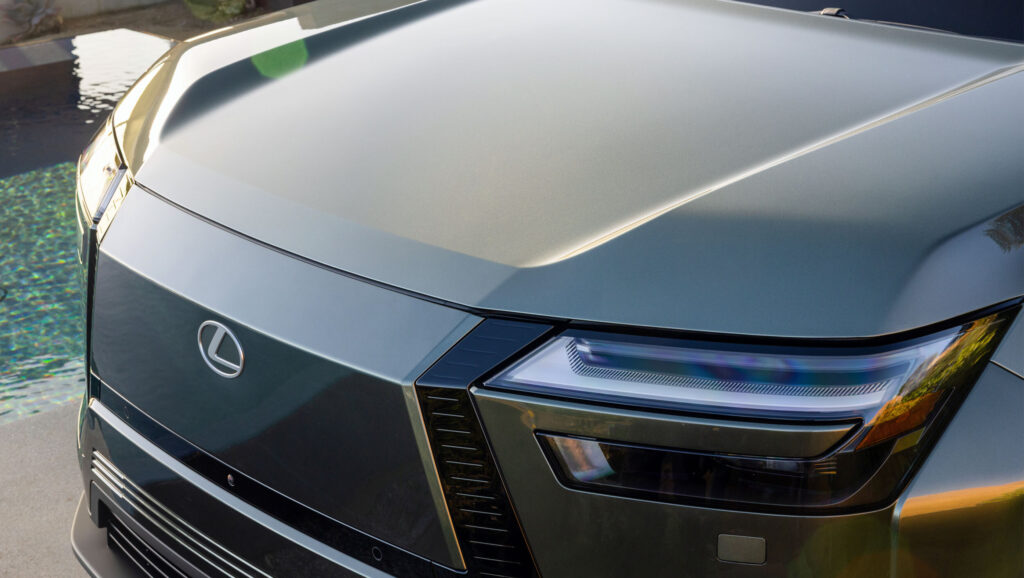
- Lexus is gearing up to launch a next-gen EV in China.
- Will use gigacasting to save weight and increase range.
- Crossover could play a big role in growing Chinese sales.
After a slow start, Toyota and Lexus have significantly expanded their electric lineups. However, one of their most important models will reportedly go into production in the fall of 2027.
According to Nikkei Asia, Lexus will build a next-generation electric vehicle at a new plant in Shanghai. Little is known about the model at this point, but it’s reportedly a crossover that will be “made with leading-edge technology, including gigacasting to mold multiple aluminum body parts together as a single large piece.”
More: Lexus Killed Its Next Electric Sedan, Then Approved Its Replacement The Same Day
The use of gigacasting was pioneered by Tesla and has been slowly spreading across the auto industry. It will be used on the upcoming Ford Fathom and it promises significant weight savings. In the case of the Lexus EV, this could increase the crossover’s range by “several percent.”
While Toyota usually reserves its most advanced production techniques for Japan or the United States, the Lexus is being billed as the “rare exception.” Electric vehicles dominate in China and the company has struggled there as they only sold 182,458 vehicles in 2025. For comparison, the luxury brand moved 370,260 units in the United States that same year.
Lexus is reportedly planning to build around 1,000 units per month in the model’s first year. However, production is slated to ramp up to “tens of thousands” of units annually.
The model appears to be a Chinese-exclusive, which would be a bit of a change for the automaker. A quick look at the company’s current lineup reveals an assortment of familiar models including the NX, RX, GX, and LX. They’re joined by the ES, LS, LM, and RZ. The latter is the brand’s sole electric vehicle in a market that practically demands them.