
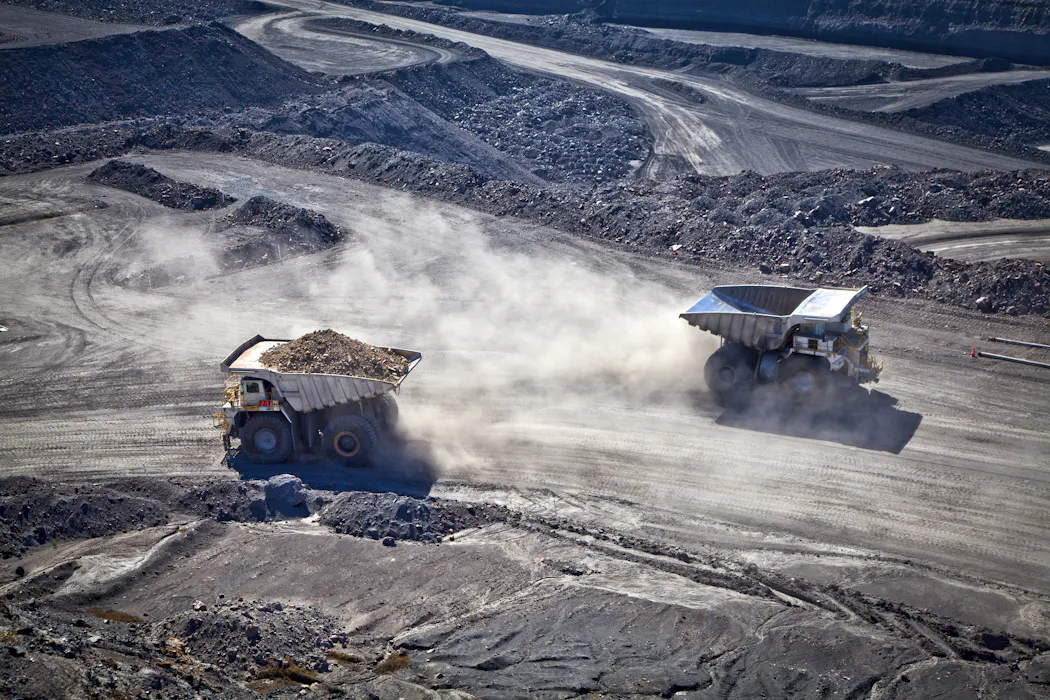
The New South Wales Independent Planning Commission has just greenlit an expansion of the largest coal mine project in the state’s history.
The decision to expand Yancoal and Glencore’s Hunter Valley Operations coal mine, which will now operate until 2045, is controversial. The planning commission received more than 10,000 public submissions across its hearing cycle.
Proponents of the expansion, including NSW Premier Chris Minns, argued it would save 1,500 jobs and inject A$1 billion into the economy each year, according to Hunter Valley Operations’ own figures.
Opponents objected to the roughly 794 megatonnes of greenhouse gases the coal will emit when transported and burned and raised concerns for local health, agriculture and First Nations communities.
The project was approved after an important NSW Court of Appeal decision last year, which ruled the planning commission must take into account the impact of emissions from burning the product overseas on the local environment. This decision is currently being appealed in the High Court, with an outcome expected next week.
So why is this expansion so controversial? And why does it matter?
Why was the expansion approved?In NSW, mining projects, including proposals to expand them, must first be assessed by the Department of Planning, Housing and Infrastructure.
The planning commission reviews the Department’s assessment alongside any public submissions. It must then consider the environmental impacts of the project, as well as the social and economic impacts on the area.
It must also take into account NSW’s emissions targets and environmental policy instruments, including the federal Safeguard Mechanism. The Safeguard Mechanism is the main federal tool for cutting emissions from big polluters. But given the mechanism doesn’t cover emissions from products burned overseas, it would deal with less than 2% of Hunter Valley Operations’ total emissions.
Read more: A landmark UN report says the world will overshoot the 1.5°C climate target. What happens now?
On Wednesday, the planning commission handed down its decision to approve the expansion of the Hunter Valley Operations coal mine. That’s despite acknowledging roughly 98% of the emissions from the Hunter Valley project are “scope 3” emissions generated by burning coal in importing countries. The planning commission’s decision also goes against the NSW Net Zero Commission, which has advised continued extensions or expansions to coal mining in NSW are not consistent with emissions targets in the NSW Climate Change Act or the Paris Agreement.
A key part of the planning commission’s reasoning was the mine’s emissions would be accounted for elsewhere. Ultimately, it decided any other risks were outweighed by the benefits for the Hunter region and NSW more broadly, including for an average of 1,311 jobs over the life of the project, government royalties and a “more orderly transition” away from fossil fuels.
However, it imposed a condition that Hunter Valley Operations take reasonable measures to export coal only to countries that are party to the Paris Agreement – under which states cooperate to limit warming to well below 2°C – or have equivalent policies in place, such as Taiwan.
NSW’s Hunter Valley is known for its thriving wine industry and picturesque landscapes. Lyn Walkerden Photography/Getty A question of trade-offsThe Independent Planning Commission’s decision highlights problems with how trade-offs and impacts on local communities are framed in the climate transition. This is a major reason why democracies are failing to tackle climate change.
Climate change is a process that forces governments, industries and everyday people to make trade-offs. The costs of abandoning fossil fuels are often local, immediate and easy to spot when planning decisions are made. The planning commission highlighted the loss of local jobs as one such cost.
However, the environmental damage of expanding oil, gas and coal projects is increasingly obvious. This week, for example, researchers at ANU and UNSW released a publicly available tool that quantifies the environmental harms of specific projects. The Carbon Impacts Tracer draws on peer-reviewed research to track temperature rise and then estimate climate-related impacts, such as how much glacial ice will melt or how many people could die due to heatwaves.
Read more: We can finally measure the damage each new coal, gas or oil project will do to people and nature
Running Hunter Valley Operations’ numbers through this tool, the coal mine expansion will result in an estimated 462,000 more people being exposed to dangerously high temperatures and 435 additional heat-related deaths in Europe.
It’s a philosophical question whether saving 1,311 jobs can be weighed against 435 preventable deaths. But these are the conundrums we must increasingly confront in the climate transition. The greatest risk, however, arises when clever carbon accounting stops us asking important questions.
Consider the planning commission’s reliance on the Paris Agreement, for example. Given the Paris Agreement counts emissions where fuel is burned, not where it’s extracted, Hunter Valley Operations’ exported coal never appears on Australia’s books. What’s more, governments already plan to produce far more coal than a Paris-compliant world can burn. Every extra tonne mined adds to that global oversupply, pushing prices down and keeping coal cheaper for longer. That’s regardless of which specific country is burning Hunter Valley coal.
NSW’s Mount Piper coal power station is set to close by 2040. mikulas1/Getty The role of lawLaw forms the foundation of our modern world. When it comes to the climate transition, it exists to make the trade-offs clear.
Without it, decision-makers — and democracies — can’t properly weigh the costs of abandoning fossil fuels or doubling down on their use. The issue is many existing legal frameworks push carbon out of sight, with the Independent Planning Commission’s latest decision being a case in point.
Worryingly, the NSW Minerals Council wants to go further. It is urging the state to legislate to limit legal challenges to coal approvals. This would effectively invert the role of law. Rather than reveal the trade-offs, it would hide them altogether.
Read more: Question of whether taxpayers or fossil fuel companies pay for climate change damage heads to Supreme Court
Liz Hicks currently receives funding from the Manchester-Melbourne-Toronto Research Fund for a project on constitutional accountability and the environment. She is also a member of the Australian Greens Victoria.