
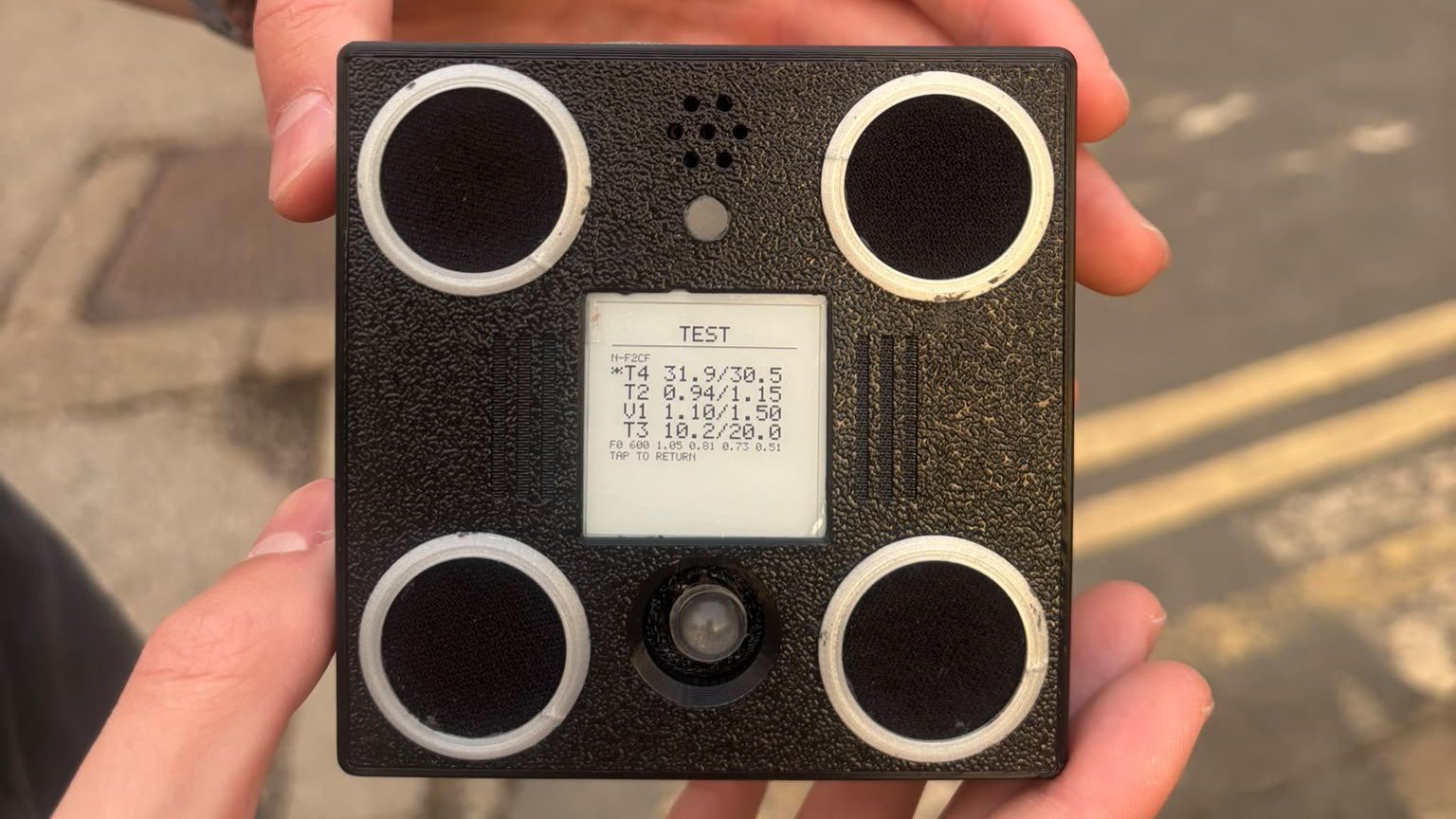
Drones have become a potent military threat, particularly on the small scale. Nimble multi-rotor drones are fast, difficult to spot, and can cause plenty of harm if allowed to go about their work unhindered. The first step to dealing with this issue is detection—a problem that [Agam Rossen] has put some work into.
The result is VolAnti—an open-source drone detector. This route was chosen as a reliable way to detect incoming multi-rotors, since spinning propellers tend to create a telltale sound that can be plucked from the noise quite specifically. In a world where fiber optic drones eschew RF emissions, it also proves particularly useful for early warning of such craft.
VolAnti relies on a small four-microphone array, with the I2S output of all four mics summed together. The output is then fed into a 2048-point FFT running every 32 ms on an ESP32-S3. A comb score is given to try and pick out different blade rates from 70 Hz to 2000 Hz. Multiple detection algorithms run in parallel, because [Agam] noted a problem—using an adaptive noise floor would miss drones that arrived in the area and hovered in place. With the noise not varying, it would get filtered out by the adaptive floor, so one algorithm in the four runs with no floor to catch drones that aren’t moving. Files are on GitHub for those curious to learn more.
We’ve featured other acoustic detection projects before, too. If you’re working on something similar, or conversely, you have the inside scoop on how to hide a drone’s noise signature, don’t hesitate to let us know on the tipsline.