
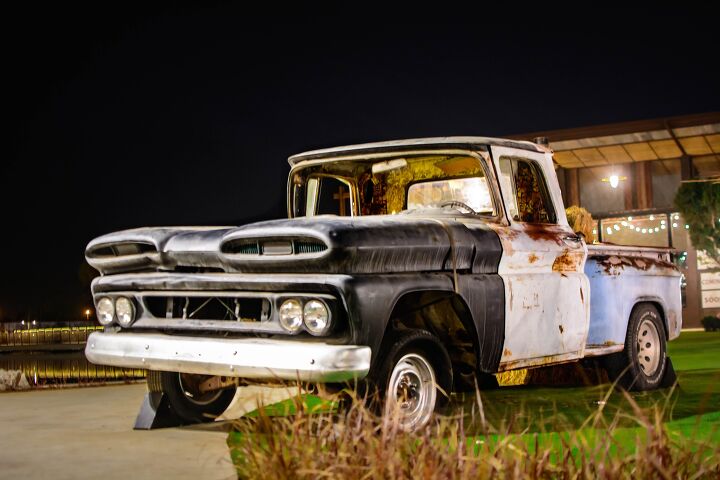
Whether we’re talking about the U.S. chicken tax, modern tariffs, or the last several decades of emissions rules, the pickup segment is beset on all sides by government influence. Some would even go so far as to call it overregulated — something which was arguably done to protect domestic automakers at the expense of the free market.
Opinions vary on whether this was a wise decision. One certainly wants to root for the home team whenever possible and pickup sales don’t appear to have suffered much over the last several decades. But we have seen diminished variety until fairly recently and there’s a sense that full-sized trucks may have achieved market saturation due to elevated pricing.
With several smaller truck models rumored on the horizon, it feels like the segment could be in for some meaningful shakeup. However, many of the political decisions that forced American trucks down the narrow path are still in effect — calling into question what’s actually feasible.
Let’s take a look at where we are before we start to break down where we’ve been, let alone pontificate about where trucks might be going.
The whole concept of the pickup truck has been muddled over the years. Formerly serving the domestic workhorse, full-size trucks have more-or-less evolved to replace luxury sedans. Land yachts died with the Ford Crown Victoria in 2011. Manufacturers were pivoting to SUVs, which boasted larger profit margins, and gradually started marketing them less for their utilitarian aspects and more for their grandeur. They were becoming the new luxury cars and pickup trucks had already been trending in the same direction.
While automakers still field base-trimmed models today, they’re often reserved for fleet sales. Meanwhile, you can find those same models in showrooms with six-figure price tags decked out with every feature imaginable. Low-option trucks are often hard to come by on dealer lots, functionally nullifying the concept of there even being a starting MSRP. Despite being larger than ever before, many full-size models have moved away from the simple motors of their predecessors to embrace smaller and more-complex powertrains. Beds are also smaller than they used to be thanks to the normalization of crew cabs. Trucks have clearly moved away from being almost comically basic working vehicles. In many cases, they’re now more mechanically and electronically complex than the typical sedan — albeit equipped with beefier hardware and added capabilities.
But it’s rare to see that functionality being tapped into by their drivers. Despite being optimized for towing/hauling, studies have shown that most of the people who own pickups don’t really use them for their intended purpose. Market analysts estimate that most drivers (over 70 percent) don’t even tow something once per year. While the truck bed does see more regular use, around 35 percent of owners still won’t bother using them over a 12-month period.
We’ve also seen a massive uptick in companies offering specialized off-road packages for pickups. They sell extremely well, often at a significant markup. But the vast majority of customers will never stray from flat-paved surfaces because they’re primarily interested in purchasing a status vehicle that makes them feel invincible. There’s nothing inherently wrong with this. Modern pickups (especially full-size models) are spacious and remain comfortable on roads where potholes have become an issue. For many drivers, they make a solid alternative for the now-absent American land yacht. But they’ve also abandoned a demographic of drivers that just wants an affordable knock-around vehicle that can still do truck things.
Midsize trucks have helped satisfy the hole in the market to a degree. But they share a lot of the same problems as their bigger brothers and the same is true of even smaller alternatives like the Ford Maverick. The point isn’t that there’s something wrong with these vehicles, just that they’re a far cry away from the budget-focused, utilitarian models from decades prior.
During the early 1970s, pickups were still being marketed exclusively as work vehicles. But the oil crisis, combined with new emissions rules from the government, made them suddenly less appealing. To combat this, automakers began advertising them as lifestyle vehicles in the hopes that they could sell them to suburban households. The scheme worked. Interiors became more plush, paint options became more elaborate, and 4x4s became more popular.
Pickups were suddenly trendy and sales increased as a result.
At the same time, drivers would begin to embrace smaller pickups in an effort to save fuel. Downsized trucks from Datsun/Nissan were already fairly popular with tradesmen working in densely populated areas. They would eventually be followed by the legendary Toyota Hilux, which wasn’t even given a proper name by the automaker for our market, and the Mazda B-Series. But other brands would rush the segment during the fuel crisis and it seemed like practically every automaker had a micro truck on offer by the 1980s.
Dodge had the D-50, Plymouth had the Arrow, Ford had the Courier, Chevrolet had the LUV, Mazda had the B2000, and Subaru had the BRAT. Even Volkswagen had a pickup that was based on the Golf/Rabbit. Subsequent models included the original Ford Ranger, Chevrolet S10, GMC Sonoma, Mitsubishi MightyMax, Dodge Rampage, and the Plymouth Scamp.
The recipe was simple and stayed largely unchanged from the original formula. Manufacturers would field a small, affordable pickup (typically single cab) offering a sizable bed and superior fuel economy at the expense of towing capacity and ground clearance. Most of the domestic trucks were also locally manufactured variants of Japanese models given the requisite American branding.
This allowed them to circumvent the chicken tax entirely, whereas the foreign automakers often had to ship their trucks across an ocean without their beds to exploit regulatory loopholes. These vehicles were technically chassis cabs until finally assembly took place and the bed could be mated to the rest of the vehicle upon U.S. soil. While still subject to tariffs, the rate was significantly lower than the 25 percent stipulated under the chicken tax.
The Subaru Brat took a different approach by bolting extra seats into the truck bed, legally classifying it as a passenger car. This oddball allowed the model to avoid a majority of import fees, with customers having the ability to unbolt the rear-facing seats upon taking ownership.
However, full-size pickups still trumped the smaller models in overall popularity. Ford’s F-Series was already America’s best-selling vehicle by the time the small-truck craze had reached its fever pitch. By the 1990s, domestic manufacturers had conducted several rounds of market research that proved that a majority of truck customers weren’t really using their work vehicles for work anymore. This was when the pivot to luxury began in earnest, only to accelerate over time.
This is also when we start to see smaller trucks vanish from the North American market. The fuel crisis had been over for years and crash testing had shown that the pint-sized pickups were often at a serious disadvantage in terms of safety. Customers trending toward luxury also meant those small, utilitarian trucks now had fewer takers.
Adhering to evolving safety standards and consumer tastes meant the vehicles would need to get heavier and more expensive, undermining the entire concept of the compact pickup.
With the 25-percent imported truck tariffs still in play, Japanese brands had to decide whether it was even worth allocating space on American assembly lines for smaller trucks. Building larger pickups would yield fatter margins and they certainly couldn’t ignore their extremely popular passenger cars. That, combined with the updated safety regulations, made the choice pretty obvious by the late 1990s and we’d start to see them exit the market.
Any chance of the tiny trucks seeing a resurgence was effectively nullified by rules that tied fueling regulations to the overall size of a vehicle in 2011. Automakers could effectively avoid stringent fuel economy rules by building the largest vehicles possible, which explains why most automobiles have gotten significantly larger over the years.
But there’s clearly an appetite for smaller trucks today. While the Ford Maverick may only see a fraction of the F-Series’ sales in a given year, it still does good business for the brand.
Meanwhile, Americans have started to import ultra-tiny Japanese Kei trucks to serve as local runabouts and overpaying for vintage micro pickups in decent condition. There was likewise an overwhelmingly positive response when Toyota previewed the new Toyota Hilux Champ for the global market. The super-small, body-on-frame pickup sells for the equivalent of about $13,000 in places like Indonesia and Thailand. However, it looks like Toyota doesn’t plan on selling it in North America — likely due to it being a niche vehicle subject to the chicken tax.
Instead, Toyota is plotting something below the Tacoma for the market that would presumably yield juicer profit margins. The pickup is rumored to use the TNGA architecture shared by the RAV4. That means it’ll be locally manufactured, unibody and come with all the trappings of modern connected automobiles.
It’s hard to say if that’s a wise play when a significant portion of the customer base that’s interested in kei trucks, vintage micro pickups, models like the Hilux Champ want them specifically because they feature older technology. Modern connected vehicles have certainly been profitable for automakers. But some of their customers have mixed feelings now that they better understand the drawbacks of “software-defined” vehicles.
The silver lining is that customer pushback has encouraged brands to implement — again — more traditional controls, albeit to a modest degree. At the same time, the United States has recently walked back some of the emission rules that have crippled diesel sales and encouraged manufacturers to run with those smaller and more-complicated powertrains. This had created a window for automakers to once again sell trucks featuring larger engines without preventing them from utilizing modern technologies (e.g. hybridization).
Then again, today’s elevated fuel prices may make that a tough sell if the resulting fuel economy suffers too greatly. A change in national leadership may likewise throw the country swiftly back into a compliance mindset, as there are still many groups pushing for mandatory electrification. This includes many automakers, especially those who have had better luck selling EVs on markets outside North America. One also feels compelled to mention that complicated powertrains play into planned obsolescence, something which seems rampant across all industries of late.
While I’m not suggesting that Americans would immediately flock to something like the base-trimmed Isuzu D-Max or Mitsubishi Triton/L200, there’s arguably a need for more basic and affordable truck models. But there are a few things manufacturers need to consider.
For starters, Americans don’t want a pretty pickup. The Ford Maverick beat the Hyundai Santa Cruz in sales because the former has the more traditional, boxy design. Ruggedness (whether genuine or perceived) is an essential component of why people want to buy pickup trucks — regardless of size. Capability is the other big factor. Customers don’t necessarily need a truck to be best in class in terms of towing, payload, dependability or off-road performance. But it needs to be able to deliver on the promise of being a truck to a meaningful degree.
The above is true of all vehicle segments. For example, the Jeep Wrangler has unfortunately developed a reputation for subpar reliability. But it’s still staggeringly good off-road and absolutely looks the part, which is why over 100,000 Americans still purchase them each year.
Obviously, tariffs will continue to play a role as well. Mitsubishi plans on offering a new pickup for North America. But it cannot realistically just ship us the Triton without encountering the chicken tax and a slew of other import fees. That means it’s likely going to base the new model off the next-generation of the Nissan Xterra and Frontier — presumably building them at the same facility in Canton, Mississippi.
Keeping all the aforementioned items in mind, pricing is going to be the final item to watch in terms of whatever comes next to the pickup segment. People I know often ask me what vehicle they should purchase. This used to result in my asking them a series of questions to determine their needs and then making a few recommendations, urging them to test as many vehicles as they realistically could before making an informed decision.
While that still happens, everyone now seems extremely concerned with price. Cost of ownership is often the first thing that’s mentioned in these discussions. Many will even say things like “You know, I’d really love to buy a truck. But they all seem so expensive.”
This nation’s willingness to go ever deeper into debt notwithstanding, there really does seem to be a growing need for affordable options. The question is where the sweet spot will be for smaller truck models and how this will play against the larger options. Tariffs have seemingly eliminated any hope of us seeing basic, ultra-cheap imported pickups and there’s still a lot of people willing to spend a bundle on full-size domestics.
Automakers would absolutely prefer to sell the highest-margin vehicles possible and those often tend to be the biggest. But trying to offset declining volumes with lofty per-unit profit margins seems a poor long-term strategy. The market will eventually either crash or adapt to the changing needs of drivers. Sadly, the latter solution hinges on a free-and-fair market and trucks arguably exist in the most gamified segment of the tightly controlled automotive industry.
[Images: Natharsha/Shutterstock; Ram; JoshBryan/Shutterstock; Sandro Leardini/Shutterstock; Jenny.DAnsel/Shutterstock; Jasson38ks/Shutterstock; Toyota; Mitsubishi; Nissan; Hrach Hovhannisyan/Shutterstock]
Become a TTAC insider. Get the latest news, features, TTAC takes, and everything else that gets to the truth about cars first by subscribing to our newsletter.