
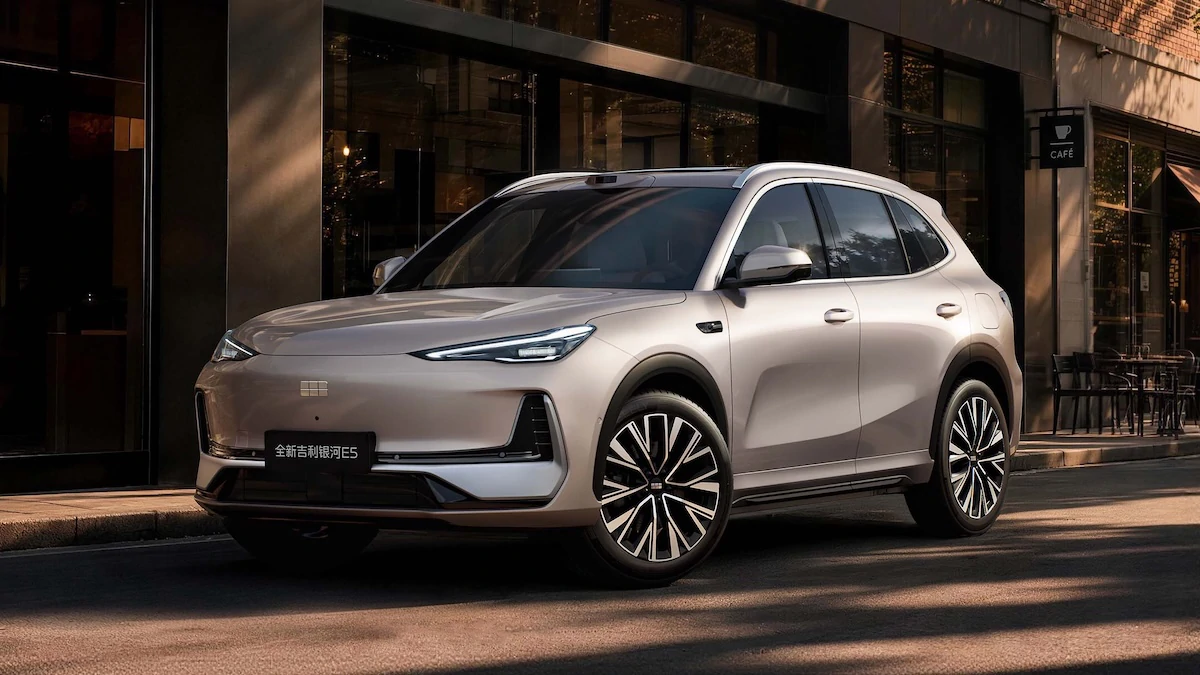
A report from Nikkei states that ICE cars made up less than half of global new car sales from January to June this year. It is believed that this is the first time this has happened since the invention of the mass-produced automobile.
At 20.25 million gas-powered units sold in H1 2026, this represents a 10% year-on-year sales drop and just 49% market share. This data comes from automotive industry analytics firm Global Mobility, and excludes models that use some form of electrification to supplement a combustion engine.
PHOTO BY Geely
This is largely attributed to the ongoing war in the Middle East between the United States and Iran, which saw traffic passing through the Strait of Hormuz restricted. This in turn caused oil prices to soar, pushing consumers to consider alternative options to gas-powered models.
OTHER STORIES YOU MIGHT HAVE MISSED:
PH fuel price update: P0.24/L decrease for gas, P7.57/L for diesel effective September 29
6 Plug-in hybrid EVs that should debut in PH
By comparison, the market share of EVs rose to 17% in the same period, which accounts for 6.87 million units sold globally. Nikkei points out that this is past the 16% threshold considered as the “tipping point for mass adoption.”
PHOTO BY VinFast
Despite sales slowing down, the Chinese market still made up half of global EV sales in H1 2026 at 3.44 million units moved. Southeast Asia, on the other hand, exhibited a sharp uptick in EV demand. The region saw around 850,000 units sold, a leap of around 81%. Other regions driving EV market share growth through increased demand include Europe and Australia.
Per Mobility Global’s forecast, it is estimated that EVs could account for 30% of global vehicle production by 2030. This would put it ahead of other powertrains like hybrid and combustion vehicles.
PHOTO BY Niky Tamayo
However, analysts point out that EV adoption is still heavily dependent on government policies such as subsidies and regulations. This has been observed in the United States market, where automakers have shifted focus to hybrids instead after the expiry of government subsidies for EVs.