
For years, Europe could afford to treat the energy transition primarily as a question of sustainability. A cheap and relatively secure gas supply meant the economics and security of energy could largely be taken for granted. Russia’s invasion of Ukraine changed that equation.
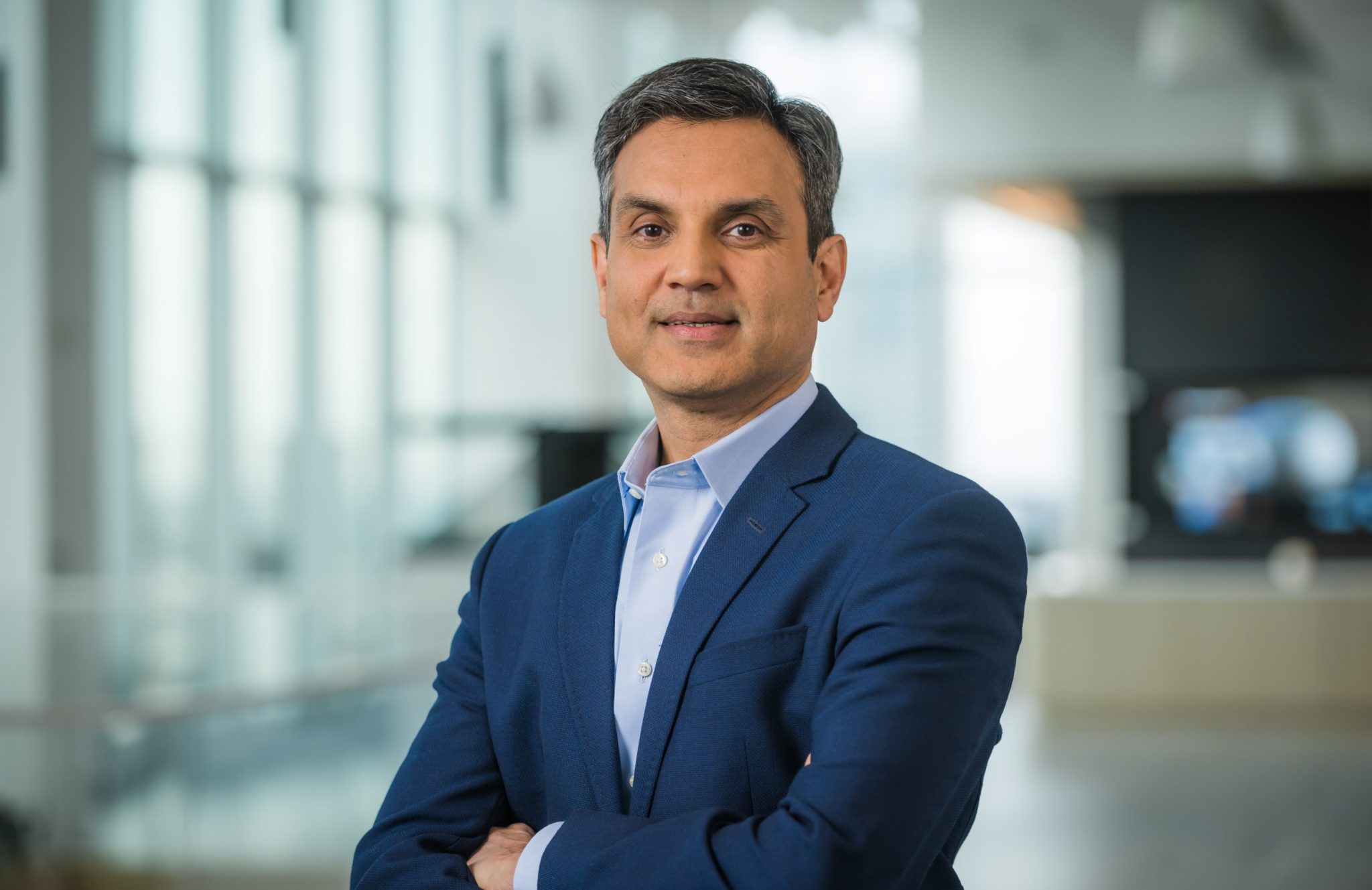
“Before the Russia-Ukraine war, the security of gas coming in and the cost of using it was so low; the risk was just not there,” says Anant Maheshwari, president of strategy and global regions at the $66 billion market cap industrial automation company Honeywell Technologies. “Now, it may not be available, and if it is available, it’s at a high cost.”
That has changed the terms of the energy transition. Europe can no longer think about decarbonization separately from the cost and security of the energy needed to power its economy. The challenge now is to build an energy system that is simultaneously cleaner, affordable, and secure—and to do so without undermining the competitiveness of European industry.
China has been particularly effective at doing this, in Maheshwari’s view. The country has its own energy security constraints and, beyond coal, does not control many of the traditional sources of energy it relies upon. Its response has been to invest rapidly across a broad mix of technologies, from solar and wind to biofuels, sustainable aviation fuel, and carbon capture, while also improving energy efficiency.
“China understands that they have an energy security problem,” says Maheshwari. “They are very clear that they’re not going to create a new source of fuel, so it has to be generated in a way that’s sustainable. And therefore they’re doing everything with the notion of sustainable technology, but focusing on security and economics.”
What distinguishes China, he argues, is not simply the scale of its investment but the breadth and speed of deployment. “They have the widest range of technology applications, at pace and scale,” he says.
Brazil offers a different model. Maheshwari sees the country as a frontrunner in biofuels, drawing on its agricultural resources and experience with crops, including sugarcane and macaúba, a native palm tree that can be grown specifically for fuel. The opportunity there, he says, is to create renewable fuels that can serve sectors where electrification is more difficult, including aviation. “Imagine you’ve got a fully renewable source—you are growing something from the ground and converting that into jet fuel,” he says.
Europe’s renewables advantageEurope, of course, has its own advantages: world-class companies capable of building and deploying new technologies at scale; strong research and development capabilities; a deep pool of engineering expertise; and a large, wealthy market in which to commercialise them. It also has an established industrial base and sophisticated energy infrastructure that could help accelerate the adoption of new technologies.
But the question is whether it can deploy those capabilities quickly enough—and at an economic cost that allows European businesses to remain competitive. Maheshwari says other regions under his remit have the regulatory support to speed up the energy transition. “Europe needs to make sure that regulation helps industry to accelerate, rather than decelerate.”
He notes that Europe has a substantial renewables and nuclear base: 48% of the energy produced in the EU in 2024 came from renewable sources and 28% from nuclear, according to official EU data. But Maheshwari argues that Europe needs to make better use of all parts of that mix by expanding renewables, nuclear and natural gas, and making fossil fuel generation cleaner by capturing or otherwise reducing its emissions.
“Europe needs to make sure that regulation helps industry to accelerate, rather than decelerate”
Anant Maheshwari, president of strategy and global regions at Honeywell Technologies
That makes efficiency as important as finding new sources of energy. Increasing production by using greener sources misses a potentially cheaper and faster route to meeting that demand. An example he gives is a global fast food restaurant chain, which had no central visibility of its energy usage across its 600 U.K. stores. Once the stores were connected to a central system, significant variations in consumption became visible—in some cases as much as 30% to 40%—creating opportunities to reduce energy use. “Savings can be made everywhere. It’s not just in areas that we design systems for, but in any areas where systems can be applied,” Maheshwari says.
The opportunities of physical AIThis is where AI starts to change the equation, he continues. For example, conventional building control systems operate according to programmed rules: if the temperature changes, adjust the heating or cooling. AI can turn that into a system that learns from changing conditions—including occupancy—and adjusts accordingly, cooling or heating only the parts of a building that need it.
But applying AI to the physical economy is more complicated than applying it to IT, says Maheshwari, who was president of Microsoft India for seven years between spells working for Honeywell. Industrial systems can remain in operation for decades, requiring companies to integrate new technology with legacy equipment. And the data generated by those systems is often difficult to access, because it sits within proprietary systems designed to control physical equipment.
“Operating technology has to connect data to physical processes,” Maheshwari explains. “That creates a particular challenge for AI because companies have to introduce new technology while maintaining and integrating legacy equipment.”
Maheshwari calls the broader opportunity “physical AI”, although he acknowledges that the term has no settled definition. In some parts of the world, it is synonymous with robotics and drones. For Honeywell, the concept is broader: using AI to make buildings, factories, assets, and supply chains more efficient and increasingly autonomous.
One application is safety. Regulations require fire detectors to be tested periodically, a process that can involve technicians physically checking individual devices. An automated system can test multiple detectors remotely and identify those requiring physical inspection, turning days of manual work into a much faster process while maintaining human oversight.
For Maheshwari, that is also where the conversation around AI and jobs becomes more nuanced. Industrial companies are already facing labour shortages, particularly as populations age. The opportunity, he says, is to keep people “at the core of the decision making” while using AI to give them the right intelligence to make decisions faster.
The implications extend beyond individual buildings or factories. As AI makes it possible to use existing infrastructure more efficiently, Maheshwari returns to the argument that we should be focusing less on how much more power the world can generate, and instead ask how to make more intelligent use of what we already have. “The world will need more energy than it uses and produces today,” he says. “The question is, are we going to consume it as inefficiently?”
For the latest coverage and updates from Fortune CEO Forum, as well as insights into the companies on our list, visit this page.
This story was originally featured on Fortune.com