
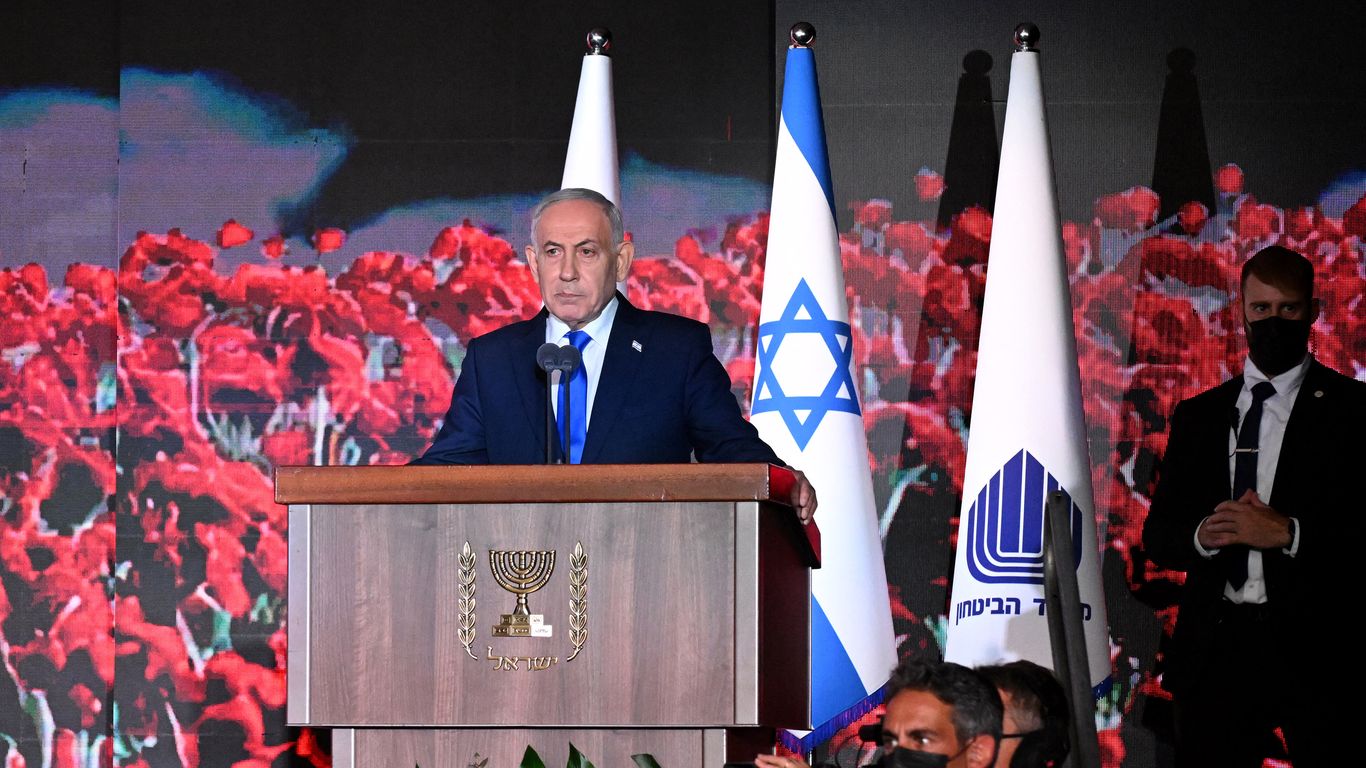
Presidential envoy Jared Kushner urged Israeli Prime Minister Benjamin Netanyahu on Tuesday to make good on commitments he made to Donald Trump to implement a Gaza peace plan, according to three sources with knowledge of a call between them.
Why it matters: The White House and Trump's Board of Peace have been increasingly exasperated by what they viewed as Netanyahu's obstinacy on Gaza, convinced that he's been prioritizing his political survival above all else.
- "I feel like the fork in the road is Israel could rise from the tragedy of October 7, be much more secure and much more integrated into the world, or they can go on the current trajectory, which is to trend toward global-pariah status," Kushner said in a New York Magazine interview published Monday.
- But two sources with knowledge of the call said it was "positive and constructive." One of them said Netanyahu signaled again that he's ready to move forward with the steps in Gaza that the White House wants.
- A third source confirmed that Netanyahu said he's committed to the Gaza plan.
- The Israeli prime minister's office confirmed that the call took place but declined to comment further.
The big picture: The Gaza roadmap calls for disarming Hamas and demilitarizing Gaza, as well as transferring responsibility for governing the enclave to a new Palestinian technocratic government. But it has been on hold for months because of the Israeli elections held on Oct. 27.
- Trump endorsed Netanyahu shortly before the election and now wants the prime minister to reciprocate. But many of the Gaza measures are loathed by Netanyahu's base.
- Netanyahu's opponent, Gadi Eisenkot, currently has a window to form a new government. He's making progress, and if he succeeds, Netanyahu could be ousted as early as next week.
- Eisenkot promised during the campaign to implement Trump's Gaza plan with the goal of ensuring that Hamas no longer controls the territory within 18 months.
Catch up quick: In July, the Board of Peace agreed with Hamas on a 15-point plan to disarm Gaza's armed groups and transfer civilian and security control to a new Palestinian technocratic government.
- Since then, Netanyahu's government has largely refused to move forward with implementing it.
- Netanyahu was and still is extremely skeptical that Hamas would ever demilitarize. He says the group is reconstituting and rearming in Gaza.
Driving the news: President Trump spoke to Netanyahu two weeks ago and asked him to move ahead with implementing the Gaza plan.
- Two sources with knowledge of the matter said Netanyahu told Trump he would approve measures that are needed to implement the plan. But since then, nothing has happened.
Behind the scenes: During his call with Trump, Netanyahu said that he couldn't approve the steps in Gaza the U.S. wants because he's heading a caretaker government.
- But the Netanyahu government accepted the Gaza plan and committed to taking those steps long before the election.
- "Bibi claimed he can't do small things in Gaza he already agreed to because he is a caretaker prime minister, but at the same time he claimed there is no problem for him to go to war with Iran. This wasn't a serious argument," a source with direct knowledge said.
Zoom in: The sources said that implementing the Gaza plan hinges on the Israeli government's green light.
They said the White House and Board of Peace have been asking Netanyahu to approve these steps:
- Allowing the International Stabilization Force (ISF) to deploy in Gaza.
- Permitting 4,000 Palestinians who were vetted by the Israeli security services and accepted to be part of a future Gaza police force to leave the enclave for training in Egypt and then be allowed to return.
- Approving materials for water and sanitation projects in Gaza.
- Allowing temporary mobile homes to enter Gaza to provide shelter in the winter.
- Allow construction materials into Gaza for building the ISF bases.
- Permitting a Palestinian technocratic government to begin operating in one area in southern Gaza as part of a pilot project.
What to watch: A source with knowledge of the matter said that there's a sense that the Trump administration's private and public pressure — as well as the results of the midterm elections — has made Israel more receptive to implementing the Gaza plan.
- The source added that while the call with Netanyahu was positive, it remains to be seen whether Israel will actually take the steps the U.S. wants.