
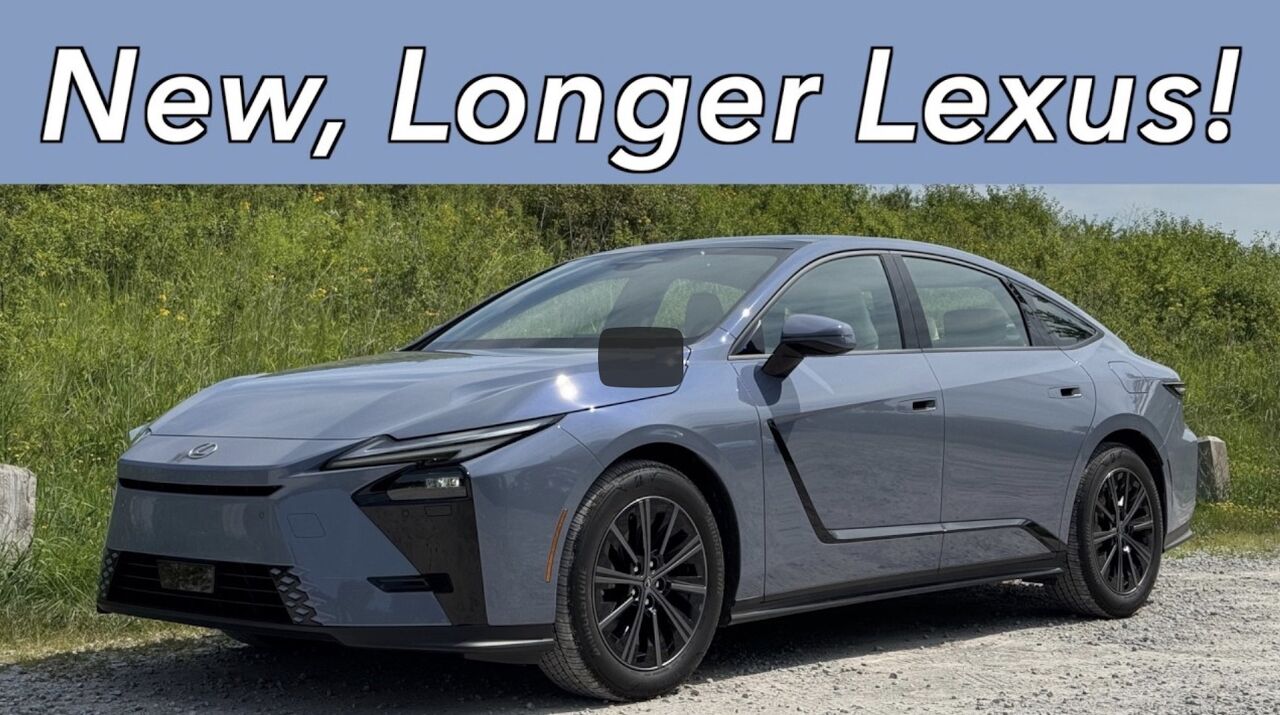
In this video, I take you through the car, show you what features are offered and how they work. And then I take you on a drive to get a sense of how well it handles, the quality of the ride, and the overall experience.
Views on Vehicles focuses on new car reviews and news, presented by Robin Warner, a perennial car nut. The reason for the channel's focus becomes crystal clear when you look at Warner’s experience.
He spent five years of his adult life as an engineer: four years in traction and stability control calibration, and little over a year in vehicle dynamics. He also spent 15 years of his adult life as an editor at various magazines, including stints at Car and Driver, Road & Track, and Autoweek.
The TTAC Creators Series tells stories and amplifies creators from all corners of the car world, including culture, dealerships, collections, modified builds and more.
An AI-summarized transcript edited by a staffer is below.
[Image: YouTube screenshot]
Become a TTAC insider. Get the latest news, features, TTAC takes, and everything else that gets to the truth about cars first by subscribing to our newsletter.
Summary
The eighth-generation 2027 Lexus ES represents a significant redesign, growing substantially in size while adopting a sharper, more modern appearance. Although its styling has an almost electric-vehicle look, the ES is available with both hybrid and fully electric powertrains. The review focuses on the ES 350h all-wheel-drive hybrid.
Exterior Styling and Pricing
The redesigned ES is more than six inches longer and over four inches taller than its predecessor. The larger dimensions translate into additional passenger and cargo space, while the exterior styling moves away from the traditional Lexus appearance toward a more contemporary, EV-inspired design.
Pricing varies by powertrain:
- ES 350e front-wheel-drive electric: Starting at $48,895.
- ES 500e all-wheel-drive electric: Starting at $51,895.
- ES 350h all-wheel-drive hybrid: Starting at $52,495.
Powertrain and Performance
The ES 350h AWD combines a 2.5-liter four-cylinder engine with three electric motors, producing a combined 244 horsepower.
Acceleration is respectable, although the reviewer estimates zero-to-60 mph takes approximately seven seconds. It isn't particularly quick, but performance is adequate for a midsize luxury sedan focused more on comfort than sportiness.
The fully electric versions offer different performance characteristics:
- Front-wheel-drive ES 350e: 221 horsepower and an estimated 307 miles of range.
- All-wheel-drive ES 500e: 338 horsepower and an estimated 276 miles of range.
Both electric versions use a 74.7-kWh battery pack. The AWD electric model promises considerably stronger acceleration, with Lexus estimating a zero-to-60-mph time of just over five seconds.
Interior, Technology and Passenger Space
The cabin is one of the biggest improvements in the redesigned ES. The increased exterior dimensions provide substantially more room for passengers, particularly those in the second row.
Rear legroom measures an impressive 41 inches, making the ES especially accommodating for taller passengers. The trunk also benefits from the larger dimensions.
Even the base Premium trim comes generously equipped with:
- 12.3-inch digital instrument cluster.
- 14-inch central touchscreen.
- Wireless Apple CarPlay and Android Auto.
- Wireless smartphone charging.
- Heated and ventilated front seats.
- Heated steering wheel.
The interior adopts a minimalist approach, with extensive touchscreen and haptic-touch controls replacing traditional physical buttons. The climate controls are integrated into the touchscreen, although a conventional volume knob remains.
The reviewer appreciates the clean, modern appearance but notes that the lack of physical controls might not appeal to everyone.
Ride Quality and Cabin Quietness
Comfort remains the ES's defining characteristic. Despite its increased size, the sedan retains the soft, cushioned ride that has long been associated with the model.
Lexus also invested heavily in sound insulation, including additional sound-absorbing materials and acoustic glass in the front windows. The result is a remarkably quiet cabin, even at highway speeds.
The reviewer describes the ES as an excellent highway cruiser, with comfortable leather seating and a relaxing driving environment.
Highway Performance and Driver Assistance
On the highway, the 350h delivers adequate acceleration for merging and maintaining traffic speeds.
The vehicle includes Lexus Safety System 4.0+, which provides several advanced driver-assistance features, including lane-centering steering assistance and automatic lane changes.
The lane-centering system works particularly well, keeping the vehicle positioned in the middle of its lane. However, it quickly reminds drivers to return their hands to the steering wheel.
The automatic lane-change function works, although the reviewer finds its operation somewhat finicky.
During a brief handling test, the ES remains composed and stable, even when pushed through a corner. The tires begin to complain, but the vehicle maintains its composure without drama.
Final Impressions
The eighth-generation Lexus ES makes a strong case for itself as a comfortable, spacious and technologically updated luxury sedan.
Its biggest strengths are its dramatically improved passenger space, exceptionally quiet cabin, comfortable ride and generous standard equipment. The availability of hybrid and fully electric powertrains also gives buyers more choices than previous generations.
However, questions remain about whether the increasingly minimalist interior and technology package deliver the complete luxury experience expected in this segment. The reviewer also raises the possibility that Lexus may be falling behind some competitors in areas such as premium audio technology.
Overall takeaway: The 2027 Lexus ES is a substantially larger, more modern and more comfortable luxury sedan that remains faithful to its traditional strengths. The hybrid powertrain provides adequate performance, while the electric versions offer considerably more power. Its emphasis is clearly on passenger comfort, quietness and refinement rather than outright driving excitement. The reviewer comes away impressed but believes the car deserves a more extensive evaluation before making a final judgment.