
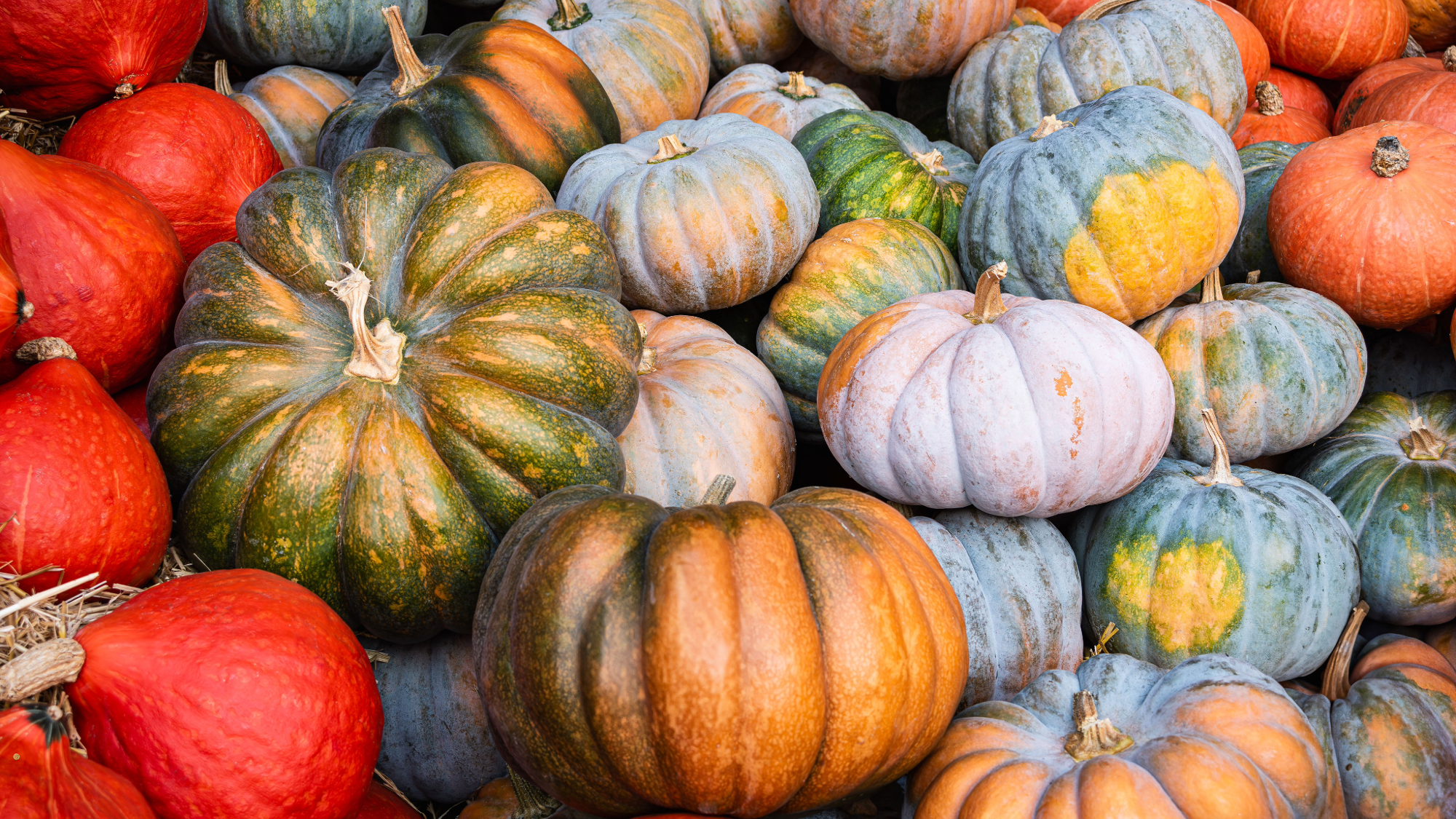
From jack-o-lanterns and cute tabletop knickknacks to pumpkin pie and the ever popular pumpkin spice latte, the iconic squash fills every nook and cranny of the fall season. But the vegetable has taken a long and strange journey to become our favorite autumnal symbol.
Logan Kistler, an anthropologist at the Smithsonian’s National Museum of Natural History, is interested in the origin stories of the crops that feed humanity. And squashes have a strange one. They evolved in the Americas before corn and beans, and played an important role in the start of agriculture in the two continents, he tells Popular Science.
It’s worth highlighting that pumpkins are a type of squash. Indeed, “pumpkin” is not an official botanical term, Kistler points out. Squashes, along with zucchini and some gourds, belong to the genus Cucurbita, which is within the broader family Cucurbitaceae, which includes melons, watermelons, cucumbers, and other kinds of gourds.
“Out of this genus Cucurbita at least six different independent lineages of squashes, pumpkins, gourds, and things like that evolved in several different places in the Americas, more or less simultaneously,” says Kistler. However, “the quirky thing about this genus and about a lot of members of this family is in the wild they are unpalatably nasty. They’re incredibly bitter.”
That bitterness comes from high concentrations of cucurbitacins. The compounds are the most bitter natural substances that scientists know of. Humans can’t stomach that level of bitterness, but paleontologists have discovered that mastodons (extinct elephant-like mammals) were eating them 30,000 years ago. And that means disseminating them through their feces.
Pumpkins evolved in several places in the Americas. Image: Jacqueline Anders via Getty Images.Today, there is no such megafauna in North America that can withstand wild squashes—they’ve lost their evolutionary partner. Cue humans, whose landscaping-shaping settlements give Cucurbita a new ecological niche to fit into.
“You can kind of think of it as, they lose their one mutualistic partner and then they can just kind of cozy up into this new disturbed landscape that’s created by humans. But then for that relationship to make any sense, they can’t be unpalatably bitter and they can’t be toxic,” Kistler explains.
It appears that these wild squashes had to make, “that evolutionary concession to soften the rind, become less toxic, more palatable and reap the benefits of the protection and care of human cultivators.”
It seems to have worked. The genus spread far and wide, and wherever it overlaps with humans, they are making use of it. For example, the pumpkins we use to make jack-o-lanterns every Halloween originated in Mexico approximately 10,000 years ago, and there is evidence of humans domesticating them there very early on.
Ultimately, the transition from extremely bitter mastodon snack to today’s autumnal epitome probably involved both Cucurbita’s natural evolutionary journey as well as human intervention. “I tend to think about domestication as, at least in the early phases, the plant is adapting to life alongside humans and that has benefits to humans,” says Kistler, adding that at some point people will get involved more directly.
But it doesn’t seem like many of these earliest domestication efforts were carried out with the goal of food production. In Florida, they may have been used as fishnet floats, and in the southwestern United States they were likely put to use as containers.
They were eventually carved and—as we all know—baked into pies.
The post The pumpkin’s strange journey from toxic plant to a seasonal staple appeared first on Popular Science.