
Mexico’s truest beauty can often be found in its widely diverse, uniquely regional variations of culture and flavors. No two places in Mexico are exactly alike. Whether it’s the way a certain salsa is prepared, the protein of choice used to stuff a tamal or the techniques that may differ from coast to coast, pueblo to pueblo, the country reflects an endless multiverse of realities inside its kitchens. As a taxi driver in Oaxaca once told me while driving across the desert terrain, you can spend two lifetimes in Mexico and even then, you still wouldn’t uncover all of its secrets and taste all of its idiosyncrasies.
It was a revelation, then, when I learned about zarzaparilla — about its historic origins and regional importance — from one of my uncles who grew up in Veracruz. In the simplest terms, zarzaparilla (referred to simply as zarza by locals) is what modern consumers would likely associate with root beer. But centuries before making its way into European markets via the Spanish — who in the 16th century first encountered the Indigenous remedy in the mountains of what is now Veracruz, and then exported it to Seville, Spain — zarza was a native drink with purported medicinal qualities made from local roots and ingredients that combated syphilis and, according to the American Homebrewers Association, far predates root beer.
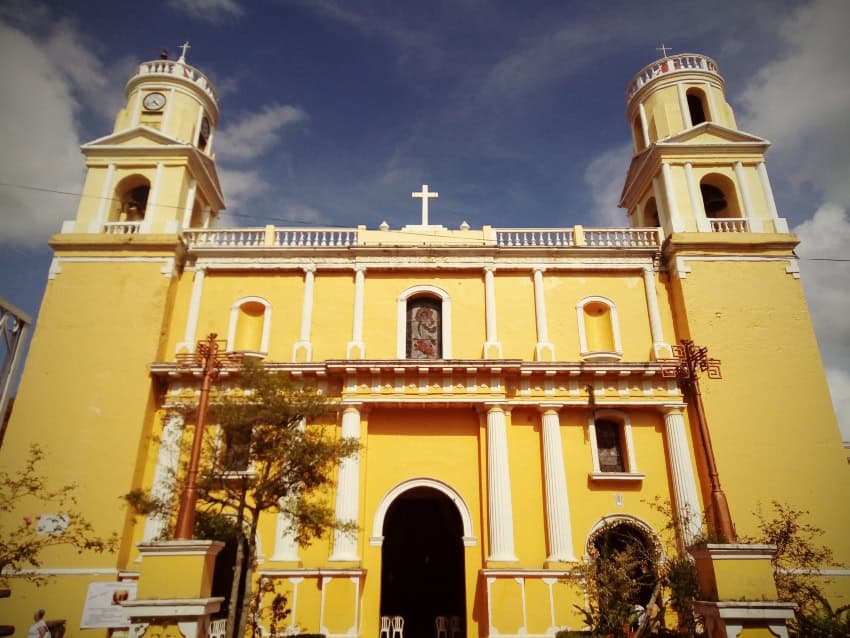
A root beer revelation The tradition of making “zarza,” or root beer, in Veracruz is centered in the small mountain town of Teocelo. (Rafael González Hernández/Wikimedia Commons)In an effort to learn more about it, I drove 45 minutes to the source, on a southbound road from my home in Veracruz past two Pueblos Mágicos — first Coatepec, then Xico — until I reached Mexico’s cradle of zarza: Teocelo (or, in Nahuatl, “Tiger God”).
The mountain town of around 11,000 can only be reached through narrow, curving roads that carve through the subtropical terrain at a high elevation — with humid and wet conditions that allow all sorts of vegetation and crops to flourish in the surrounding areas (coffee, in particular, is a notable product from this part of Mexico).
It’s here that zarzaparilla (also confusingly spelled “sarsaparilla”) gained notoriety as a beverage among Spaniards and mestizos, becoming a local commercial industry of sorts that would expand beyond the region. Today, zarzaparilla can be found throughout Mexico, particularly within Veracruz and its neighboring states. But back then, it was — much like jalapeños were until they became commonplace elsewhere — a specialty product known only to those in the greater Xalapa vicinity.
The origins of ‘zarza’In snooping around the tiny pueblo, it’s easy to find where it all started: Zarzaparilla Flores (a family-owned business that is not to be mistaken for a separate branch of family operations, Zarzaparilla Flores Doña Chabe, which is literally next door, but technically unaffiliated). The original Zarzaparilla Flores is said to have opened in 1920 inside what used to be a storage building for the nearby train yard, which served as a prominent trade route during the Porfiriato era from Xico to the United States. Due to the train, lots of immigrants and outsiders were able to pass through town, bringing a transient mixture of passersby who helped give zarzaparilla its fame beyond Veracruz.
Today, a third-generation family member runs the business — with antique family photos dating back to the Mexican Revolution bedecking the walls (one photo of the original shop owner, Don Manuel Flores, and his wife hangs stoically beneath two old rifles).
Rubén Olivares is the current face of operations. He married into the Flores family and has taken over the zarzaparilla tradition with pride.
A family tradition and recipe Don Manuel Flores started Teocelo’s most famous zarza business, which has used the same recipe for more than a century. (Zarzaparilla Flores)“This region used to be known for cultivating pineapples and oranges, and that created a local exporting economy early on,” Olivares says. “But over time, with climate change and different farming methods, everything shifted, and pineapple exports migrated further south, due to the hotter temperatures down there. And this area, which has always been colder and at higher altitudes, began to grow coffee and other ingredients that were good for making zarzaparilla.”
Without revealing the specifics of their family recipe, he tells me their zarzaparilla is a mix of ginger, cardamom, star anise, cinnamon, lime, jamaica, egg whites and more. They also sell hidromiel (mead) and other liquors made from fermented oranges, arrowhead plants, cherry and crucetillo (a shrub that in the past was used to treat venomous snakebites).
The family’s zarza recipe has remained the same for more than a century and was patented in 1920 by Don Manuel Flores, but according to Olivares, Don Manuel only sold a few liters of it at the time. The family now regularly brews batches of around 1,000 liters and ships it all over Mexico. Predominantly made as a syrupy concentrate, the molasses-like mixture is put into various sizes of plastic bottles and jugs, which consumers can mix with any ratio of filtered or mineral water to their liking.
How the drink conquered the ‘Wild West’In the 19th and 20th centuries, the beverage was viewed as a medicinal remedy and was brought to the U.S. According to The Seattle Times, “Sarsaparilla was widely consumed all across 19th-century America, easy to find in the local saloon if the one-road town one rode into had no dedicated apothecary or pharmacy, and was supposedly quite popular with cowboys and ranchers looking to tame a rumbling tummy or put a little pep in their step, much as people use kombucha today.” Eventually — and it’s unclear when, why or how — zarzaparilla (made from “dried root bark of several plants in the genus Smilax,” which grew plentifully in Veracruz) was replaced by sassafras, and zarzaparilla became known as root beer. (In 1960, the U.S. Food and Drug Administration banned real sassafras in commercial root beer as safrole in high amounts was found to be carcinogenic.)
Throughout it all, zarza remained the dominant beverage of choice in and around the town of its origin in Veracruz. The Flores family is no longer the only one making it, either: A Google Maps search will reveal no fewer than five other zarzaparilla businesses in the town of about 23 square miles (for comparison’s sake, Mexico City is estimated at 573 square miles, yet according to Google, unfortunately has no official zarzaparilla-dedicated outlets).
Travel attractions in TeoceloTeocelo has other worthwhile features besides zarza: It’s the site of the Fiesta Patronal, a weekend-long celebration that includes parades, fireworks and religious celebrations in honor of the burial of Jesus after his crucifixion. At the pueblo’s main entrance, there’s a bee sanctuary that produces all kinds of honey products you likely won’t find anywhere else, at least not in abundance — jugs of honey wine, salsa macha made with honey and “honey butter” (akin to peanut butter, with a similarly thick consistency) in variations that range from almond and walnut to berry or garlic.
@descubreteocelo Acompáñame a descubrir el comercio local de #Teocelo, en está ocasión me fui a conocer el nuevo local de Zarzaparrilla “L.P.” 🥤 #zarzaparrilla #zarzaparrilla🌿 #bebida #refrescoderaiz #teoceloveracruz #Veracruz #Teocelo #pueblo ♬ sonido original – Descubre Teocelo
Note: The honey shop, known as La Mielada, or “The Honeydew,” also has an accompanying restaurant that serves honeyed meats and breads, with an affordable selection of beverages like the aforementioned honey wine or my personal favorite, a mug of locally cultivated coffee with large dollops of organic honey mixed in — a pure delight of sweet and bitter flavors. For outdoor-seeking adventurers, the surrounding area also offers waterfalls, hikes, cabins and whitewater rapids.
To be sure, there’s no shortage of offerings — and mugs of zarza — to enjoy for a weekend in the chilly mountain locale.
Alan Chazaro is the author of “These Spaceships Weren’t Built For Us” (Tia Chucha Press, 2026), “Notes from the Eastern Span of the Bay Bridge” (Ghost City Press, 2021), “Piñata Theory” (Black Lawrence Press, 2020), and “This Is Not a Frank Ocean Cover Album” (Black Lawrence Press, 2019). He is a graduate of June Jordan’s Poetry for the People program at UC Berkeley and was selected as a Lawrence Ferlinghetti Poetry Fellow at the University of San Francisco. His work can be found in NPR, The Guardian, SLAM, GQ, L.A. Times, and more. He is currently based in Veracruz.
The post The story of Zarzaparilla, an Indigenous root beer from Veracruz appeared first on Mexico News Daily