
As Canadians got out of bed Saturday morning, they woke up to a new reality in the relationship with their American neighbours that could change their lives as they know it.
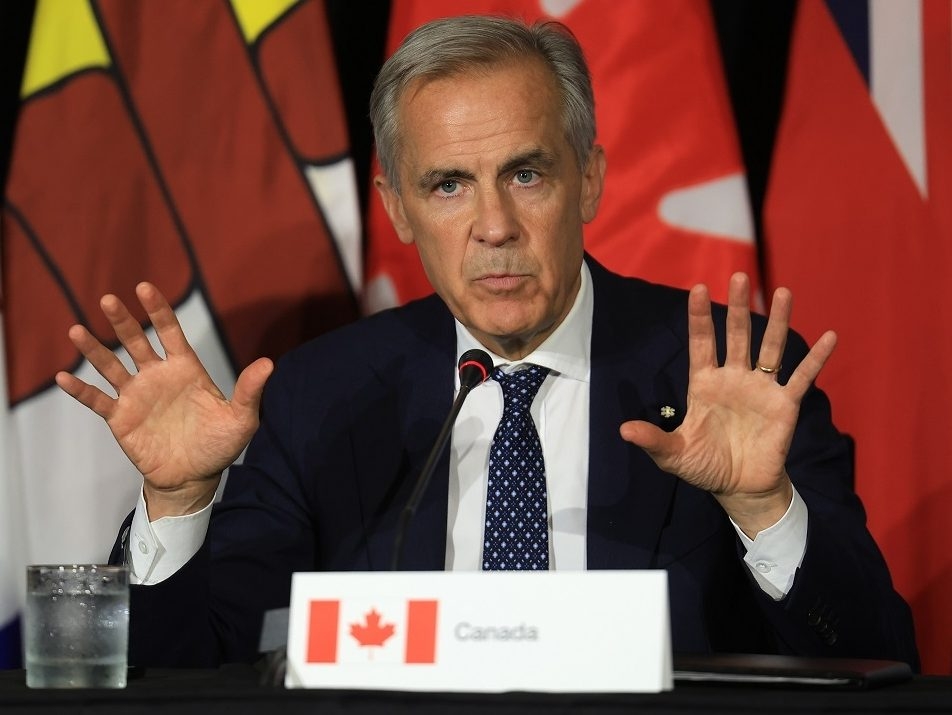
Manitoba Premier Wab Kinew had called on Canada to not make a deal with President Donald Trump’s America and instead “fight” – and that’s exactly what Prime Minister Mark Carney decided he would do on Friday night.
While it was progressing to see a signed deal that would avoid 50% tariffs on Canadian deals, Carney wrote in a late-night X post “that progress has not been enough to meet our objectives for Canadians” and “as a result, this evening, I have decided to suspend trade negotiations with the U.S. and have directed Canada’s negotiators to return to Ottawa.”
And just like that, Canada is in an all out economic war with the United States.
“At midnight tonight (Friday), the U.S. intends to impose a 50% tariff on roughly $28 billions of Canadian goods,” he said, vowing “Canada will match those tariffs dollar for dollar to protect our workers and businesses” in retaliation.
Once having the largest free-trade arrangement in the world, Canada and the U.S. now appear to be headed into a high-stakes tariff war.
Breaking the silence he maintained last week, Ontario Premier Doug Ford has indicated he fully supports Carney’s move to walk away from the table.
My statement on Canada-U.S. trade negotiations: pic.twitter.com/65OuQH40ra
— Mark Carney (@MarkJCarney) August 22, 2026
“Team Canada needs to stand together more united than ever before,” Ford posted to X.” The prime minister has my full support for a strong response – tariff for tariff, dollar for dollar. As we fight to protect Canadian sovereignty and economic security, everything needs to be on the table. Ontario is ready to do its part.”
- WARMINGTON: Manitoba Premier Wab Kinew spits on Trump, Carney and trade talks
- LILLEY: What did Carney give up to get tentative deal with Trump?
Canadian goods to be tariffed at 50%
Ontario’s auto sector and steel industry, among many others, face the bulk of the risk that comes with tariffs on goods to the U.S. reaching 50%.
Explaining he would not allow any country to “determine our future,” Carney made it clear to Canadians that the once cozy and special business relationship between Canada and the U.S. is no longer in place.
“We have recognized from the beginning that America has changed, and that we will not return to our old relationship,” Carney said. “Our government understood, before many, that America is altering all its trade relationships. Putting tariffs on its closest allies and charging for access to its vast market.”
Trump, who has called for Canada to become the “cherished 51st state,” had extended the deadline of imposing the new 50% tariff as a result of a deal in principle that needed to be finalized – but this all fell apart at the 11th hour.
“Last-minute changes in the U.S. proposed terms were unfair, uneconomic, and called into question the reliability of any deal,” wrote Carney.
But the Prime Minister said they did try.
Explaining they “worked” to “strike a fair deal that would provide the best access to the U.S. market and greater certainty to Canadian businesses and workers,” Carney said that did not mean a “deal at any price or on any deadline.”
The Prime Minister said “over the past 18 months” the focus has been on “building our strength at home, diversifying our partnerships abroad, and striking a fair deal with the United States,” which included “to preserve tariff-free access to the U.S. for the vast majority of Canadian business, provide greater stability to our trade relationship, significantly reduce U.S. tariffs on our key strategic industries, protect our small and medium-sized businesses” and maintain “our flexibility, independence, and sovereignty so we can keep building the Canada we want.”
This, at the last minute, proved to be unattainable at the negotiating table.
Team Canada needs to stand together more united than ever before.
— Doug Ford (@fordnation) August 22, 2026
The prime minister has my full support for a strong response—tariff for tariff, dollar for dollar. As we fight to protect Canadian sovereignty and economic security, everything needs to be on the table. Ontario…
While there had been much talk about Carney asking the provinces to re-stock liquor stores with American wine and spirits as a show of good faith, leaked details indicating there still would be tariffs on many Canadian exports – including steel – proved to be too hard to overcome.
RECOMMENDED VIDEO
Don’t buy American hooch
Late last week, Manitoba’s Premier urged Canadians to steer clear of purchasing American booze even if it did return to store shelves.
“What I would say to Canadians is ‘leave it there,'” said Kinew, who called Trump “weak” and claimed America is on its heels. “Don’t buy it.”
It’s unclear if Trump was aware of Kinew’s outburst and the President so far has not commented on the breakdown in talks, which by all accounts have no further meetings scheduled.
Trump’s trade ambassador, Jamieson Greer, issued a statement Saturday saying, “Canada has declined to finalize the trade deal under the terms agreed earlier this week.”
“Despite the U.S. offer to Canada to receive the best treatment of any major exporter to our market, new demands and walk backs of other commitments by Canada have upended the careful balance reached in the past days,” he said.
Greer added: “This is a missed opportunity for Canada.”
Tonight, Canada declined to finalize the trade deal under the terms agreed earlier this week.
— United States Trade Representative (@USTradeRep) August 22, 2026
Despite the U.S. offer to Canada to receive the best treatment of any major exporter to our market, new demands and walk backs of other commitments by Canada have upended the careful…
Carney, however, doubled down on his earlier declarations of moving forward with a new world order agenda that effectively moves on from once relied upon trade with the neighbouring United States.
“Canada has what the world wants. And we will not allow any nation to determine our future,” he said. “We will set our own course to keep building Canada strong for all.”
Federal Opposition Leader Pierre Poilievre released a statement Saturday saying, “Conservatives are disappointed that the United States has chosen to impose further unjustified tariffs on Canada” that “threaten the jobs and livelihoods of families right across our country.”
He also said he plans to speak with the Prime Minister to “discuss what we can do to fight for our workers, businesses and economy.”
“Canadians must stand united to defend our country against these unfair attacks on our jobs and businesses,” Poilievre said.
“Canada cannot accept one-sided tariffs that will deindustrialize our country. Nor can we accept a bad deal. Instead, we must continue the fight for tariff-free trade,” he added.
Conservatives are disappointed that the United States has chosen to impose further unjustified tariffs on Canada. They threaten the jobs and livelihoods of families right across our country.
— Pierre Poilievre (@PierrePoilievre) August 22, 2026
Canadians must stand united to defend our country against these unfair attacks on our…
Time will tell how this will all play out in Canada where the mood is divided. Many want to follow Kinew’s edict to do battle while others worry about the future of the economy without a stable relationship with its largest trading partner.
With that in mind, Carney signaled, there will be taxpayers’ help on the way to assist Canadian businesses who will be devastated by the tariffs, the lack of access to the American market and any other fallout that come with these talks breaking down.
“In the coming days, the government will introduce additional measures to support Canadian workers and businesses, building on the nearly $25 billion in support provided over the past 18 months,” Carney said. “These actions complement Canada’s core economic strategy. From day one, we have been focused on building our strength at home and diversifying our partnerships abroad.”
While Carney said “that strategy is working” and “we are advancing nearly $500 billion in major infrastructure projects” and “unlocking new export markets for Canadian businesses,” it is not lost on Canadians that the once reliable economic engine that provided more than 70% of Canada’s trade may well be a thing of the past.
There will be great debate and discussion on this going forward as Canada decides what happens next.
jwarmington@postmedia.com