
Preparatory meetings for the United Nations’ annual climate summit are usually quiet affairs, focused on laying the political and technical groundwork for the main COP event. But this year felt very different.
I was at this week’s pre-COP31 gathering in Fiji for talks that were both harmonious and powerful. Pacific delegates were clearly frustrated at having to repeatedly retell their stories of climate change. But they were also generous in their wish for the world to engage with the reality they face.
Following a tussle for leadership last year, it was agreed Australia would jointly host these Pacific climate meetings with Fiji. Rival bidder Turkey (also called Türkiye) will host the annual UN COP31 climate summit in the city of Antalya in November.
There has been criticism of the number of world leaders at the A$20 million Fiji meeting – with 14 national leaders making a side visit to Tuvalu on Tuesday, and just two of those hailing from outside the Pacific.
However, the purpose of meeting was not a leadership summit – although more national leaders attended than in previous years.
Rather, it was a chance for governments, community leaders and Australia’s Minister for Climate and Energy Chris Bowen – who has the role of president of negotiations at COP31 – to hear directly from Pacific leaders, ministers and climate envoys on their priorities.
And they had so much to say.
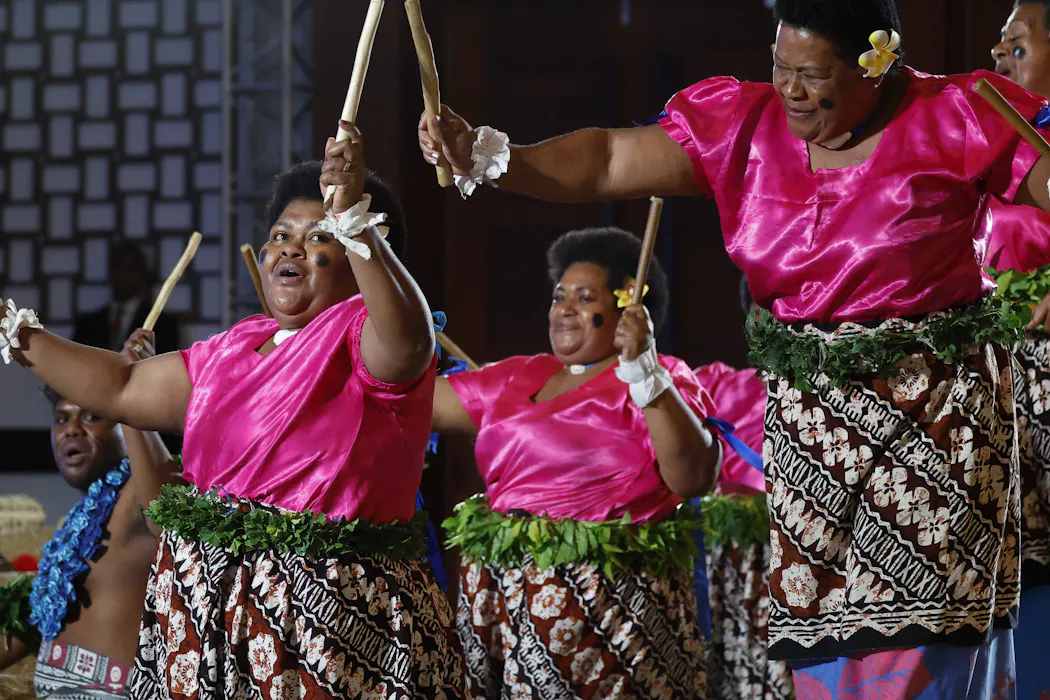
The Pacific should not be sacrificedThe most obvious shift in Fiji was the difference in tone. Pacific voices, music, art, film, tradition and storytelling took centre stage. It reminded everyone that if these parts of the world are lost to climate change, so, too, is their inextricably intertwined culture.
There was unabashed honesty about the emotional, psychological and cultural toll climate change is taking, which undeniably moved all those who attended. More than a few tears were shed.
Over the course of the four days, the clear sentiment in meetings was the frustration Pacific delegates felt at having to tell – and re-tell – their stories about the risks and damage caused by climate change.
There was a sense the Pacific has been relegated to a “sacrifice zone”, despite climate emissions from the region being dwarfed by those of G20 nations.
Despite this, the determination of Pacific leaders and communities was undeniable – they came together for meaningful and difficult conversations about priorities, and the messages they want to share with the world.
Overwhelmingly, there was a strong commitment to ensuring science was central to the global response to climate change. This led to calls for more Pacific voices at the scientific negotiations at COP31.
Students pose outside the venue for the Pacific Pre-COP31 leaders event in Funafuti, Tuvalu. Saeed Khan/Getty 1.5°C is a lifelineIn UN climate diplomacy, Pacific nations are often dubbed “Small Island Developing States”. In contrast, during the talks this week,Pacific representatives deliberately referred to their nations as “Big Ocean States” or BOS, (appropriately pronounced as “boss”).
This reflects the way a healthy and thriving ocean underpins a healthy and thriving way of life in the Pacific.
Although a recent UN report found we will likely pass 1.5°C above pre-industrial temperatures in 2030, an intensified push to phase out fossil fuels and cut emissions could see this limited to 1.8°C. In theory, carbon removal methods could then be used to bring temperatures back to 1.5°C or below this century.
However, Pacific delegates emphasised remaining below 1.5°C is a lifeline for their region, and the response to overshooting this needs to be as brief and effective as possible to preserve their safety and cultural identity.
Who foots the bill?Who will pay for the cost of climate change was a key area of discussion. Delegates called for accessible, predictable and fit-for-purpose funding, and for greater commitments of climate finance capital at COP31 in November.
There are already examples of how effective funding can be.
The Pacific Resilience Facility (PRF), is a Pacific-managed climate fund established by treaty, with Pacific members in the driver’s seat. It has already made a significant impact, only five months since it received funding from the UN.
For example, a speaker from Palau talked about the taro patch (a tropical root vegetable) as the “mother of life” in the Pacific region. Taro is under threat from salt-water intrusion and extreme weather, which imperils Pacific livelihoods.
With only US$4,000 (A$5,700) of transitional funding, the PRF was able to support a women-led project to restore taro patches (mesei), which play a vital role in food security and irrigation. The power of a women- and Indigenous-led initiative was clear.
Setting a precedentIn Fiji, I witnessed open negotiations driven by stories of real challenges and a genuine desire for the world to engage with those affected by climate change.
In the face of criticism over the efficacy of the UN’s COP process, this kind of humanity is often missing from global climate talks. Reaching beyond participation to relationships may set us up for the significant climate progress the Pacific – and every nation on earth – desperately needs.
The ultimate success of this year’s unique Fiji meetings will not be clear until November, but I hope we see future summits centred not just on participation, but human connection.
Kathryn Bowen receives funding from the World Health Organisation, Wellcome, the Global Fund, Australian Department of Foreign Affairs and Trade, Australian Department of Climate Change, Energy, Environment and Water, Green Climate Fund, Global Environment Facility, Asian Development Bank, World Bank. She is affiliated with the Port Philip EcoCentre.