
See more Toronto Sun on Google — save as a Preferred Source
The buses may be faster, but voters will go to the polls before they have all the facts on RapidTO.
While city hall has been collecting data on TTC performance, traffic volumes and travel times on Bathurst and Dufferin Sts. in and around the new red rapid transit lanes, that work only began after the World Cup and numbers won’t be released this year.
“We’re currently collecting data on the long-term operation of the RapidTO corridors and expect to begin sharing dashboards by early 2027,” Jacquelyn Hayward, a director with city hall’s transportation services division, said in a statement to the Toronto Sun .
Mike Layton, who is seeking a return as councillor in the ward he used to represent, said he’s knocked on thousands of doors in University-Rosedale despite not registering until the final week. RapidTO is one of the issues he hears about, with some residents for it and others against.
“Both have very valid points,” he told the Sun .
“There are some trade-offs,” he said. “There is only so much road to budget for. Is parking cars on the road critical every moment of the day, or just in certain periods? And what does that ratio look like?”
Layton said in his personal life he’s more familiar with the lanes on Dufferin, using them as a motorist. He’s seen traffic patterns change and the buses appear to move along more smoothly.
He said, however, that data should inform the city’s decisions on what’s next for RapidTO, including whether the program should be expanded north of Bloor St. on Bathurst and Dufferin, or onto other city streets. He said it’s “unfortunate” that voters won’t have that data in time for the election.
Still, “I think we should be doing all we can,” Layton said. “Despite the fact that I may be (in) a car in traffic at some points of the day, I think our public policy objectives should be moving the maximum number of people efficiently on our streets.”
Is city hall listening?
One of his campaign rivals, Karina Lemke, hears more in Ward 11 about congestion in general than RapidTO specifically, but said “there is a lot of upset” about the program.
When the city took away parking spots on Bathurst , small businesses lost their loading areas and some seniors were robbed of their mobility, she said. Her husband, Yuk Yuk’s co-founder Mark Breslin, has needed to use a cane lately, and when there’s no nearby parking, just getting into a local business can be arduous, she said.
Lemke said the consultation process fell far short, and it seemed city hall had its mind made up on RapidTO before the public knew what was happening.
“I don’t think that you need draconian brush strokes,” Lemke told the Sun . “You’ll never please everybody,” she added, but the city should ensure “the least harm is done.”
- LILLEY: Mike Layton now eyeing a council seat and trying to force young woman to bow out
- With council run, Erskine-Smith gets ‘back up off the mat’
- Bradford says Mayor Chow ‘squandered’ her appearance on CNN
Over in Davenport ward, the incumbent councillor, Alejandra Bravo, said the program needed some tweaks but the concept has been well received, especially by regular riders of the No. 29 Dufferin bus route.
“The first impressions from the World Cup days show that the RapidTO lanes are helping buses move faster and spend less time stuck in traffic on these routes,” Bravo said in a statement to the Sun , adding that “we still need the full data” to judge and further improve the program.
Another candidate in Davenport, Marco Martins, told the Sun an “overwhelming amount of people” have told him what Lemke has heard – they don’t feel city hall has the pulse of the public.
“In general, I think residents are feeling that their councillor has been absent and not showing up in the community in consultation on things like RapidTO,” Martins said.
Decamped for Danforth
The TTC referred questions about RapidTO to the City of Toronto. The city said in its statement that by holding off until after the World Cup, the data it gathers will “reflect normal operating conditions.”
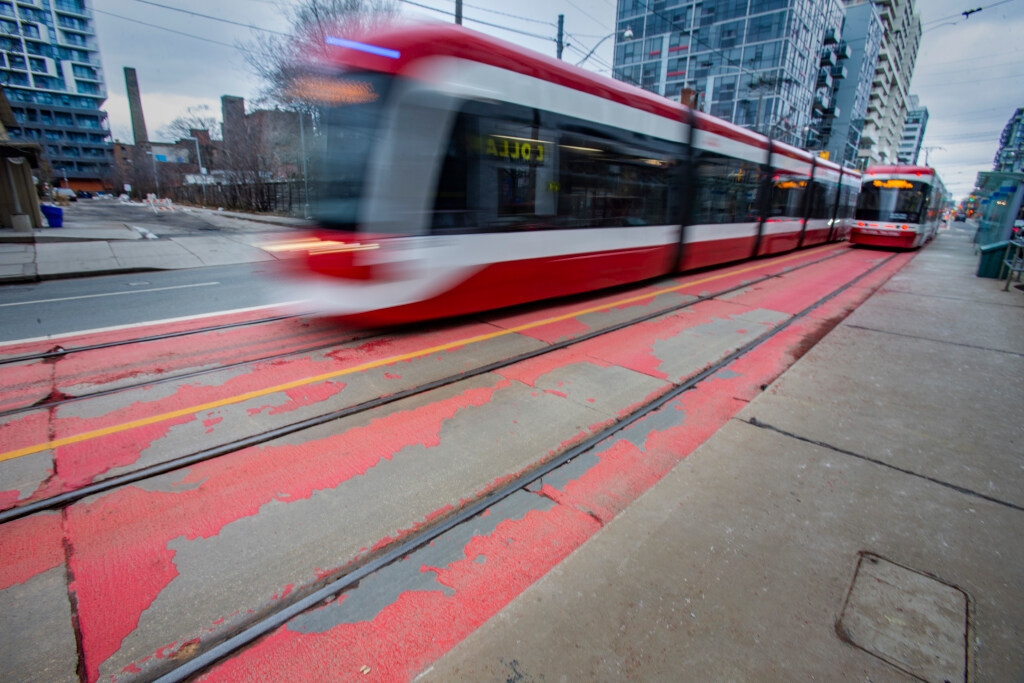
RapidTO has had its growing pains. To make space for the red transit lanes, on-street parking and left turns were restricted. Some associate the program less with faster transit times than with the red paint that quickly crumbled on some unsightly stretches of Bathurst and Dufferin.
In an unusual political twist, a city councillor who took on a visible role in selling RapidTO to the public has left for a ward not close to the transit program. Dianne Saxe pushed for parking to be limited on Bathurst not just south of Bloor, but also to the north – but she’s unlikely to face many questions about that after shifting to run in Toronto-Danforth ward .
While her campaign did not respond to a request for comment, Saxe previously provided the Sun with data on bus service on that stretch of Bathurst St. north of RapidTO.
Parking was largely removed from one side of the street between Bathurst station and Dupont St. to get the No. 7 Bathurst bus moving faster. The gains may seem modest, but they were associated with a 3.6% improvement in ridership from last September’s numbers – even as the system as a whole saw a 6.8% drop.
Travel times on the northbound No. 7 are down by nearly two minutes on weekdays between 2 p.m. and 4 p.m., and more than a full minute at other times, including noon to 7 p.m. on weekends and 6 p.m. to 7 p.m. on weekdays. Trip times are more consistent, too.
Still, those numbers only mean so much, as they were meant to complement improved service in the RapidTO lanes between Bloor and Lake Shore Blvd. They also come with their own trade-off: the loss of abundant parking in a largely residential area.
City hall said that stretch of Bathurst won’t be part of its traffic study as it’s expected the removal of parking won’t affect travel times.
jholmes@postmedia.com